

Series
The Odyssey on Screen and in Homer
Christopher Nolan's The Odyssey reached Japanese cinemas on September 11, 2026. The poem behind it was composed some 3,000 years ago and can still be read in the original. In this series, members of the Humanitext project set scenes from the film against the lines of Homer's text and explain what the film changed. The four articles are listed in reading order.
Two can be read before the film without spoilers; two are for afterwards. The Greek text and a parallel translation of every passage quoted are open to anyone in Humanitext Reader.
4 articles · August 21 – September 18, 2026 · Written by Yuki Suzuki (Doctoral Student, Nagoya University)
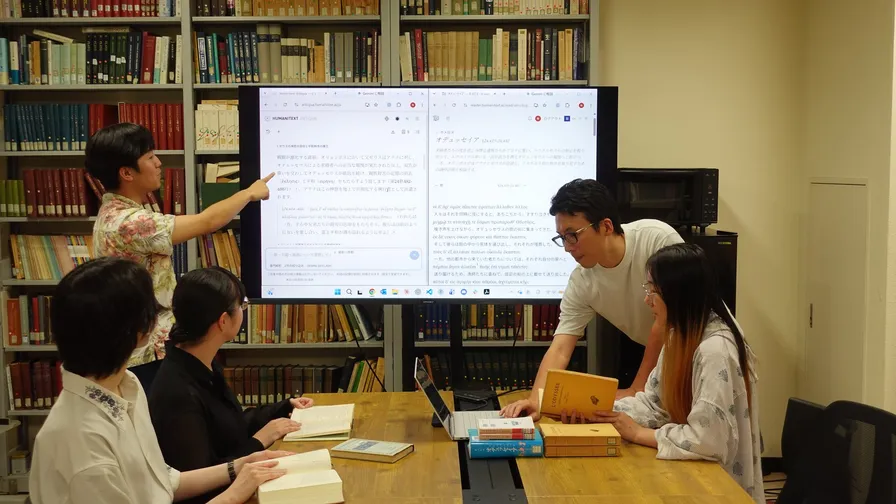
The articles, in reading order
Before the film (no spoilers)
-
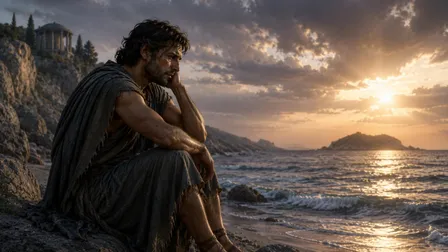
Part 1 No spoilers · Yuki Suzuki
The Odyssey: “Nostalgia” Was the Pain of Being Unable to Return
The monster-slaying of the trailer is a sliver of the poem's twenty-four books. The hero does not appear until Book 5, and spends most of his wandering weeping on a single island. Two words behind "nostalgia" show what kind of hero Homer wrote.
Read the article → -
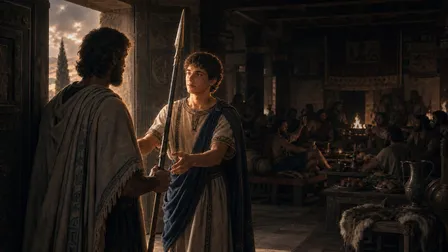
Part 2 No spoilers · Yuki Suzuki
Ask the Guest's Name After the Meal: The “Law of Zeus” in the Odyssey
How could more than a hundred men camp in another man's house and eat his herds? What is the "law of Zeus" the film keeps invoking? Set the poem's scenes of hospitality side by side, at the palace door, in the swineherd's hut, in the giant's cave, and the suitors' strangeness comes into focus.
Read the article →
After the film
-
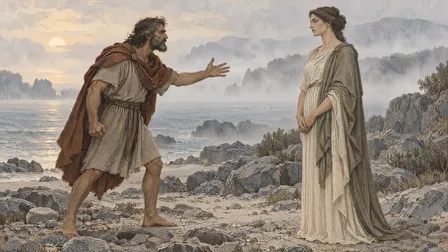
Part 3 Discusses the film's central events · Yuki Suzuki
Athena in the Odyssey: How Do Homer and the Film Differ?
Why does the film's Athena neither save Odysseus nor blame him? In Homer she devises the journey, provides the ship, and shares the hero's cunning as an accomplice. The film turns that frame inside out.
Read the article → -
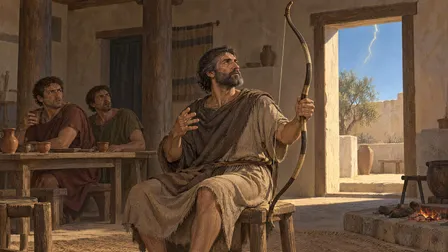
Part 4 Discusses the film's ending · Yuki Suzuki
The God Who Makes Men Forget, the Man Who Will Not: The Ending of the Odyssey
Homer's poem goes on after the suitors are killed, and the last thing the gods put in place is forgetting. The film changes that ending. A god who makes men forget, a man who will not: the two endings, read from the Greek.
Read the article →
Open the original
Every passage the articles quote can be checked against the text itself.
Humanitext Reader
The full Greek text of all 24 books of the Odyssey, free, beside a sentence-by-sentence translation in English, Japanese, Chinese, or Korean, with a dictionary and parser a click away.
Humanitext Antiqua
Ask questions about the text in plain language. Each answer cites the passages it rests on, so you can go straight back to the poem.
About this series
Humanitext is a project led by university researchers in classics, exploring what AI can do for research and reading in the humanities. The researchers themselves build the apps and write and edit the articles.