

Typhon's Rebellion - The Final Battle for Cosmic Supremacy
This article details the story of Typhon, the greatest monster in Greek mythology, from his birth to his epic battle with Zeus for cosmic supremacy and his eventual imprisonment beneath Mount Etna, drawing on ancient sources.

Typhon’s Rebellion - The Final Battle for Cosmic Supremacy
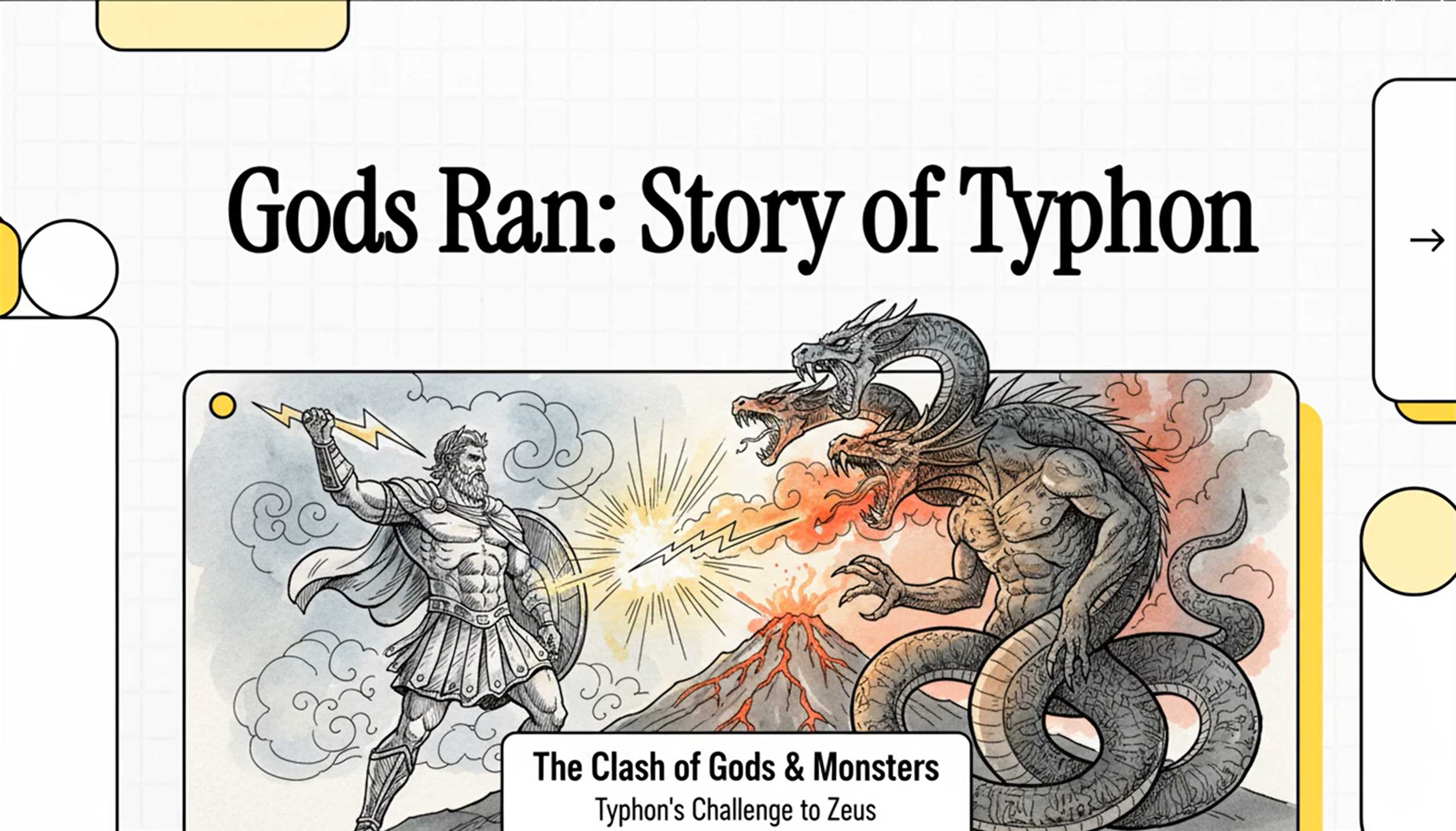
The order established by the Olympian gods was on the verge of being overthrown from its very foundations. Typhon (or Typhoeus), the last and most powerful child born of the Earth Mother, Gaia, had arrived. His appearance struck fear into even Zeus, king of the gods, and heralded the beginning of an unprecedented battle for the fate of the cosmos.
The Last Challenger to Shake the Cosmos
The age of the Titanomachy had ended, and Zeus reigned as the ruler of the cosmos. But this peace was not to last. Gaia, the Earth Mother and mother of the defeated Titans, resented Zeus’s rule and conceived a terrible child with Tartarus, the abyss. This child was the monster king Typhon (Hesiod Theogony 820-822).
His form defied all imagination. According to the ancient writer Apollodorus, Typhon was so immense that he surpassed the mountains, and his head often brushed against the stars. From the waist up, he had a human shape, but when he stretched out his arms, one reached the far west and the other the far east. From his hands sprouted a hundred dragon heads (Apollodorus Library 1.6.3). Below the waist, his body consisted of the coils of giant vipers. His entire body was winged, disheveled hair blew from his head and chin, and fire flashed from his eyes (Apollodorus Library 1.6.3).
Hesiod also conveyed the terror of his voice. From Typhon’s hundred heads came all manner of eerie sounds that echoed through the mountains-from articulate speech that the gods could understand to the bellows of a raging bull, the roar of a fearless lion, and even the whimpering of puppies (Hesiod Theogony 829-835). The monster’s very existence was the ultimate challenge to the order Zeus had established. If left unchecked, he was a threat so great that he could have subjugated not only the world of mortals but that of the gods as well (Hesiod Theogony 836-838).
The Flight of the Gods and the First Thunderbolt Strike
As Typhon began his assault on heaven, the Olympian gods were seized with a terror they had never known. Seeing the monster approach, hurling red-hot rocks toward the sky and spewing a storm of fire from his mouth, the gods scattered and fled (Apollodorus Library 1.6.3).
According to the poet Ovid, the gods fled as far as the land of Egypt, where they disguised themselves in the forms of various animals to hide their identities. Zeus became a ram, Apollo a crow, Artemis a cat, Hera a cow, and Aphrodite a fish (Ovid Metamorphoses 5.321-331). Such was the overwhelming terror inspired by Typhon that the rulers of the cosmos were forced to abandon their true forms and hide in fear.
But Zeus alone did not flee. As king of the cosmos, he resolved to face this challenge. From a distance, he attacked Typhon, hurling his thunderbolts (Apollodorus Library 1.6.3). Hesiod’s poetry vividly depicts the ferocity of the battle. Leaping from Olympus with thunder, lightning, and searing thunderbolts in hand, Zeus struck all of the monster’s terrible heads. The earth, sky, and sea roared and burned, and the heatwave was so intense that it made even the Titans in Tartarus and Hades, king of the underworld, tremble (Hesiod Theogony 839-852).
The King of Olympus is Defeated
Having wounded Typhon with his long-range thunderbolts, Zeus closed in for close combat. Wielding an adamantine sickle, he pursued the monster to Mount Casius, which towers over Syria (Apollodorus Library 1.6.3). Victory seemed within his grasp. But it was here that the king of the gods would suffer one of the greatest humiliations in all of mythology.
Though wounded, Typhon summoned his remaining strength and ensnared Zeus in his massive serpentine coils. He then wrested the sickle from Zeus’s hands and severed the sinews of his hands and feet (Apollodorus Library 1.6.3). Powerless and completely incapacitated, Zeus was hoisted onto Typhon’s shoulders and carried across the sea to the Corycian Cave in Cilicia (modern-day southern Turkey). Typhon hid the severed sinews in a bearskin and set the dragon-maiden Delphyne, a half-woman, half-serpent creature, to guard them (Apollodorus Library 1.6.3). The ruler of the cosmos, stripped of his strength, was now a prisoner in a monster’s cave-an unprecedented turn of events.
A Heroic Rescue and the Final Battle
With Zeus gone, the cosmos teetered on the brink of chaos. But two gods moved in secret to resolve this desperate situation: Hermes, the messenger god, and Aegipan, the goat-god. Evading Delphyne’s watch, they snuck into the cave and succeeded in stealing back Zeus’s sinews, which they skillfully restored to his body (Apollodorus Library 1.6.3).
His full strength restored, Zeus mounted a chariot drawn by winged horses and once again took up the pursuit of Typhon. Wielding his avenging thunderbolts, he relentlessly hunted the monster. The battle raged across the world. At Mount Nysa, the Moirai (the Fates) tricked Typhon, giving him ephemeral fruits with the false promise that they would grant him greater strength, when in fact they weakened him (Apollodorus Library 1.6.3).
The pursuit continued into the region of Thrace. In a battle near Mount Haemus, Typhon hurled entire mountains at Zeus, but they were all deflected by the god’s thunderbolts and thrown back, gravely wounding the monster. It is said that the mountain was named Haemus after the copious amount of blood (haima) that flowed there (Apollodorus Library 1.6.3). The monster king who had once defeated Zeus was now weakened and reduced to a desperate fugitive.
The Roar Echoing Beneath Sicily
Attempting a final escape, Typhon tried to cross the Sicilian Sea. From behind, Zeus delivered the final blow. It was not a thunderbolt, but the great Mount Etna of Sicily itself (Apollodorus Library 1.6.3). The mountain fell upon Typhon like a colossal tombstone, imprisoning him completely beneath the earth.
This myth has been passed down since antiquity as an explanation for Mount Etna’s volcanic activity. Apollodorus notes that to this day, the mountain spews fire because of the thunderbolts Zeus hurled (Apollodorus Library 1.6.3). Ovid expands on this with more poetic imagery, describing how the entire island of Sicily weighs down upon Typhon. His right hand is pinned by the cape of Pelorus, his left by Pachynus, and his legs by Lilybaeum, while Mount Etna rests heavily on his head. Whenever the prone monster stirs and struggles to shake off the weight of the earth, the ground trembles, and he exhales scorching flames from his mouth (Ovid Metamorphoses 5.346-356).
The geographer Strabo analyzed this myth from a broader perspective. He believed that the entire region from Cumae in Italy to Sicily was connected by subterranean channels of fire and theorized that the myth of Typhon arose to explain the natural phenomena of this extensive volcanic zone (Strabo Geography 5.4.9). He quotes the poet Pindar (Pind. Pythian Odes 1.17-19) to vividly convey this mythical imagery.
νῦν γε μὰν ταί θʼ ὑπὲρ Κύμας ἁλιερκέες ὄχθαι Σικελία τʼ αὐτοῦ πιέζει στέρνα λαχνάεντα.
But now the sea-girt cliffs above Cumae, and Sicily, press down upon his shaggy breast.
(Pindar, quoted in Strabo Geography 5.4.9)
Thus, the last challenger to the cosmic order was sealed deep beneath the fiery mountain. The smoke that rises from Mount Etna and the tremors that shake the earth may well be the fierce, unyielding breath of the monster king Typhon, still raging to this day.
(With editorial cooperation from Yuki Suzuki)
Japanese Views on Seasons - The Gaze of Literary Figures
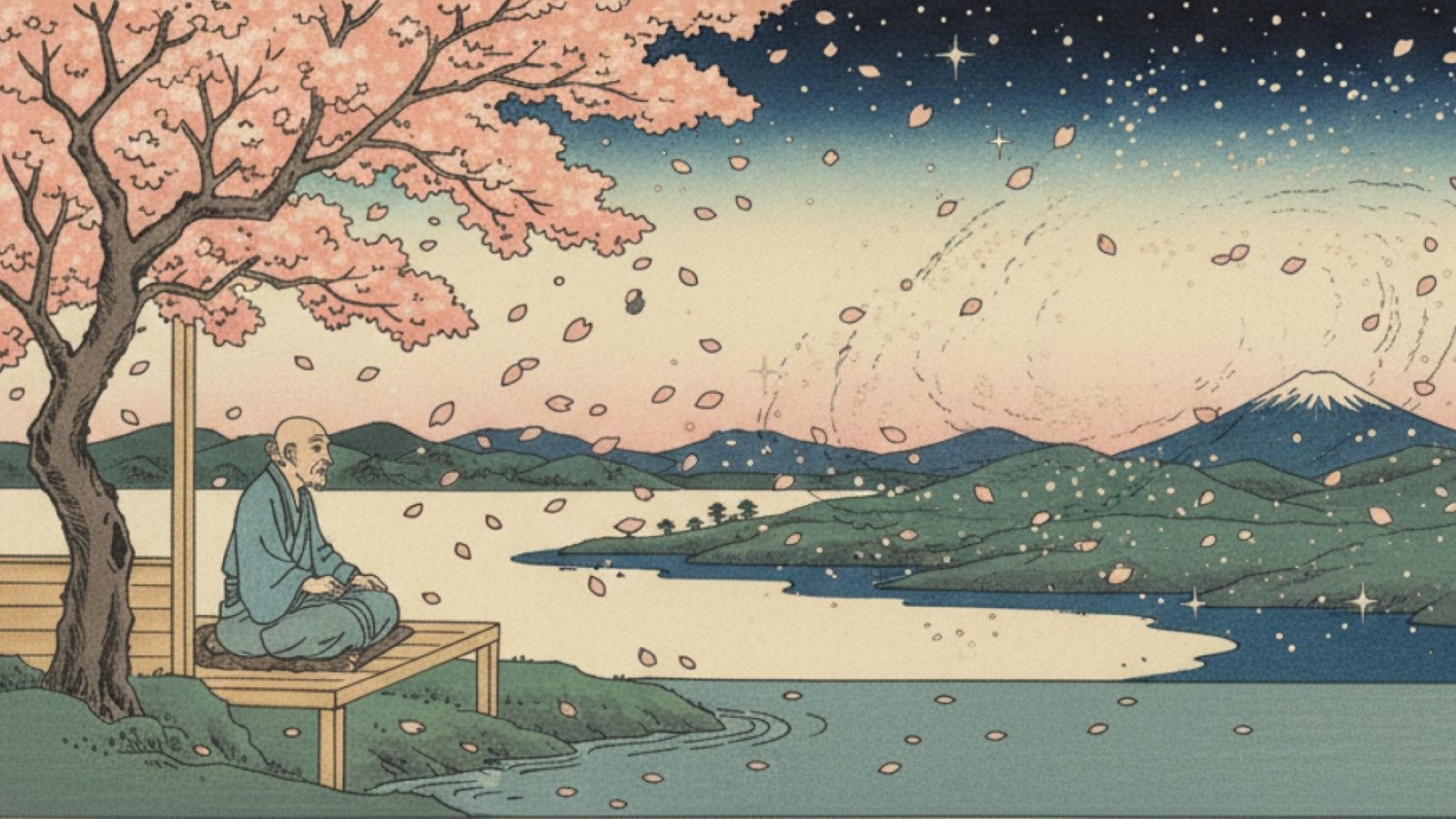
Japanese literary figures have deeply engaged with the shifting seasons and the workings of life through various forms of expression such as novels and essays. Their delicate sensibilities and keen powers of observation open the door to a dialogue with nature for us, teaching us the beauty and philosophy hidden within everyday landscapes.
Japan's Primal Landscapes - A Tale of Memories Told by the Land
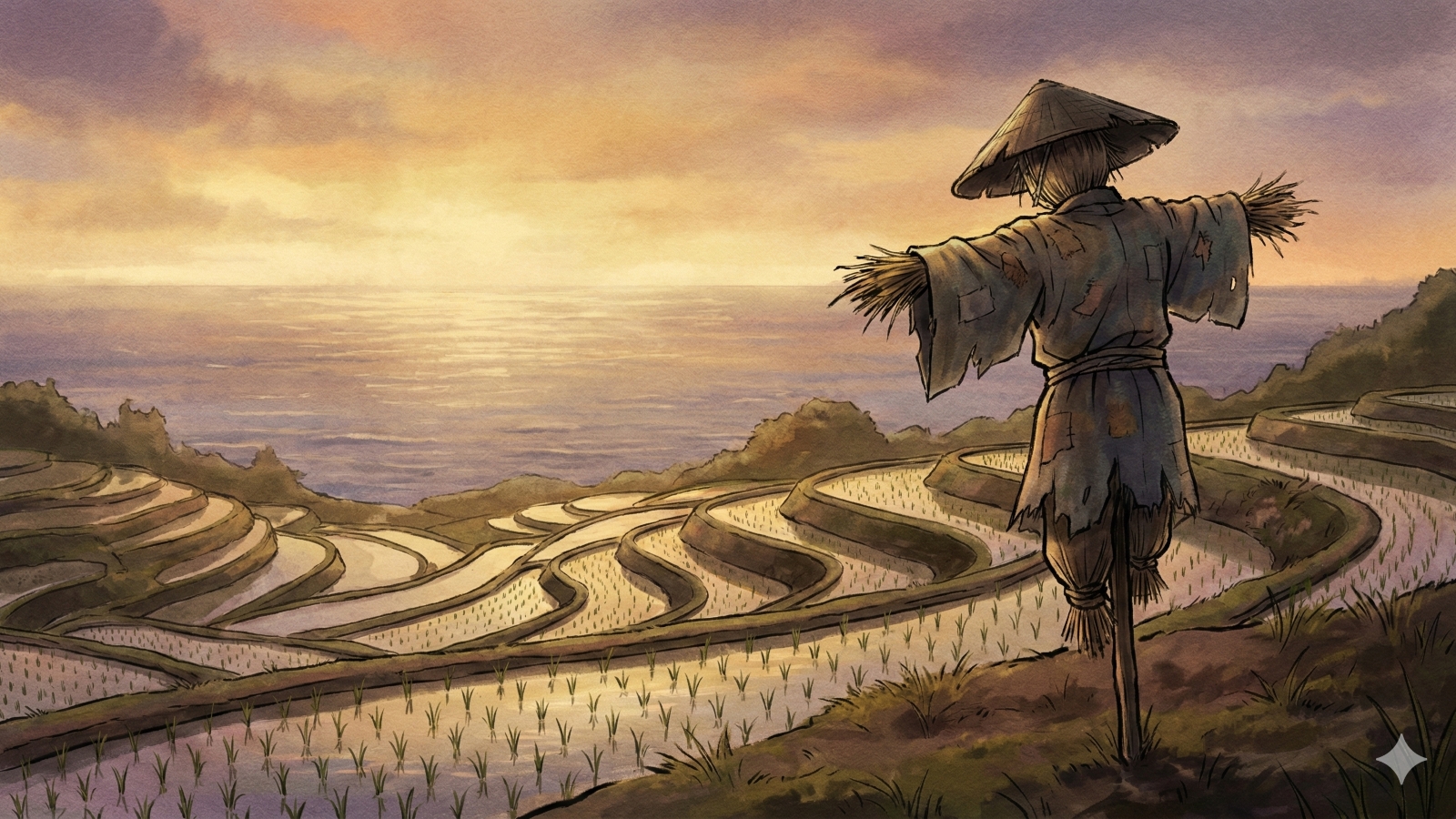
Superimposing the deceased onto the buzzing of flies, seeing gods in one-legged scarecrows. For Japanese people, these mysterious stories were not fantasy, but "life" itself, right next door. Longing for lands beyond the sea, legends remaining in ancient mounds. Why not travel through the frightening yet gentle "primal landscapes of the heart" gathered by Kunio Yanagita, Lafcadio Hearn, and others?

To Wonders Beyond Logic - The Beautiful Abyss Peered into by Scientists
Science is not just cold calculations. It is awe for nature beyond human understanding and an endless quest for beauty. Seeing the universe in a snowflake, feeling the ferocity of life in roadside grass... These are the adventurers of knowledge who confronted the overwhelming "mysteries" that appear only at the end of logic. We touch upon the records of their quiet yet passionate souls.
The Soul Screaming "I" - Stories of Fate and Pride by Modern Women
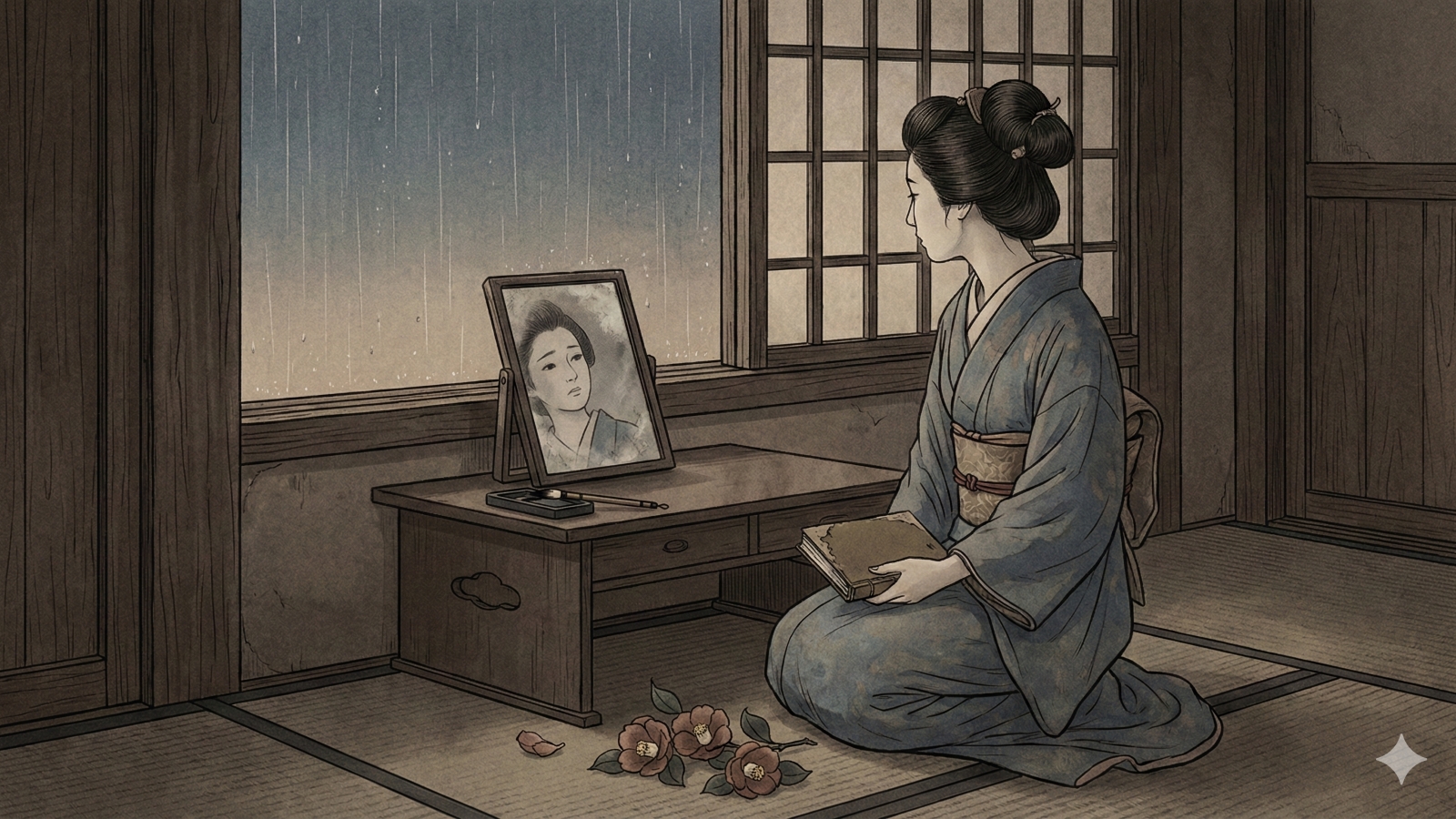
Should women's lives be plastered over with resignation to fate? Or is it a battle to break through social barriers and win one's own "life"? The dry self-mockery spat out by Ichiyō, the poignant scream released by Akiko for her beloved. We listen to the cries of their souls as they resisted the chains of their era, struggling through the mud to establish the "self."