

Japan's Primal Landscapes - A Tale of Memories Told by the Land
Superimposing the deceased onto the buzzing of flies, seeing gods in one-legged scarecrows. For Japanese people, these mysterious stories were not fantasy, but "life" itself, right next door. Longing for lands beyond the sea, legends remaining in ancient mounds. Why not travel through the frightening yet gentle "primal landscapes of the heart" gathered by Kunio Yanagita, Lafcadio Hearn, and others?

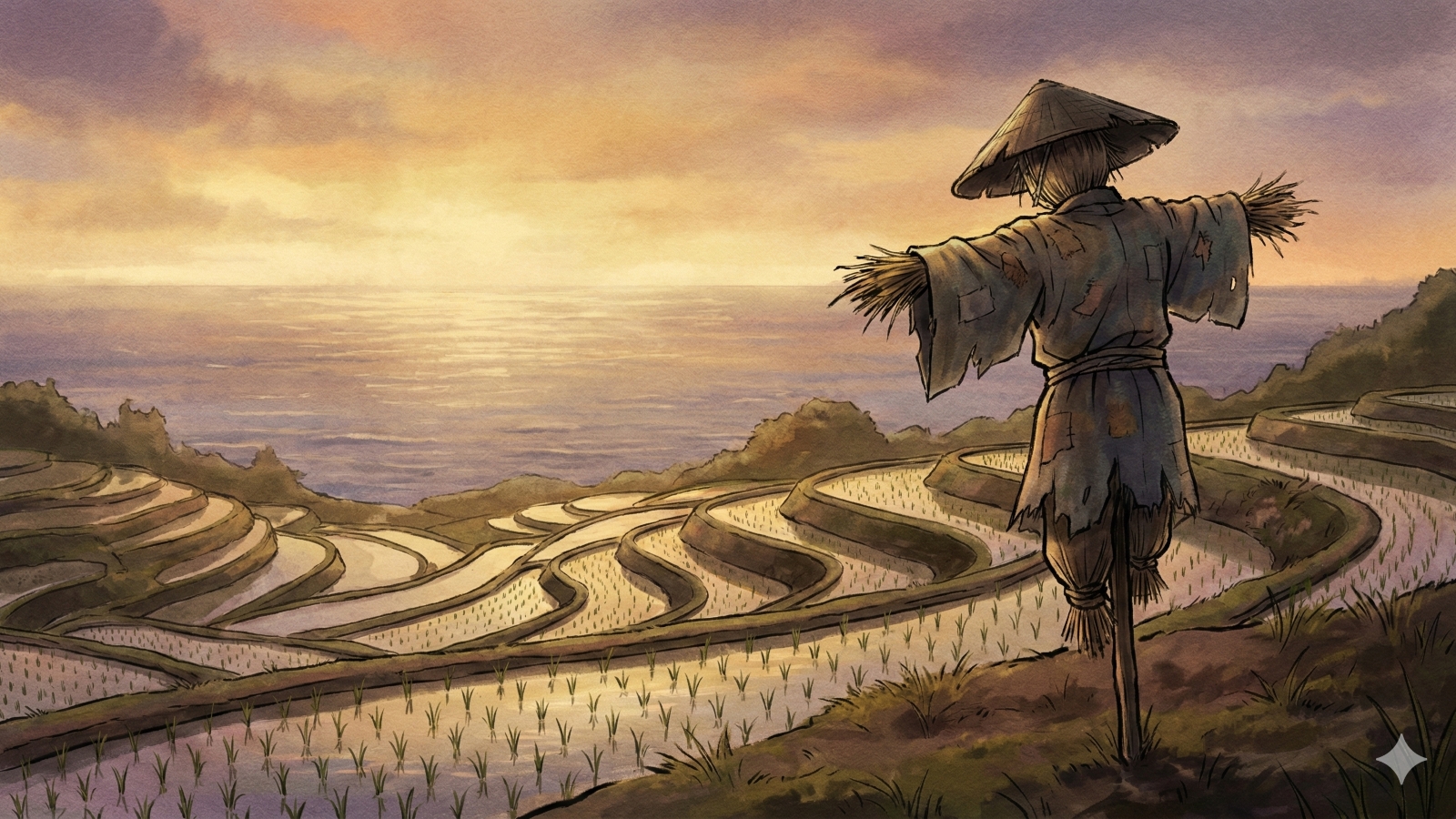
「海阪の彼方には、神でもあり、悪魔でもある所のものの国があると考へたのが、最初なのだ。」
“The initial thought was that beyond the slope of the sea lay a land belonging to beings that were both gods and demons.”
—— Shinobu Orikuchi, Tokoyo and Marebito
【Commentary】
Is what lies beyond the sea a paradise or a demon realm? In the ancient Japanese view of the afterlife, the land beyond the sea (Tokoyo or Nirai Kanai) was a place inhabited by gods who brought abundance, but at the same time, it was the dwelling of evil spirits who brought disaster. This ambiguity of being “both god and demon” is the primal sensation regarding the other world. A chaotic view of the afterlife, mixing awe and longing before the absolute division of good and evil, likely shaped the spiritual world of our ancestors.
「この話に似たる物語西洋にもあり、
“Stories resembling this tale exist in the West as well; is it mere coincidence?”
—— Kunio Yanagita, The Legends of Tono [28]
【Commentary】
Why do surprisingly similar legends exist in distant foreign lands? The author notices that the story of a mysterious stone mortar associated with a pool in Tono closely resembles a Western tale, and asks if it is merely by chance. This suggests the possibility that folklore rooted in a specific land is actually based on universal human psychology and mythical structures common to all mankind. Stories nurtured in a specific climate are simultaneously doors opening to the world, a passage that foreshadows the comparative cultural breadth of folklore studies.
「
“It is just like reading an ancient Fudoki.”
—— Kunio Yanagita, The Legends of Tono [32]
【Commentary】
Mythical time that once breathed in the land is sealed within each place name. Hearing the origin stories—such as chasing a white deer through the mountains, where its injury or death became place names like “Katahayama” (Broken Wing Mountain) or “Shisuke” (Death Aid)—the author could not help but leak this impression. It is an expression of surprise that in the land of Tono, people, nature, and divine spirits interact in an undifferentiated state, just as when the ancient Fudoki (Records of Wind and Earth) were compiled. A rich fertile field of folklore, invisible just by tracing letters on a map, spreads out there.
「要するにこの書は現在の事実なり。」
“In short, this book is a present fact.”
—— Kunio Yanagita, The Legends of Tono [Preface]
【Commentary】
The author loudly declares that myths and legends are by no means relics of the past. This powerful sentence asserts that the mysterious stories told in Tono are not products of fantasy, but urgent realities for the people living in that land. Folklore holds meaning precisely because mountain men and Tengu breathe as “facts” within people’s hearts and lives. The stance of accepting stories carved into the land as “present facts” is the reason this book remains an enduring masterpiece.
「わたしたちの世の事は、すべて神の仕業に習うものです。」
“The affairs of our world all follow the deeds of the gods.”
—— Yukichi Takeda, Kojiki [Ame-no-Hiboko]
【Commentary】
Is this not a phrase that condenses the ancient worldview that all human activities are imitations of myth? This is spoken as a line by a mother deity performing a curse at the end of a tale of interspecies marriage, but it contains the paradoxical truth that “myth defines reality.” We may be unconsciously living, rejoicing, or fighting according to the molds of stories passed down from long ago. From this short assertion, one can strongly sense that in folk society, myth was not merely a fantasy story, but the very guideline for daily action.
「この神は足は歩きませんが、天下のことをすつかり知つている神樣です。」
“Though this god’s legs do not walk, he is a god who knows everything under heaven.”
—— Yukichi Takeda, Kojiki [Okuninushi-no-Kami]
【Commentary】
This speaks of the surprising deification of the scarecrow seen in fields, revealed to be a god of wisdom familiar with the affairs of the world. How rich and warm is the ancient imagination that interprets the figure standing on one leg as “unable to walk but seeing everything”? The paradox that an existence bound to the land possesses the power to see through the entire world sounds like the pride of settled agricultural people. The source of Japanese animism, which finds gods in familiar daily tools and landscapes, seems to lie here.
「死んだ者――殊に餓鬼の境涯へ入る者――は時時、虫の姿になって戻って来るから」
“For the dead—especially those who enter the state of gaki (hungry ghosts)—often return in the form of insects.”
—— Lafcadio Hearn, Story of a Fly (Translated by Masanobu Otani)
【Commentary】
Have you ever superimposed the image of a deceased person onto the buzzing sound of small wings? This story depicts the simple belief that the souls of the dead transform into small insects like flies and return to appeal their lingering attachments from life. Viewed through modern reason, it may be nothing more than superstition, but breathing there is the gentle yet sorrowful Japanese view of life and death: “the dead and the living are not severed.” The figure of the couple marking the wing to confirm its return appears not as fear, but as a prayer trying desperately to believe in the connection with their loved one. The sensibility of finding the whereabouts of the soul in familiar natural phenomena quietly touches the heart.
「ろくろ首の塚として知られている塚は今日もなお見られる。」
“The mound known as the Mound of the Rokurokubi can still be seen today.”
—— Lafcadio Hearn, Rokurokubi (Translated by Ryuji Tanabe)
【Commentary】
When told at the end of a story that “the proof still remains,” the boundary between fiction and reality suddenly becomes blurred. The conclusion that the place where the monk Kairyu buried the Rokurokubi actually exists as a “mound” gives the legend a sense of geographical reality. In folk society, unique terrain and ruins were often given meaning by stories, and conversely, stories were proven by the land. Through this single sentence, readers come to accept a tale of the supernatural from the distant past as history contiguous with the world they inhabit. The imagination to find stories within the landscape is the bridge connecting the land and myth.
「數百年間何の變化なしに保存せられて居た土俗の消えるのは、瞬くの間であらうと思はれる。」
“It seems that local customs, preserved without change for hundreds of years, will vanish in the blink of an eye.”
—— Kunio Yanagita, Changes in Ghost Ideology [1. The Devastation of Local Customs and Funerals]
【Commentary】
Does the wind of modernization blow away traditions that have lasted for centuries in an instant? While lamenting the current state where old local customs are rapidly being lost due to the development of transportation, Yanagita focuses on one point. That is “funerals.” Even if other lifestyles are replaced by department store goods, rituals for sending off the dead are stubbornly protected by ancient anxiety and awe. Through customs like the “bamboo skewers (Kongouzue)” remaining in villages near Tokyo, he attempts to locate the deepest roots of Japanese folklore—the view of life and death—within the disappearing scenery.
「看板一つにも其の地方に於ける美しい人情と芸術的な感性といふものが十分発揮されて居なければならぬ。」
“Even a single signboard must fully demonstrate the beautiful human empathy and artistic sensibility of that region.”
—— Kunio Kishida, Tourism Business and Cultural Issues
【Commentary】
Does not a single signboard on a street corner determine the dignity of that land? Kishida criticizes the current state where tourist spots have all degraded into uniform copies of Tokyo. He asserts that unless everything from souvenirs to popular songs is made by the people of that land using their own sensibilities and skills, it is even a “disgrace.” True local culture is not advertising to the outside, but something that appears as a result of the people living there loving their own climate and permeating that aesthetic consciousness into every corner of their lives.
(Editorial Cooperation: Haruna Ishita, Momona Sassa)
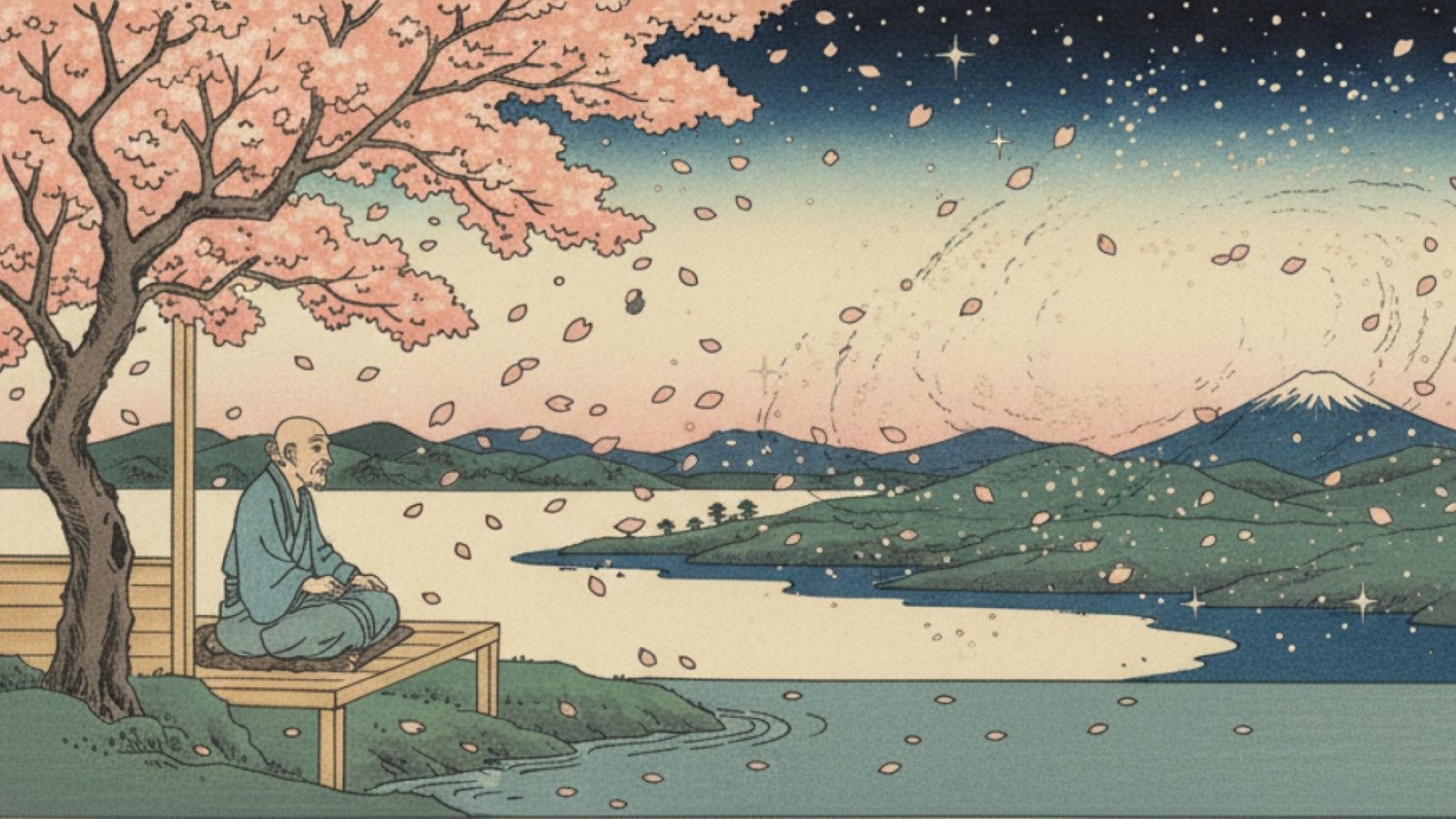
Japanese Views on Seasons - The Gaze of Literary Figures
Japanese literary figures have deeply engaged with the shifting seasons and the workings of life through various forms of expression such as novels and essays. Their delicate sensibilities and keen powers of observation open the door to a dialogue with nature for us, teaching us the beauty and philosophy hidden within everyday landscapes.
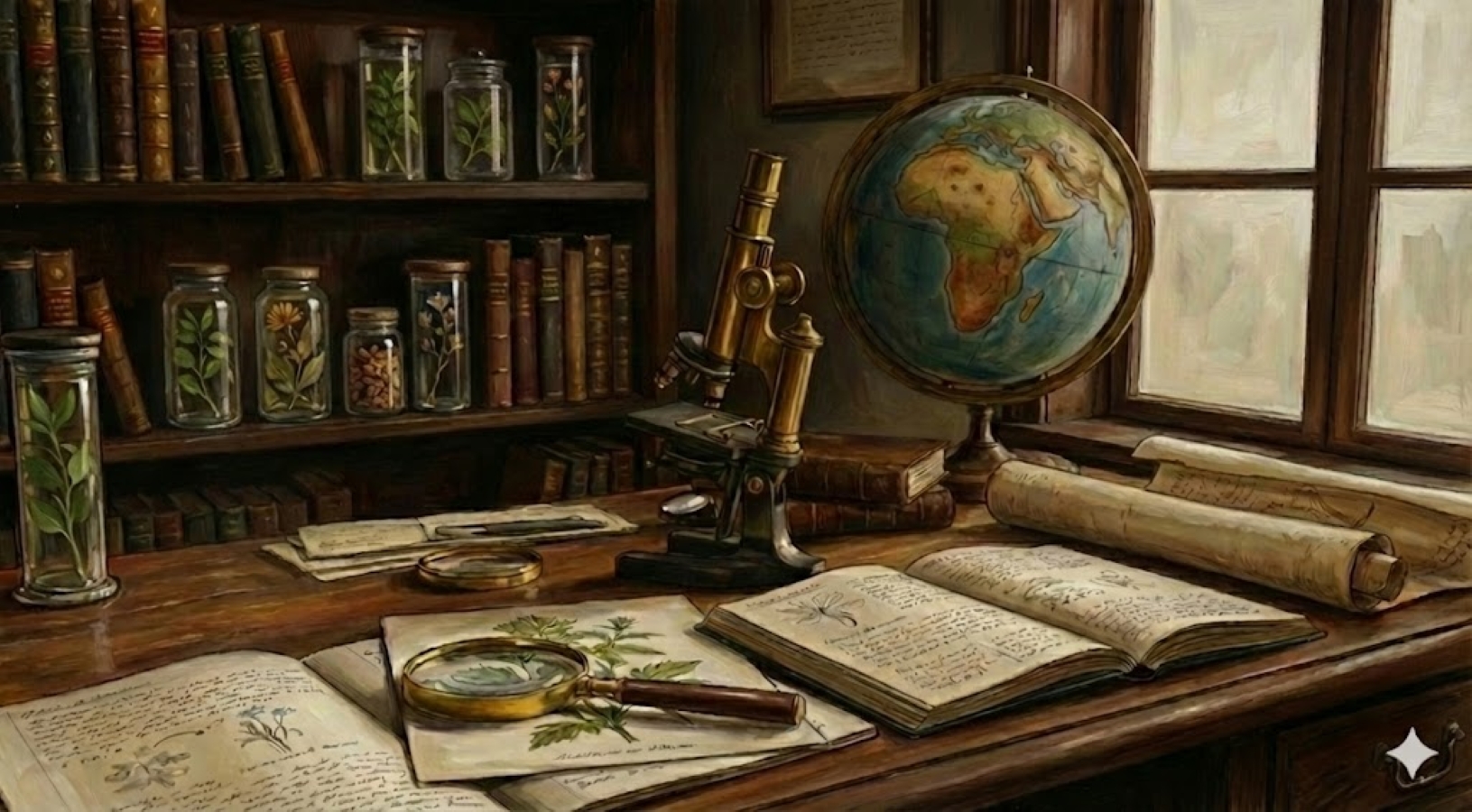
To Wonders Beyond Logic - The Beautiful Abyss Peered into by Scientists
Science is not just cold calculations. It is awe for nature beyond human understanding and an endless quest for beauty. Seeing the universe in a snowflake, feeling the ferocity of life in roadside grass... These are the adventurers of knowledge who confronted the overwhelming "mysteries" that appear only at the end of logic. We touch upon the records of their quiet yet passionate souls.
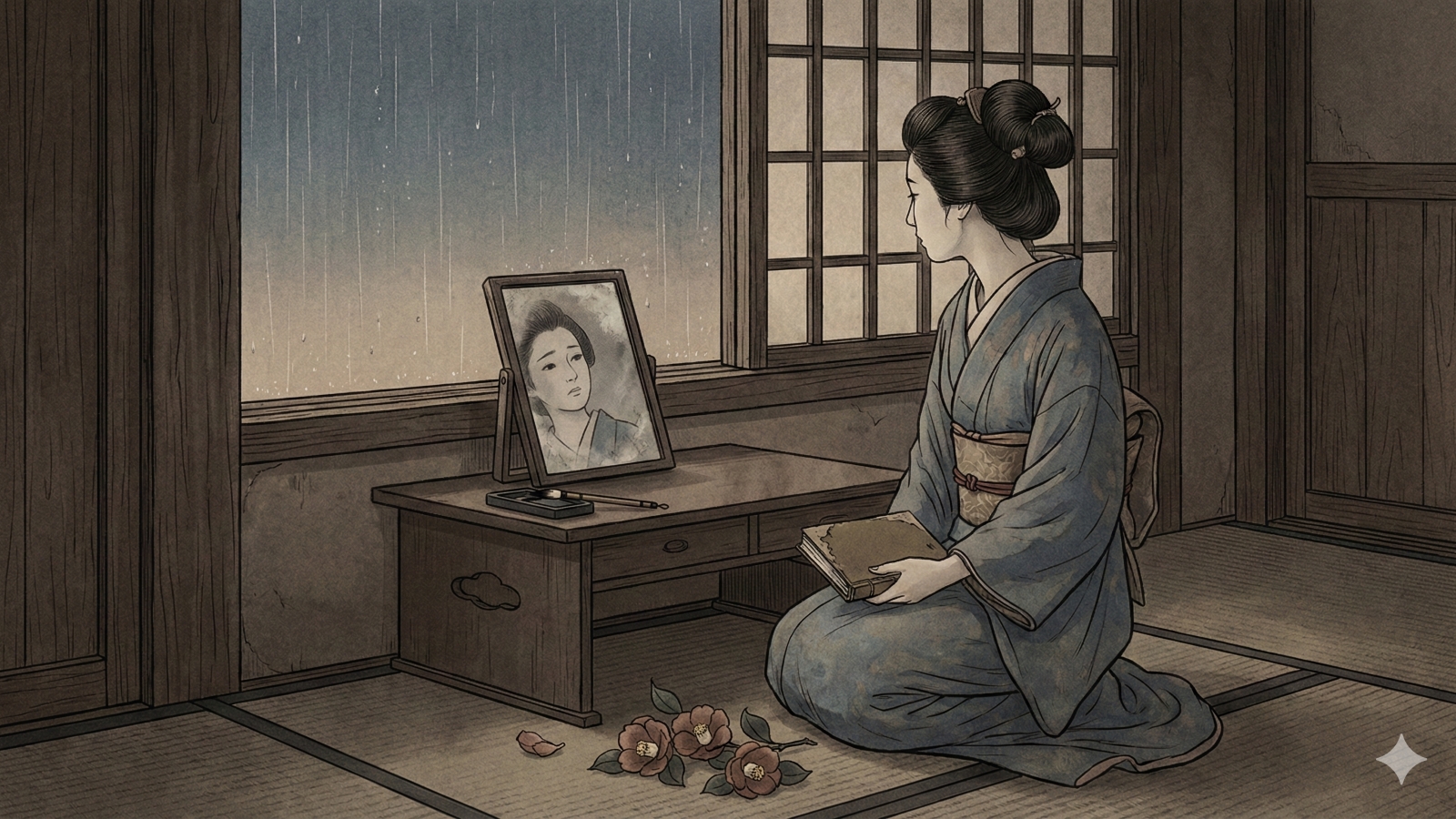
The Soul Screaming "I" - Stories of Fate and Pride by Modern Women
Should women's lives be plastered over with resignation to fate? Or is it a battle to break through social barriers and win one's own "life"? The dry self-mockery spat out by Ichiyō, the poignant scream released by Akiko for her beloved. We listen to the cries of their souls as they resisted the chains of their era, struggling through the mud to establish the "self."
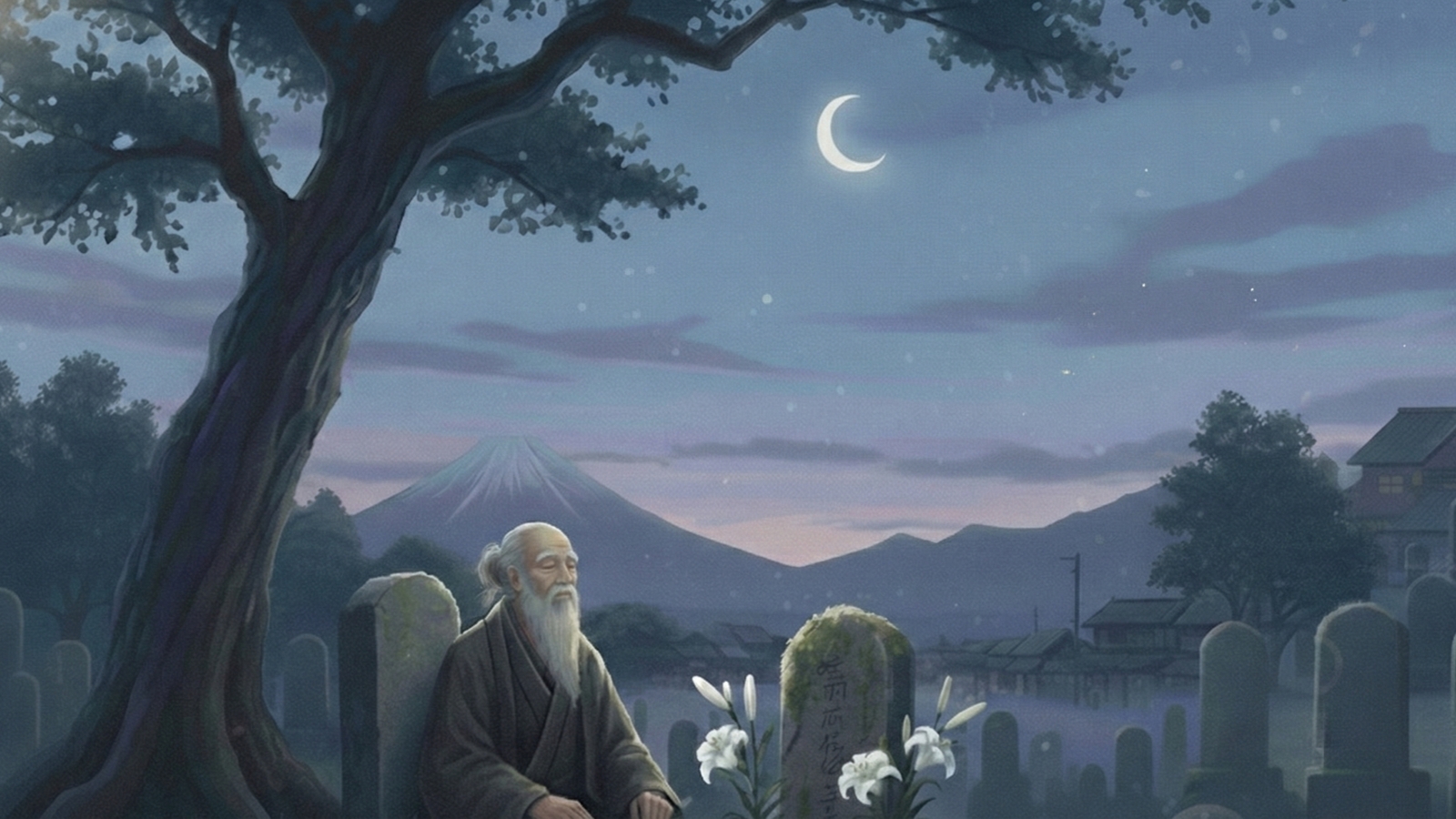
In Search of Unfading Illusions - Time and Memory Depicted by Great Writers
Memories—aren't they often more beautiful, and yet more cruel, than reality? The traces of a face in a photograph can be more vivid than the real thing, or love alone might remain even after a name is forgotten. Here, we depict "days gone by" that have crystallized within memory, transcending physical time. Why not take a peek into this world of lost time, which shines precisely because it can never return?