

In Search of Unfading Illusions - Time and Memory Depicted by Great Writers
Memories—aren't they often more beautiful, and yet more cruel, than reality? The traces of a face in a photograph can be more vivid than the real thing, or love alone might remain even after a name is forgotten. Here, we depict "days gone by" that have crystallized within memory, transcending physical time. Why not take a peek into this world of lost time, which shines precisely because it can never return?

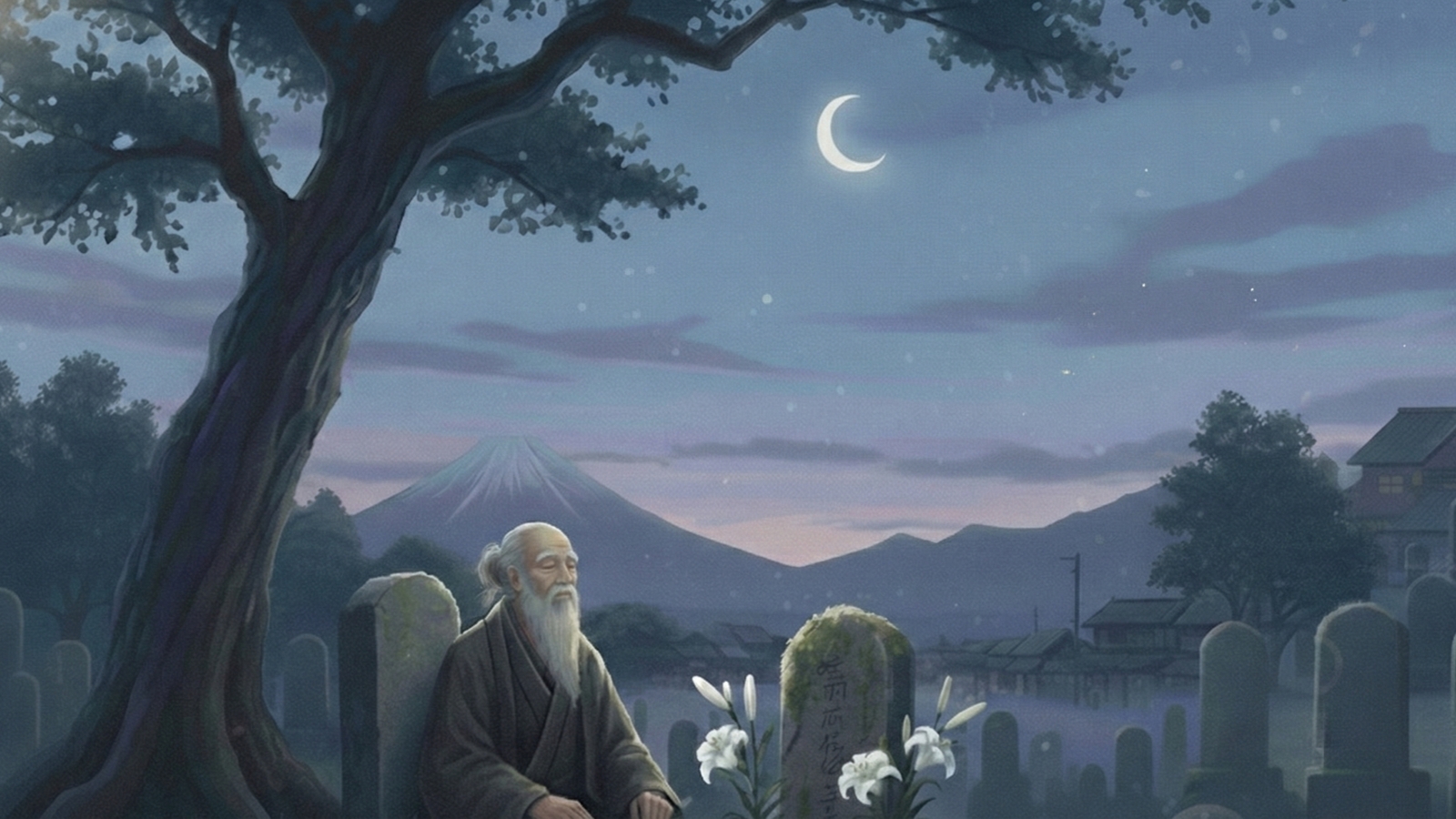
「『百年はもう来ていたんだな』とこの時始めて気がついた。」
“I realized then for the first time that the ‘hundred years’ had already come.”
—— Soseki Natsume, Ten Nights of Dreams [The First Night]
【Commentary】
A promised reunion might be fulfilled not by numbers on a calendar, but by an intuition that resonates with the soul. The man who waited “one hundred years” by the woman’s grave had seen off countless sunrises and sunsets, eventually losing his sense of time. However, the moment the white lily opened and he touched its scent and dew, he realized the fulfillment of the “hundred years” as a conviction transcending logical calculation. Time here is depicted not as a physical length, but as an emotional cycle until the soul of the loved one returns. It is a beautiful conclusion where memory and promise sublimate linear time into a circular eternity.
「百年、私の墓の傍に坐って待っていて下さい。きっと逢いに来ますから」
“Please sit by my grave and wait for one hundred years. I will surely come to meet you.”
—— Soseki Natsume, Ten Nights of Dreams [The First Night / The Woman]
【Commentary】
The words of a person facing death can sometimes become a spell that binds the time of those left in this world forever. What the woman, quietly accepting death, entrusted to the man was the overwhelming wait of “one hundred years.” These words possess the power to transform the parting of death from an eternal severance into a long run-up to a reunion. By accepting these words, the man deviates from the normal flow of time, becoming an existence defined solely by the act of “waiting.” It is a fantastic and powerful vow of love where words define the future and tether the time of two people together as a promise transcending death.
「ついに明治の木にはとうてい仁王は埋っていないものだと悟った。」
“I finally realized that Nio guardians were simply not buried in the wood of the Meiji era.”
—— Soseki Natsume, Ten Nights of Dreams [The Sixth Night]
【Commentary】
Does this sentence not contain the resignation that when the era changes, the spirit and forms that should exist there are also lost? The narrator, seeing Unkei carve a Nio guardian out of wood, attempts to do the same, but cannot find a Nio in the wood of the Meiji era. This is not merely a story about sculpting skills, but a lament for the ancient spirituality lost by the modern era and the loss of pure immersion where one becomes one with the object. The phrase “wood of the Meiji era” symbolizes irreversible change caused by time and the lonely recognition of modern people that they can no longer return to the ideals of the past.
「いまでも私の
“Even now, they come back to life vividly within me—yet for that very reason, drifting further away from the real people they were.”
—— Tatsuo Hori, Childhood
【Commentary】
Is it true that the more vivid a face in memory becomes, the further it drifts from the person in reality? The author speaks of the paradox where, gazing at photos from his childhood, the figures of his parents are purified in memory, thereby losing their sense of reality. Photographs freeze time, but they are merely “images” separated from real humans who live and change. An image burned too clearly into the mind leaves behind the warmth of living flesh, remaining in the heart as a beautiful yet lonely illusion. It is in this subtle gap between memory and reality that the sweet pain of reminiscence lies.
「記憶喪失トイッテモ思イ出セナイノハ主トシテ人名ヤ地名デアッテ、事柄ヲ忘レテイルノデハナイ。」
“Even with memory loss, what I cannot recall are mainly names of people and places; it is not that I have forgotten the events themselves.”
—— Junichiro Tanizaki, The Key
【Commentary】
Is losing words synonymous with losing oneself? The protagonist, a professor, is frightened by signs of aging where proper nouns fail to come to mind at random moments. However, what is interesting is that he remembers the “events” themselves clearly. The fact that relationships and facts remain even when the labels called names peel away highlights the mysterious structure of human memory. When facing the divergence of words and memory, one tastes both the fear of one’s reason crumbling and the tenacity of the remaining “consciousness” simultaneously.
「一生のうちにたのしいおりというものはそうたくさんはないものだね」
“There are not so many happy occasions in a lifetime, are there?”
—— Junichiro Tanizaki, A Blind Man’s Tale [Oichi no Kata]
【Commentary】
Is happiness something whose outline is only defined after it has passed? These words, leaked by Oichi no Kata as she looks back on her few peaceful days while being tossed about by the rough waves of the Warring States period, are filled with poignant realization. The “happy occasions” that shine like gems in memory hold eternal value precisely because of their brevity and fragility. The sadness of finding peace only in the recollection of the past, rather than in hope for the future, is spoken with quiet resignation.
「時間も、世の中も、何も彼も忘れて、私の世界にはただ永久にいとしい光子さんいう人があるばっかり。」
“Forgetting time, the world, and everything else, my world consists solely of my beloved Mitsuko, forever.”
—— Junichiro Tanizaki, Quicksand (Manji) [Sonoko]
【Commentary】
When love reaches its zenith, does the world shrink into a sealed room for just two people? Hidden in the grass of Mount Wakakusa, the two are completely cut off from social time and the gaze of the world, sharing a moment that feels like eternity. “Forgetting” here is not the loss of memory, but the active act of pushing everything other than the beloved object out of consciousness. That intoxication, as if time has stopped, emits a radiance that is too pure and dangerous within a story heading toward ruin.
「小学の放課の鐘の、あの黄ばんだ時刻を憶ひ出すとして、タダ物だと思ひきれるか?」
“When you recall that yellowed time of the bell after elementary school, can you dismiss it as something trivial?”
—— Chuya Nakahara, Me Voilà
【Commentary】
How much meaning is there in a life that can be fully explained by logic and reason? The poet asks if the sound of the bell echoing in the school at dusk, or the “yellowed” sensation evoked by that scene—memories accompanied by such qualia (sensory qualities)—are not the very proof that we lived. Memories of “insignificant time” that settle deep in the soul, beyond social status or practical value. If these serve as a cane for the heart at the moment of death, perhaps we live not for logical “meanings,” but for these lovable, “meaningless” memories.
「丈夫な扉の向ふに、古い日は放心してゐる。」
“Behind the sturdy door, the old days are lost in a daze.”
—— Chuya Nakahara, Songs of Days Past, “Cold Night”
【Commentary】
Is the past not time that has gone by, but a space locked in a closed room? In this verse, the “old days” that have passed are personified, depicted as standing absent-mindedly behind a door. The quiet image of time within memory not being dead, but simply existing there “in a daze,” softens the pain of recollection while highlighting the sense of isolation that can never be breached again. The sadness smoldering in the heart and the physically blocked landscape of the past—this contrast seems to seep into the reader’s chest along with the chill of a winter night.
「あゝ、『あの時』はあゝして過ぎつゝあつた!碧い、噴き出す蒸気のやうに。」
“Ah, ‘that time’ was passing by just like that! Like blue, gushing steam.”
—— Chuya Nakahara, Songs of Days Past, “Blue Eyes”
【Commentary】
Why is passing time colored so vividly? The poet captures the way the irrevocable “that time” vanishes using the visual and dynamic image of “blue, gushing steam.” Like steam that slips through your fingers when you try to grasp it, time diffuses into the sky while retaining the heat of the moment, never to condense again. Condensed here is the fragility and beauty of the very moment the present transforms into the past, before it is fixed as memory, evoking a strong sense of loss in the reader.
(Editorial Cooperation: Haruna Ishita, Momona Sassa)
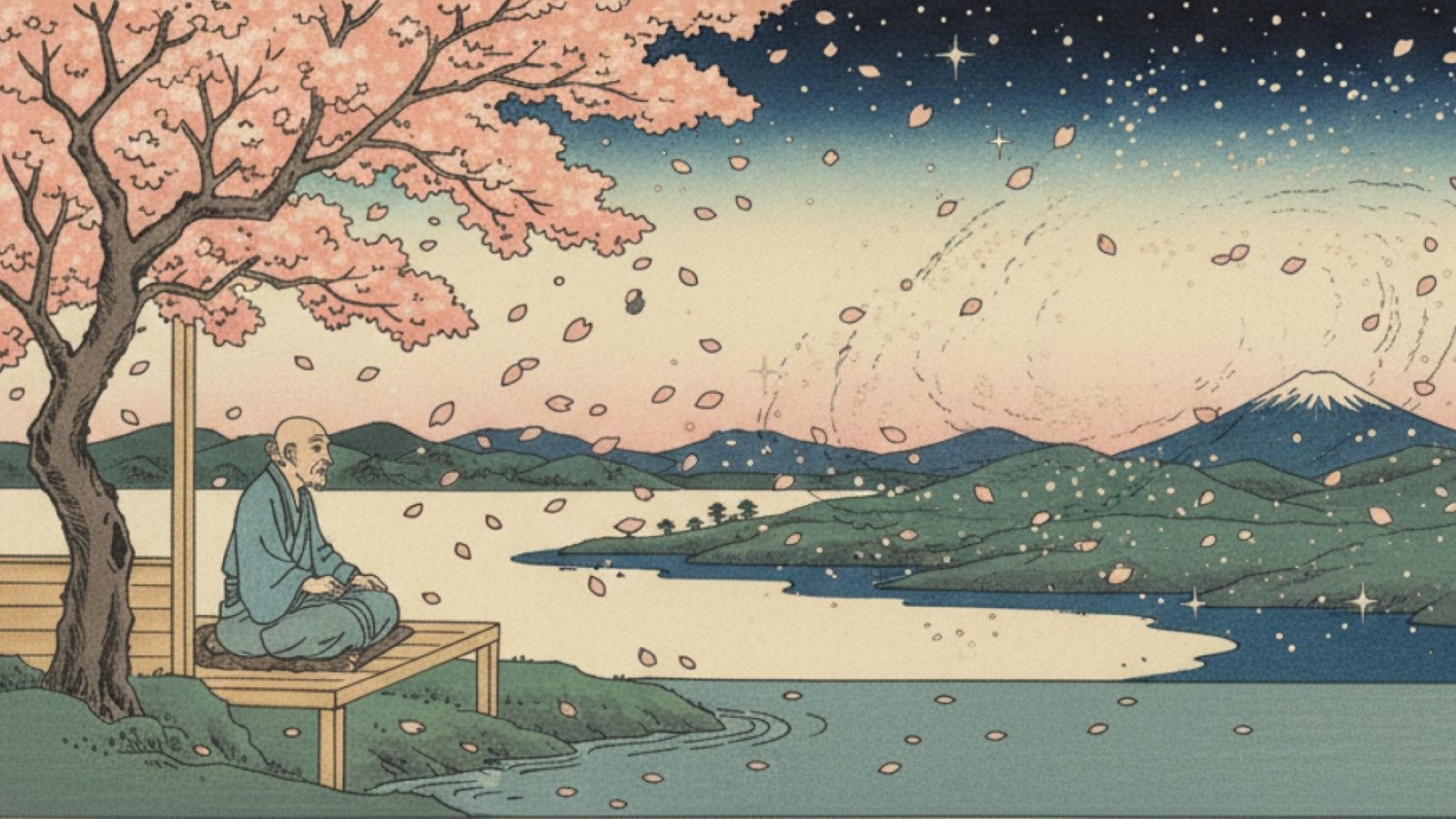
Japanese Views on Seasons - The Gaze of Literary Figures
Japanese literary figures have deeply engaged with the shifting seasons and the workings of life through various forms of expression such as novels and essays. Their delicate sensibilities and keen powers of observation open the door to a dialogue with nature for us, teaching us the beauty and philosophy hidden within everyday landscapes.
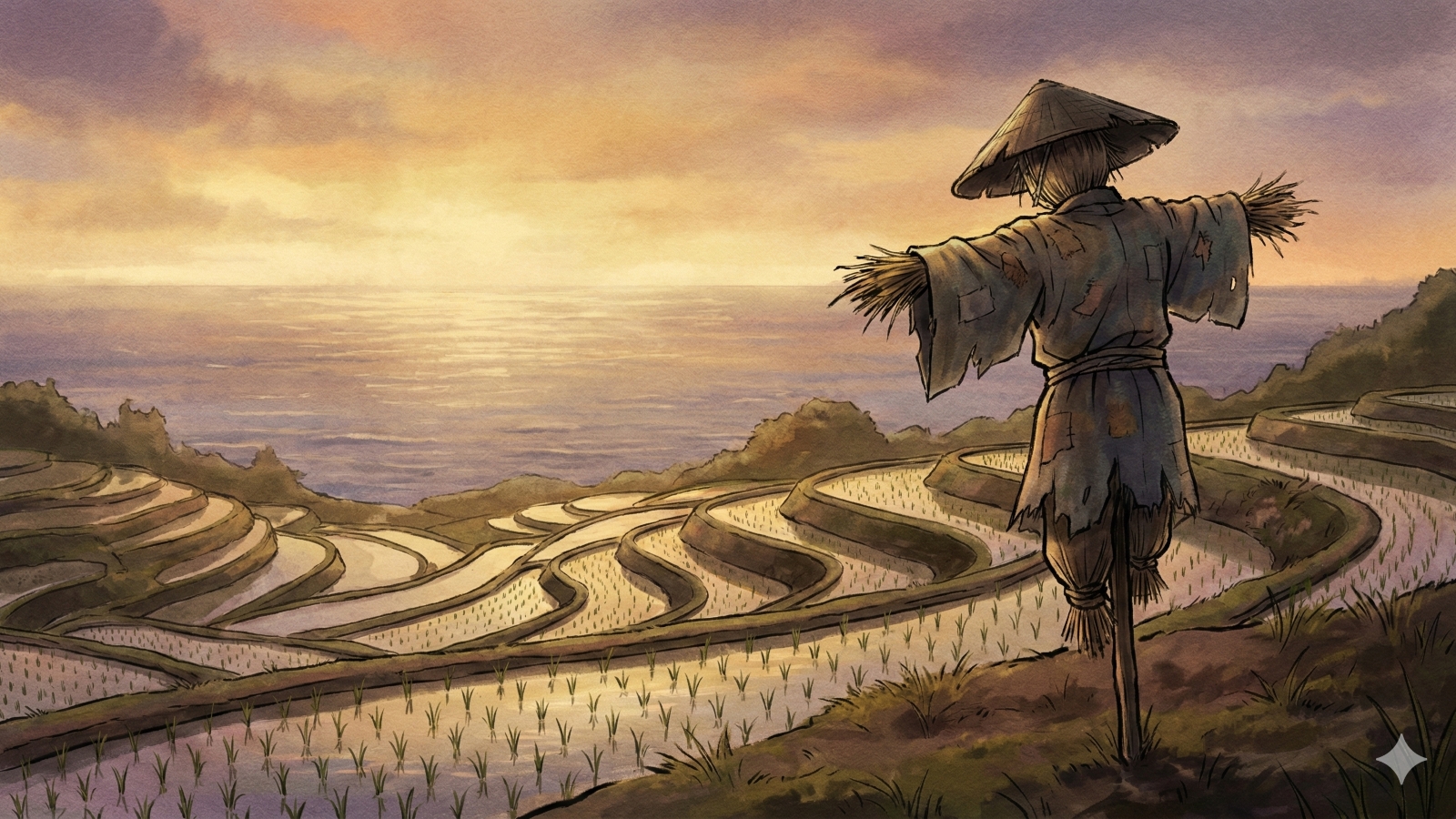
Japan's Primal Landscapes - A Tale of Memories Told by the Land
Superimposing the deceased onto the buzzing of flies, seeing gods in one-legged scarecrows. For Japanese people, these mysterious stories were not fantasy, but "life" itself, right next door. Longing for lands beyond the sea, legends remaining in ancient mounds. Why not travel through the frightening yet gentle "primal landscapes of the heart" gathered by Kunio Yanagita, Lafcadio Hearn, and others?

To Wonders Beyond Logic - The Beautiful Abyss Peered into by Scientists
Science is not just cold calculations. It is awe for nature beyond human understanding and an endless quest for beauty. Seeing the universe in a snowflake, feeling the ferocity of life in roadside grass... These are the adventurers of knowledge who confronted the overwhelming "mysteries" that appear only at the end of logic. We touch upon the records of their quiet yet passionate souls.
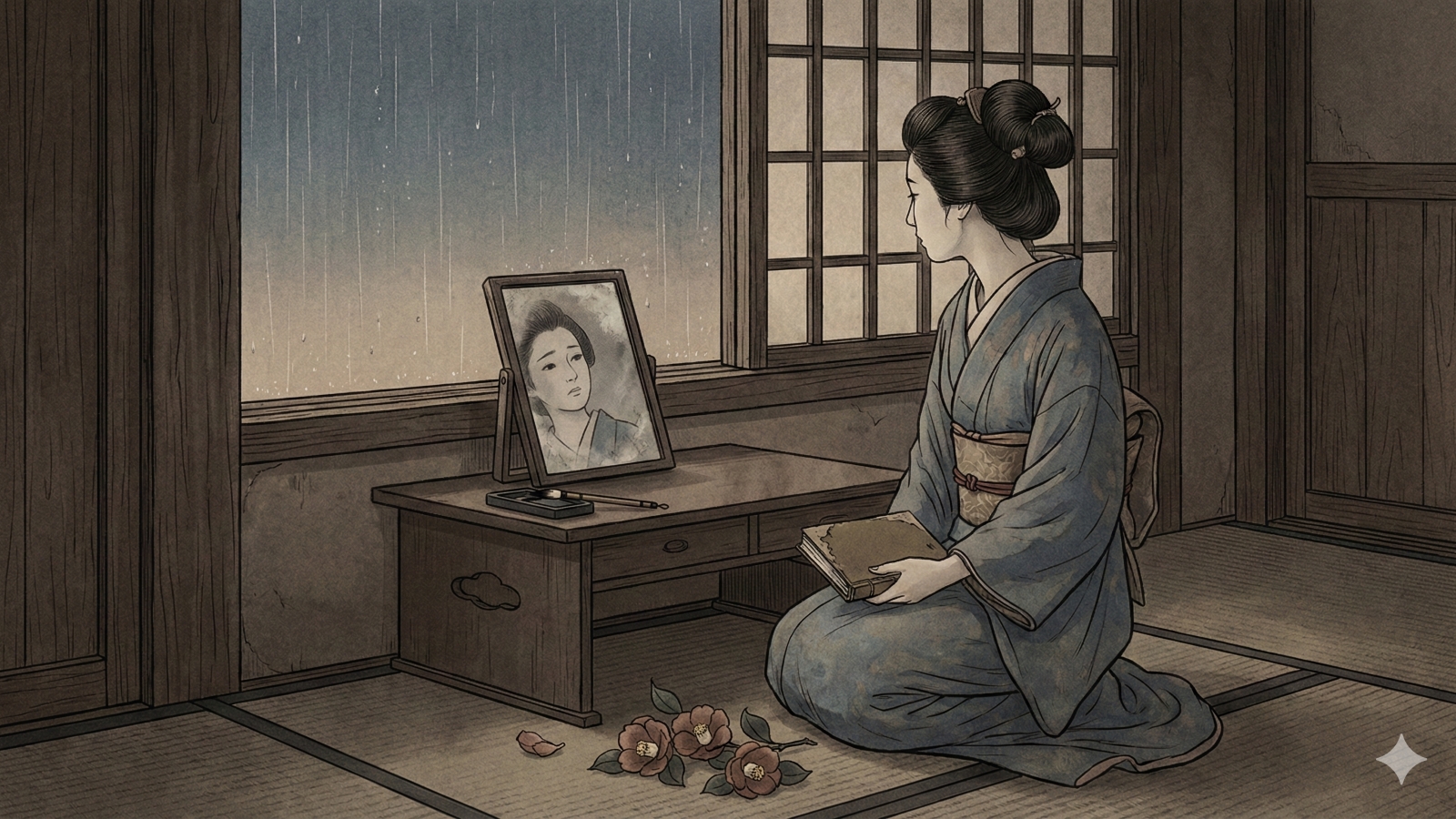
The Soul Screaming "I" - Stories of Fate and Pride by Modern Women
Should women's lives be plastered over with resignation to fate? Or is it a battle to break through social barriers and win one's own "life"? The dry self-mockery spat out by Ichiyō, the poignant scream released by Akiko for her beloved. We listen to the cries of their souls as they resisted the chains of their era, struggling through the mud to establish the "self."