

The Soul Screaming "I" - Stories of Fate and Pride by Modern Women
Should women's lives be plastered over with resignation to fate? Or is it a battle to break through social barriers and win one's own "life"? The dry self-mockery spat out by Ichiyō, the poignant scream released by Akiko for her beloved. We listen to the cries of their souls as they resisted the chains of their era, struggling through the mud to establish the "self."

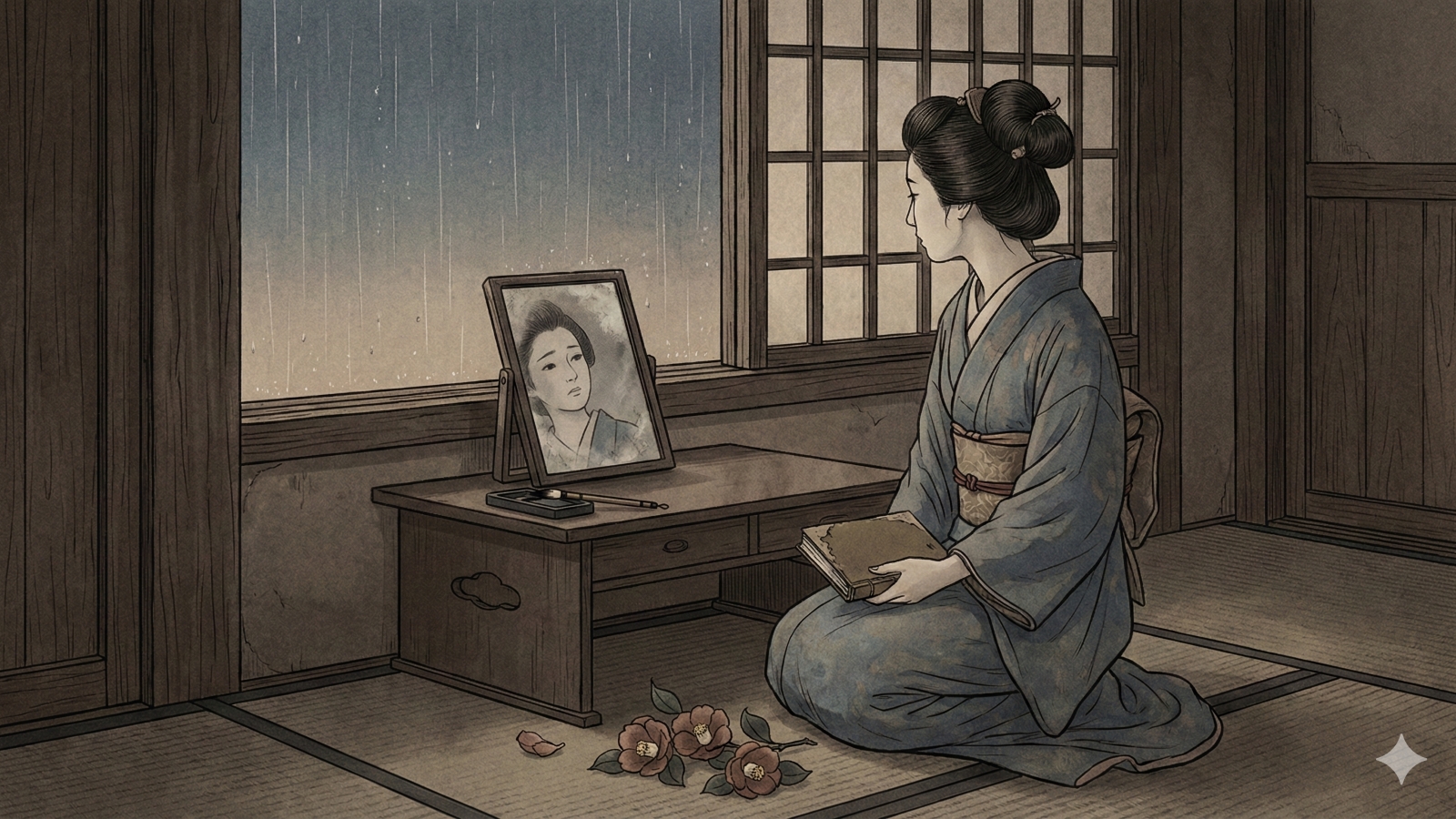
「私しのやうな運の惡るい者には呪も何も聞きはしない」
“For someone with bad luck like me, curses and the like won’t have any effect.”
—— Higuchi Ichiyō, Nigorie [1]
【Commentary】
Is there a self that is barely maintained by deciding one is “unlucky”? This is a line that O-Riki, a barmaid, spits out self-mockingly to a colleague. The resignation and emptiness hidden beneath her flashy makeup are condensed into this short phrase. This attitude, which refuses even to hold onto hope, sounds like the dry scream of a woman forced to accept a harsh reality.
「相手はいくらもあれども一生を頼む人が無いのでござんす」
“Though there are plenty of partners, there is no one to rely on for a lifetime.”
—— Higuchi Ichiyō, Nigorie [1]
【Commentary】
Surrounded by so many men, why is the heart so cold? This is the honest truth O-Riki leaks to a customer. While blowing smoke with a flirtatious attitude, the sorrow of a courtesan whose soul’s loneliness is not healed in the slightest drifts through. A desperate craving for true love or a place of peace is hidden at the bottom of that voice, settling heavily in the listener’s heart.
「あなたの爲の藝術でもなければあなたの爲の仕事でもないんですから。私の藝術なんですから。」
“It is neither art for your sake nor work for your sake. It is my art.”
—— Tamura Toshiko, The Mummy’s Lipstick [Minoru]
【Commentary】
There is a resonance here that flatly refuses to live a life for someone else. Minoru, the protagonist who feels stuck as a writer and decides to become an actress, says this to her husband Yoshio, who sneers that she is “too old.” It reveals a strong pride in trying to become independent as an expressive artist, rather than settling for being a wife as an appendage or an existence merely supported in daily life. In Meiji and Taisho literature, a voice asserting the rights of a woman as an “individual” this vividly is rare. Her scream, trying to stand on her own feet even if covered in mud, resisting the framework of society and family, should pierce the hearts of us living today.
「どんなところにも言葉というものは不自由はないものです。」
“No matter the place, there is no lack of freedom in words.”
—— Yanagiwara Byakuren, My Memories
【Commentary】
Do people find loopholes in words the more they are in a place bound by formalities? This is a passage where the author, raised as a daughter of a court noble, found the toughness of women speaking abusive language elegantly even within the strict etiquette of court language. No matter how stiff the rules, human emotions and the desire for expression cannot be completely contained. From the figures of court women manipulating words flexibly, one can feel the wisdom to survive within constraints and the depth of culture.
「ふしぎに、魂は年とともに、いきいきと、若く新しく育ってゆくような気がします。」
“Strangely, I feel that the soul grows lively, young, and new with age.”
—— Yanagiwara Byakuren, My Memories
【Commentary】
Is aging not loss, but the liberation of the spirit? This is the state of mind Byakuren reached in her later years after a fierce fate involving a loveless marriage, an elopement that turned society against her, and the death of her beloved son in war. It is the realization that even if the body decays, the soul that has overcome hardships increases in purity and regenerates freshly. Her radiant voice, released from social labels and “woman’s fate,” lights a lamp of hope for growing older.
「私は私自身、そのためのけし粒のような小さい種であってほしいとの念願に今日も生きています。」
“I live today with the prayer that I myself may be a tiny seed, like a poppy seed, for that purpose.”
—— Yanagiwara Byakuren, My Memories
【Commentary】
Does the prayer for peace begin with sowing small seeds? These are words spoken humbly by Byakuren, who threw herself into the peace movement as a “sorrowful mother” following her son’s death in war. In the great swell of history, individual power may seem insignificant. However, by defining herself as a “poppy seed,” she tried to connect sincere prayers as a human being—not fame or status—to the next generation. That quiet determination strikes the heart.
「わたしには此夜中に、じつと耳を澄まして聞かねばならぬ声がある……」
“In this dead of night, there is a voice I must strain my ears to hear…”
—— Yosano Akiko, Complete Poetical Works of Akiko
【Commentary】
There must be a truth that only the silence of the night brings after the hustle and bustle of midday has passed. Rejecting the noise of the world (the accordion), the poet concentrates all her nerves on the faint voice that can only be heard in the lonely night. It is likely something like a beautiful, fleeting revelation compared to “distant starlight” or “a strand of golden hair.” This verse teaches us that there is a “voice” that can only be touched by not fearing solitude, but rather immersing oneself in its abyss.
「あゝをとうとよ、君を泣く、君死にたまふことなかれ」
“Ah, brother, I weep for you; you must not die.”
—— Yosano Akiko, Koigoromo
【Commentary】
Is there any other cry of love so direct and so poignant? When the cause of the nation or the logic of the “family” tries to treat individual life lightly, the poet resists it by baring her affection as an older sister. It is not a political slogan, but the uncontrollable wailing of a soul as a warm-blooded human being. The universal “voice of women” wishing for the safety of loved ones, transcending times and positions, is condensed here.
「『婦人運動に理想あれ』という希望の言葉を以ってこの感想を結びます。」
“I conclude these thoughts with the hopeful words: ‘Let there be ideals in the women’s movement.’”
—— Yosano Akiko, Protest to Women Leaders
【Commentary】
Is criticism not mere denial, but a prayer to lead to a higher place? Concerned that the women’s movement of the time was ending in formal activities, Akiko presents this word at the end while offering severe advice to her seniors. It is also a passionate cheer that women should be existences that yearn for true culture and freedom, transcending immediate interests. The preciousness of continuing to hold up ideals is included in this powerful concluding phrase.
「ああ、どなたでも教へて下さい、わたしの大事な貴い声の在処を。」
“Ah, someone, anyone, please tell me the whereabouts of my precious, noble voice.”
—— Yosano Akiko, Complete Poetical Works of Akiko
【Commentary】
Do you ever lose sight of your own voice in the crowd? The “crystalline thin voice” that was drowned out by the noisy tone of the accordion and fled somewhere. It is the very resonance of the pure soul we originally possess, which tends to be buried in the noise of society and the expectations of others. The author is impatient with that loss and tries to run toward the darkness. This earnest question should sound like a prayer for us living today to regain “my voice” that is not borrowed.
(Editing cooperation: Haruna Ishita, Momona Sassa)
```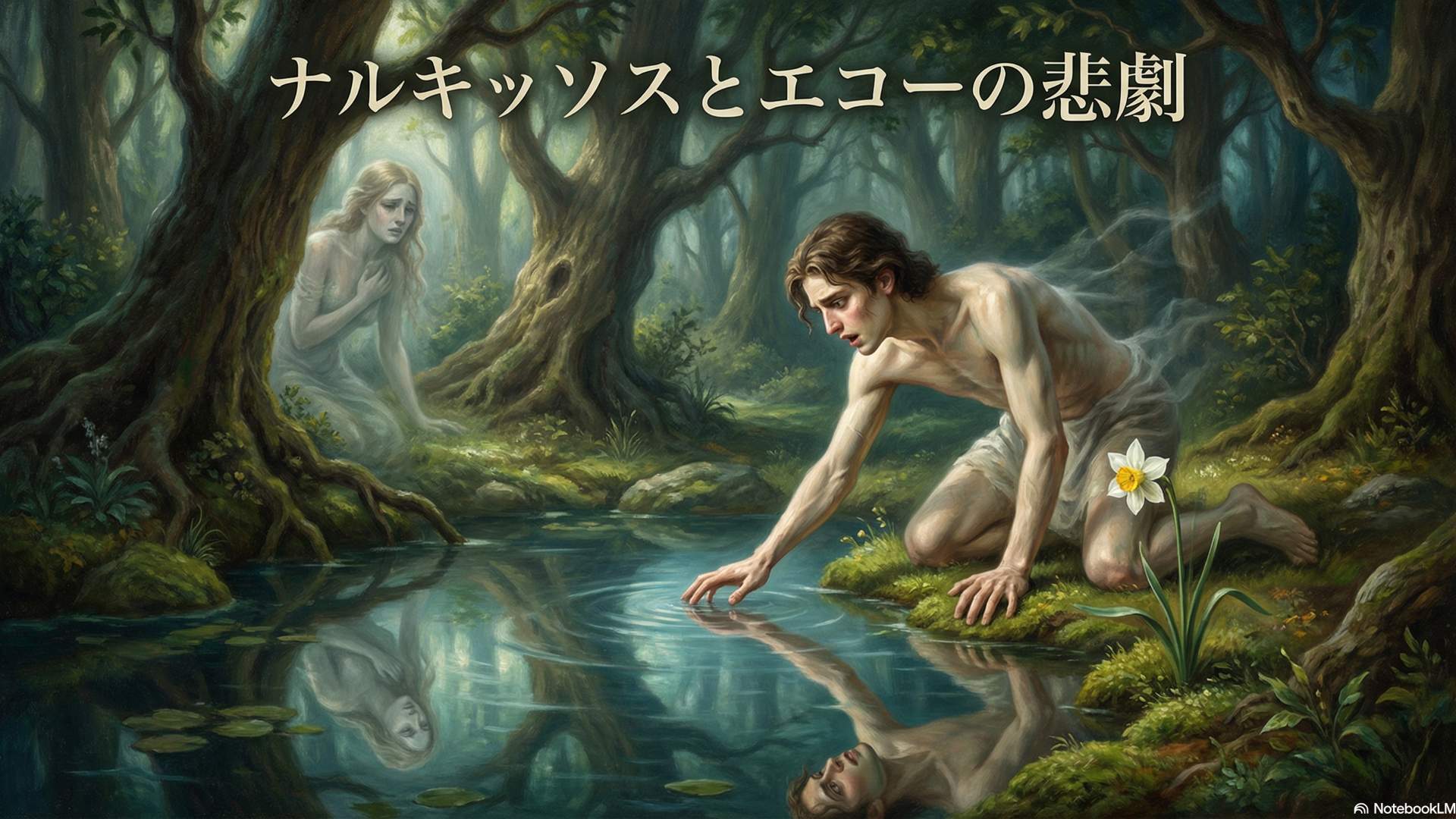
Resonating Solitude and the Curse of the Water-Mirror: The Tragedy of Narcissus and Echo
A tale of unrequited love and self-love depicted by the ancient Roman poet Ovid. We unravel the fates of Echo, the nymph who possessed only a voice, and Narcissus, the beautiful youth imprisoned by his own image, through the original Latin text.
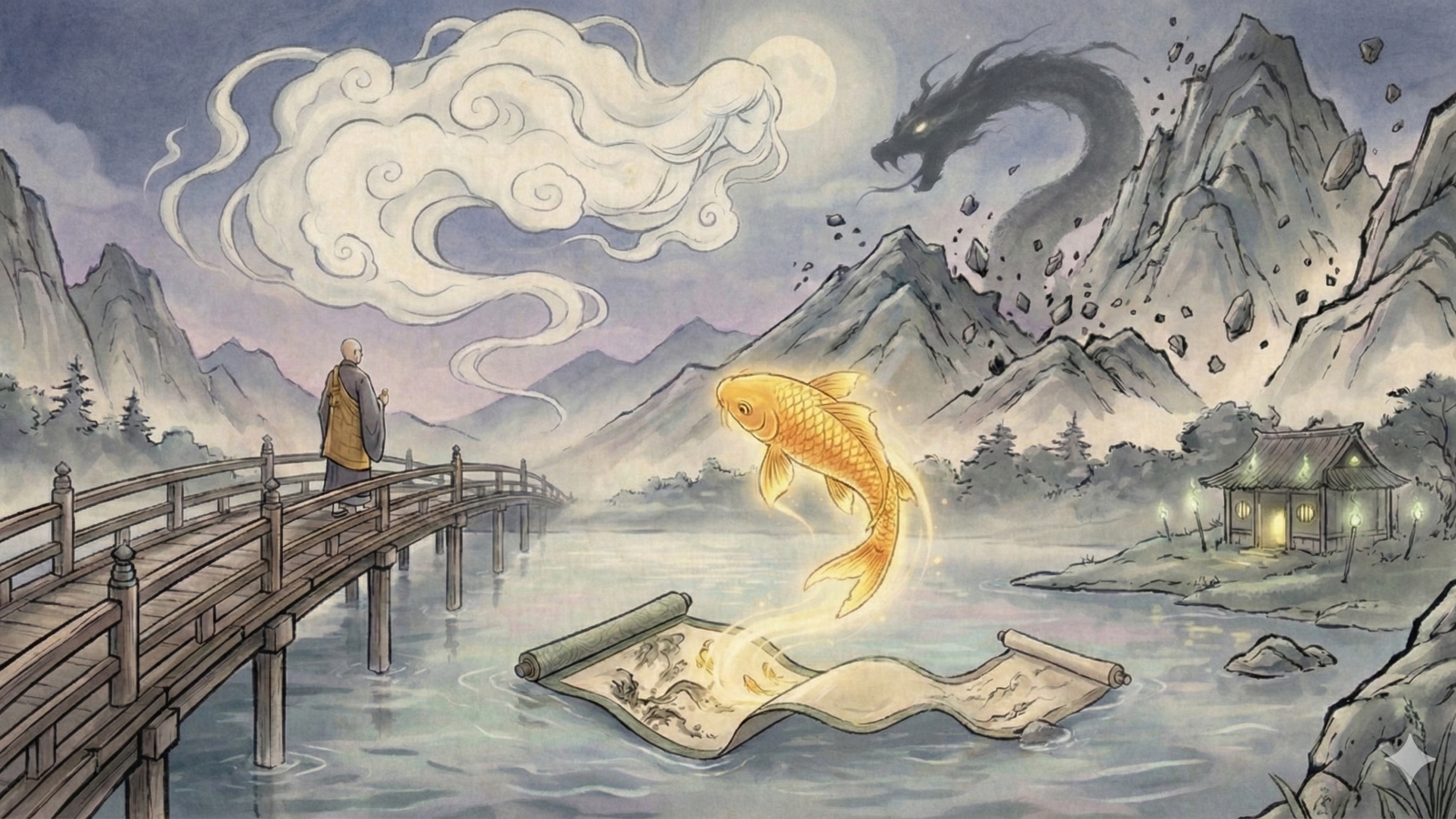
Beautiful Strangeness - Swimming in the Space Between Dream and Reality
Once, the darkness of night was an entrance to the "otherworld" that led people astray. Ueda Akinari, Lafcadio Hearn (Koizumi Yakumo), and Izumi Kyoka. These three literary masters depict a mysterious world where dreams and reality, terror and beauty, melt ambiguously together. Golden scales shimmering at the bottom of the water, white breath in the snow, the presence of beasts separated by a single wooden door... We invite you to a world of beautiful strangeness peeking through the cracks of everyday life.

Laughing Askance at the World - Thrilling Irony Learned from Masterpieces
Is the common sense we believe in truly unquestionable? Here lies a collection of "traps of words that brilliantly betray common sense" set by literary giants. The refreshing quality of "enthusiastically being absent" or the paradox of overcoming temptation by "yielding" to it. These are not mere pranks, but sharp blades striking at society's contradictions. Welcome to a world of laughter filled with poison and intellect that pierces the truth deeper than sound arguments.

Madness Mocking Reason - The Aesthetics of "Collapse" Projected by Two Geniuses
Can you say with certainty that this world is not merely someone else's dream? Yumeno Kyusaku and Edogawa Ranpo. These two geniuses vividly destroy the "reality" we believe in. Nightmares that cover the world, empty realities, artificial beauty blooming with poisonous vibrancy... The world you trusted crumbles noisily away. Why not experience that shudder, akin to vertigo, for yourself?