

Laughing Askance at the World - Thrilling Irony Learned from Masterpieces
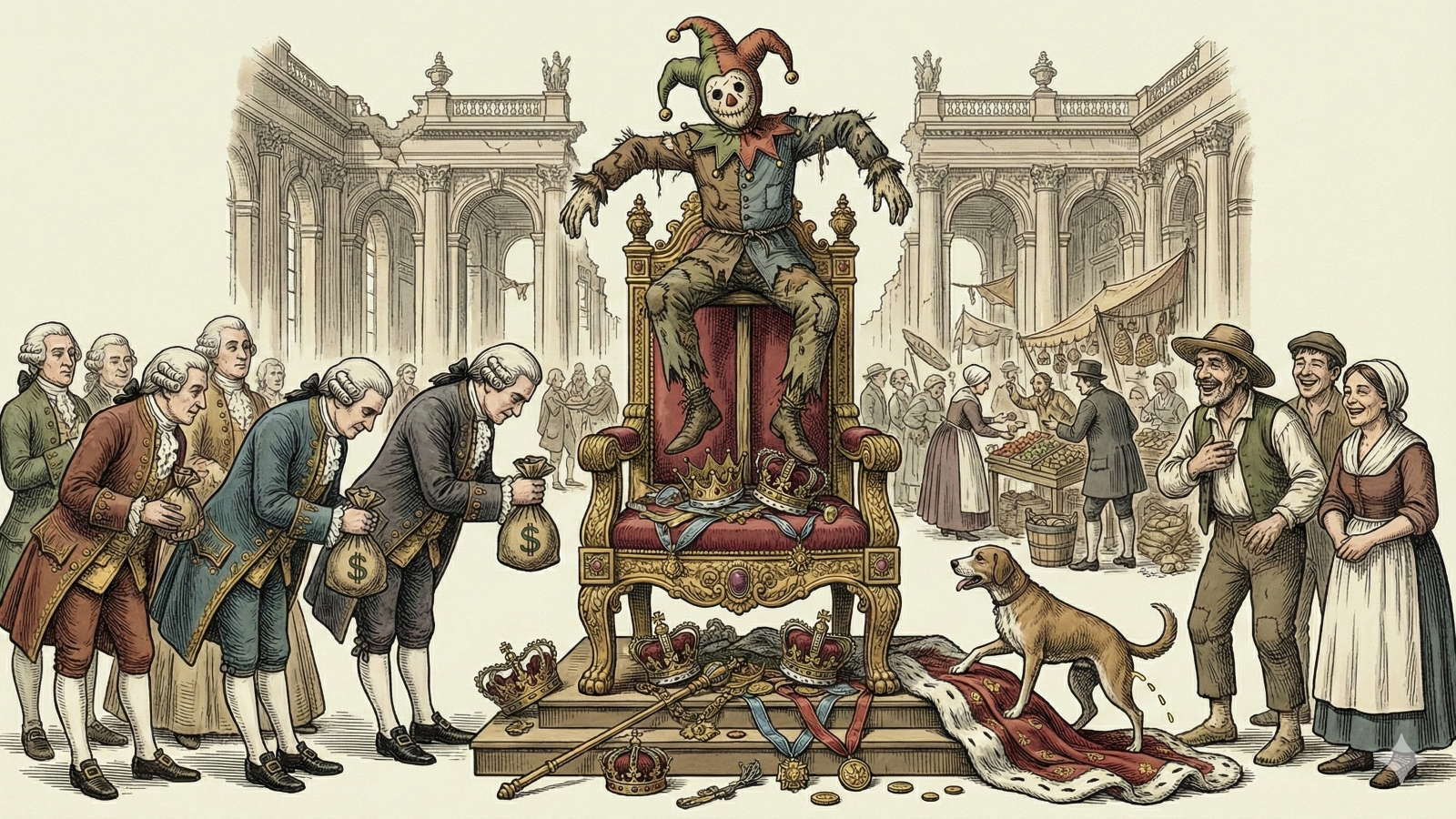
Is the common sense we believe in truly unquestionable? Here lies a collection of "traps of words that brilliantly betray common sense" set by literary giants. The refreshing quality of "enthusiastically being absent" or the paradox of overcoming temptation by "yielding" to it. These are not mere pranks, but sharp blades striking at society's contradictions. Welcome to a world of laughter filled with poison and intellect that pierces the truth deeper than sound arguments.

「おれは奮って欠席だ」
“I shall enthusiastically be absent.”
—— Kuni Sasaki, Struggling Schoolmates [Horiguchi]
【Commentary】
Is there any phrasing more refreshing and ironic when declining an unwelcome invitation? Facing the cliché “Please enthusiastically attend” written on the class reunion notice, the contrarian boy Horiguchi turns the positive word “enthusiastically” against them to express his determination to refuse with all his might. The linguistic sense to link an adverb usually indicating eagerness to participate with a resolve for non-participation shines with childish rebellious spirit and humor. It is a thrilling piece of rhetoric to dodge peer pressure lightly and stick to one’s will—a phrase one wants to chant in one’s heart.
「乞食は食う為めと公言して食を乞うから、決して自己を欺かない」
“Beggars publicly declare they beg in order to eat, so they never deceive themselves.”
—— Kuni Sasaki, The Undefeated Man [Teacher Ando]
【Commentary】
When stripped of social status and honor, what is the most sincere profession? In response to Horio, who pointed out the self-deception of salarymen working reluctantly for a living, his mentor Teacher Ando paradoxically argues that “beggars” live the honest way. He exposes the hypocrisy of pretending to have loyalty to a company while saying one works to eat, using biting irony. By using an extreme analogy, this sharp passage of satire confronts us with the essential contradiction of “labor and life” from which we usually avert our eyes, prompting bitter laughter and contemplation in the reader.
「滑稽的美感を挑撥するのは面白い。」
“It is amusing to provoke a sense of comic aesthetic.”
—— Natsume Soseki, I Am a Cat [Meitei]
【Commentary】
They say lying is a means to an end, but nothing is as nasty or interesting as an intellectual lie. Meitei, posing as an aesthetician, justifies confusing those around him with fictitious stories not merely as a prank, but as a kind of aesthetic game. The attitude of enjoying the observation of people earnestly believing him is in bad taste, but it likely contains a critique of the credulity of people who “believe anything if it comes from an authority.” The ridiculousness of the deceived and the spitefulness of the deceiver create an intellectual laughter.
「偶には股倉からハムレットを見て、君こりゃ駄目だよくらいに云う者がないと、文界も進歩しないだろう。」
“Unless someone occasionally looks at Hamlet from between their legs and says, ‘My, this is no good,’ the literary world will make no progress.”
—— Natsume Soseki, I Am a Cat
【Commentary】
Even the world’s masterpieces might look like mere comedies if viewed upside down. The cat’s perspective, which relativizes even the authority of Shakespeare by peeking at it from “between the legs,” is a thrilling satire that awakens human eyes bound by fixed ideas. The teaching that different values become visible if the viewpoint is changed, no matter how great the subject, can be taken as a warning against blind worship. The discoveries gained only by overturning common sense may be the true source of humor.
「あんな主人を持っている猫だから、どうせ野良猫さ」
“Since it’s a cat owned by such a master, it must be a stray cat anyway.”
—— Natsume Soseki, I Am a Cat [Maid]
【Commentary】
Is a pet’s dignity determined by its owner, or does the owner’s reputation extend to the pet? The lament of “I” (the cat), treated as a “stray cat” because of the master’s eccentric behavior (gargling loudly), contains the truth of how unreasonable public reputation is and how it spreads like a word association game. The maid’s blunt assumption reflects the cruelty of the masses who evaluate others based on emotions and impressions rather than logic. Through the figure of the cat suffering collateral damage, it laughs away the selfish labeling done by humans.
「彼等は二人とも、生れながらの樂天家だつた。そして、世間に
“They were both optimists by nature. And they knew how to show a composed, good-humored face to the world.”
—— O. Henry, The Church with an Overshot-Wheel (Translated by Ikusaburo Miyake)
【Commentary】
Is optimism a talent one is born with, or a mask for navigating the world? The narrator describes the two as “optimists” while seeing through the fact that this is a social skill of “showing a good-humored face.” Here lies a gentle satire on the armor called “brightness” that adults acquire to conduct social life. The strength of humans to smile while harboring sadness exudes the idea that it is a kind of performance and, at the same time, courtesy toward others.
「人々はすぐに、「アグレイア」粉が、二つの
“People soon learned that ‘Aglaia’ flour had two prices. One was the highest price in the market, and the other was—the price of free.”
—— O. Henry, The Church with an Overshot-Wheel (Translated by Ikusaburo Miyake)
【Commentary】
Is the value of a product determined by market principles or human mercy? The flour sold by the successful miller had a dual price ignoring economic rationality: the highest price for the wealthy and free for the suffering. This system is a biting irony against capitalist society, which considers profit pursuit supreme, yet simultaneously a warm humor presenting the correct use of wealth. The anecdote that flour arrived at a disaster site before fire trucks eloquently tells the depth of his love.
「イギリスの国王でも、今の私と同じようなことになったら、やはり、これくらいの苦労はするだろう」
“Even the King of England, were he to find himself in my present situation, would likely undergo just as much hardship.”
—— Jonathan Swift, Gulliver’s Travels (Translated by Tamiki Hara) [Gulliver]
【Commentary】
When the robe of authority is stripped away, perhaps a king is no more than a single insect. Gulliver, having wandered into the land of giants, Brobdingnag, is exposed to public view as a spectacle, his pride shredded. This monologue is a consolation he concocted to maintain his self-esteem, but it also contains a perspective of relativization: “status and honor become meaningless depending on the environment.” The irony that even an absolute ruler becomes a mere toy if the scale changes is the very sharp gaze of Swift stripping away the vanity of class society. Readers end up laughing at the fragility of human society through Gulliver’s miserable figure.
「そのそばに近づくものは、誰でも脳味噌を叩き出されます。」
“Anyone who approaches near it has their brains dashed out.”
—— Jonathan Swift, Gulliver’s Travels (Translated by Tamiki Hara) [Gulliver]
【Commentary】
When speaking of cruel slaughter weapons as the pride of civilization, who is truly the barbarian? Gulliver proudly explains the power of gunpowder and cannons to the King of Giants as a “wonderful invention.” However, the cruelty of that description was enough to make the peace-loving King shudder and feel contempt. The expression “brains dashed out,” which Gulliver speaks of innocently, highlights the horror when scientific and technological progress is linked with a lack of ethics. Gulliver’s figure, priding himself on being from a highly civilized country while unaware of his own barbarism, can be called black humor foreseeing the divergence between modern military technology and ethics.
「誘惑に打ち勝つ唯一の方法は、それに従うことだ。」
“The only way to overcome a temptation is to yield to it.”
—— Oscar Wilde, The Picture of Dorian Gray (Translated by On Watanabe) [2 / Lord Henry]
【Commentary】
Does not the object remain in one’s mind all the more, the more one endures it? This is a famous line where the hedonist Lord Henry preaches his unique philosophy of life to the beautiful youth Dorian Gray. This paradox, asserting that “self-control,” generally considered a virtue, actually warps the soul, and that surrendering to desire is liberation, serves as a biting irony against the strict moral views of the time. It is a passage where Wilde’s characteristic intellectual humor, which brilliantly flips common sense, pleasantly shakes the reader’s ethical views.
(Editorial Cooperation: Haruna Ishita, Momona Sassa)

Japanese Views on Seasons - The Gaze of Literary Figures
Japanese literary figures have deeply engaged with the shifting seasons and the workings of life through various forms of expression such as novels and essays. Their delicate sensibilities and keen powers of observation open the door to a dialogue with nature for us, teaching us the beauty and philosophy hidden within everyday landscapes.

Japan's Primal Landscapes - A Tale of Memories Told by the Land
Superimposing the deceased onto the buzzing of flies, seeing gods in one-legged scarecrows. For Japanese people, these mysterious stories were not fantasy, but "life" itself, right next door. Longing for lands beyond the sea, legends remaining in ancient mounds. Why not travel through the frightening yet gentle "primal landscapes of the heart" gathered by Kunio Yanagita, Lafcadio Hearn, and others?

To Wonders Beyond Logic - The Beautiful Abyss Peered into by Scientists
Science is not just cold calculations. It is awe for nature beyond human understanding and an endless quest for beauty. Seeing the universe in a snowflake, feeling the ferocity of life in roadside grass... These are the adventurers of knowledge who confronted the overwhelming "mysteries" that appear only at the end of logic. We touch upon the records of their quiet yet passionate souls.

The Soul Screaming "I" - Stories of Fate and Pride by Modern Women
Should women's lives be plastered over with resignation to fate? Or is it a battle to break through social barriers and win one's own "life"? The dry self-mockery spat out by Ichiyō, the poignant scream released by Akiko for her beloved. We listen to the cries of their souls as they resisted the chains of their era, struggling through the mud to establish the "self."