

Resonating Solitude and the Curse of the Water-Mirror: The Tragedy of Narcissus and Echo
A tale of unrequited love and self-love depicted by the ancient Roman poet Ovid. We unravel the fates of Echo, the nymph who possessed only a voice, and Narcissus, the beautiful youth imprisoned by his own image, through the original Latin text.

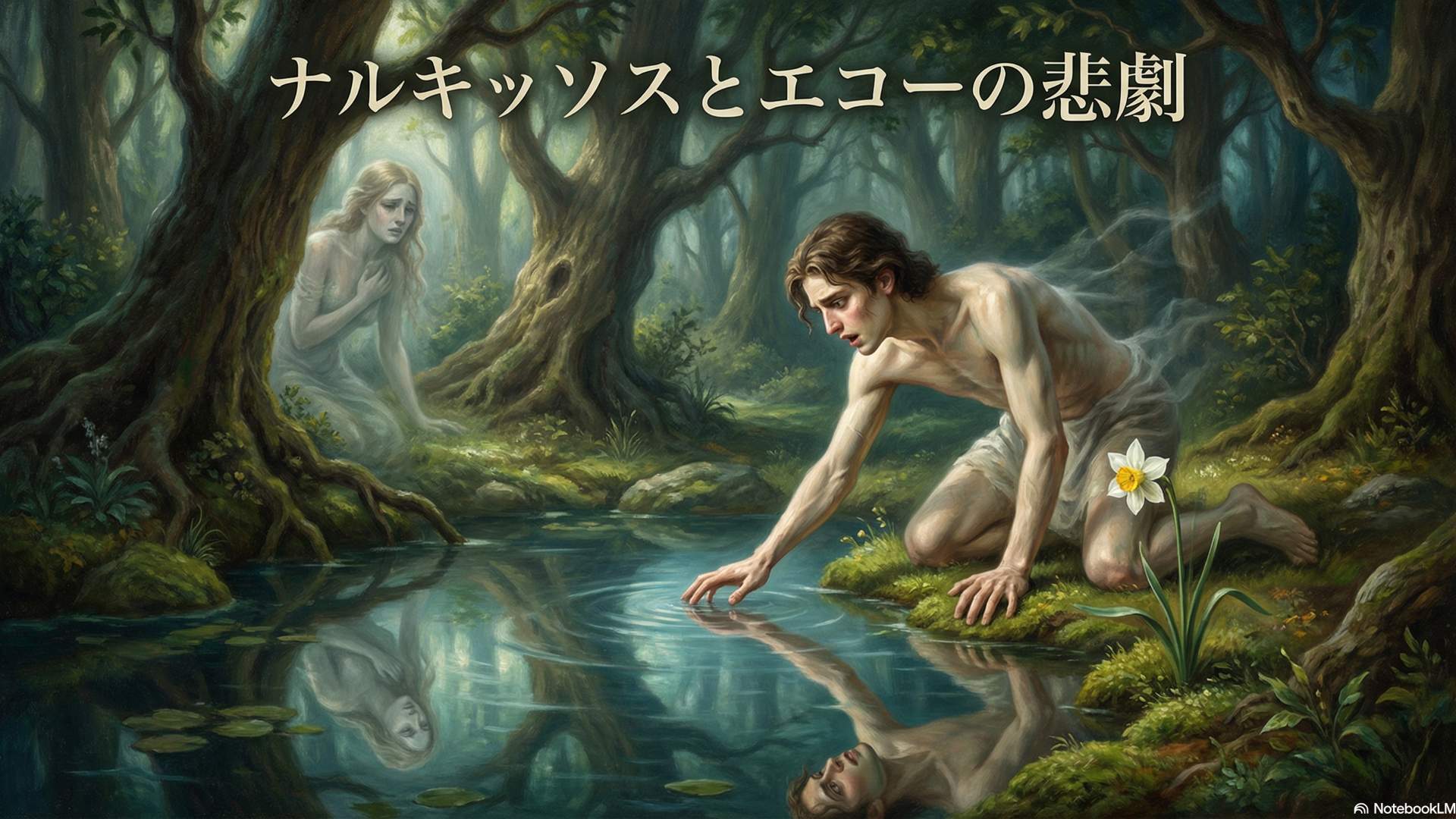
Resonating Solitude and the Curse of the Water-Mirror: The Tragedy of Narcissus and Echo
A maiden permitted only to repeat the words of others, never to speak first; and a boy who, accepting no one’s love, died longing for his own reflection in the water. Among ancient myths, the story of Narcissus and Echo is particularly beautiful and cruel, posing eternal questions about “love” and the “self.”
Prophesied Fate and Stolen Words
The story begins with the birth of a beautiful boy and an ominous prophecy concerning him. The child, born of the river god Cephisus and the nymph Liriope, possessed such beauty from the moment of his birth that he garnered the love of the nymphs. His mother, Liriope, asked the seer Tiresias if the child would live a long life, but the answer was enigmatic (Ovid Metamorphoses 3.342–347).
fatidicus vates “si se non noverit” inquit.
The prophet replied, “If he does not come to know himself.”
(Ovid Metamorphoses 3.348)
The meaning of these words remained understood by no one for a long time. However, when the boy Narcissus turned sixteen—reaching that beautiful age between boyhood and manhood—the prophecy would be fulfilled in a terrifying manner (Ovid Metamorphoses 3.349–352). Many youths and maidens sought him, but his proud heart would accept no one’s love (Ovid Metamorphoses 3.353–355).
It was the chatterbox nymph, Echo, who fell in love with him. However, she had a certain condition. Though she once possessed her own body, she was now left with only the function of a “voice.” This was the result of incurring the wrath of the goddess Juno (Hera). Whenever Juno came to the mountains to catch her husband Jupiter (Zeus) in the act of infidelity, Echo would detain the goddess with long conversations, allowing the other nymphs to escape in the meantime (Ovid Metamorphoses 3.362–365). Realizing this, Juno cursed her.
“huius” ait “linguae, qua sum delusa, potestas parva tibi dabitur vocisque brevissimus usus” :
“That tongue, by which I was deluded, shall have but little power given to thee, and a most brief use of voice,” she said.
(Ovid Metamorphoses 3.366–367)
Thus, Echo became unable to do anything but repeat the end of words spoken by others (Ovid Metamorphoses 3.368–369).
Missed Connections and Rejection in the Forest
One day, when Narcissus entered the forest chasing deer, Echo spotted him and was captivated by his appearance. She desperately wanted to approach him, but her nature would not allow herself to speak first (Ovid Metamorphoses 3.370–376). All she could do was wait for him to utter a word and then answer it.
By chance, Narcissus, separated from his companions, shouted, “Is anyone here? (ecquis adest?)” Echo immediately replied, “Here! (adest!)” (Ovid Metamorphoses 3.380). Narcissus, surprised, looked around but saw no one. When he shouted, “Come!” she also shouted back the same (Ovid Metamorphoses 3.381–382).
Irritated that the owner of the voice was invisible, Narcissus said, “Let us meet here! (huc coeamus!)” Echo, feeling supreme joy, replied, “Let us meet! (coeamus),” and rushed out of the woods to throw her arms around his neck (Ovid Metamorphoses 3.386–389). However, Narcissus rejected her and fled.
Ille fugit fugiensque “manus complexibus aufer: ante” ait “emoriar, quam sit tibi copia nostri.”
He flees, and fleeing says, “Take your hands off my embrace! May I die before you have use of me.”
(Ovid Metamorphoses 3.390–391)
Rejected, Echo hid in shame in the depths of the forest and in caves. Yet, her love did not vanish; rather, it grew stronger through the pain of rejection (Ovid Metamorphoses 3.393–395). Sleepless nights and heartache consumed her body; her skin shriveled, and all her bodily fluids evaporated. Finally, only her “voice” and “bones” remained, and eventually, the bones turned into stone (Ovid Metamorphoses 3.396–399).
The Prayer for Revenge and the Silvery Spring
Echo was not the only one Narcissus treated coldly. He had similarly rejected the nymphs of the mountains and waters, as well as the courtship of men. Once, a youth scorned by him raised his hands to the heavens and prayed: “May he too love like this, and yet not possess what he loves!” (Ovid Metamorphoses 3.402–405). The goddess of revenge, Rhamnusia (Nemesis), heard this just prayer (Ovid Metamorphoses 3.406).
The stage was set. There was a clear spring, shining like silver, undisturbed by mud. It was a place wrapped in silence, untouched by shepherds, goats, or other livestock, and its surface had never been disturbed by birds, wild beasts, or falling branches (Ovid Metamorphoses 3.407–410).
Exhausted from hunting and the heat, Narcissus lay down by this spring. While drinking water to quench his thirst, he was captivated by a form reflected in the water. Unaware that it was his own figure, he fell in love with that shadow (Ovid Metamorphoses 3.413–417).
adstupet ipse sibi, vultuque inmotus eodem haeret, ut e Pario formatum marmore signum.
He is astonished by himself, and hangs motionless with the same expression, like a statue formed from Parian marble.
(Ovid Metamorphoses 3.418–419)
He lay on the ground, gazing in admiration at his twin star-like eyes, his hair worthy of Bacchus (Dionysus) or Apollo, his ivory neck, and his complexion, a mixture of snowy white and red (Ovid Metamorphoses 3.420–423). Unknowingly desiring himself, he fell into a strange situation where the admirer and the admired were the same person; he ignited the fire while simultaneously being burned by it (Ovid Metamorphoses 3.425–426).
Unreachable Kisses and the Paradox of Self-Love
Narcissus tried repeatedly to kiss the water’s surface and plunged his arms into the water to embrace the neck he saw, but each time the illusion fled elusively (Ovid Metamorphoses 3.427–429). Not knowing what he was seeing, he continued to burn with love for that phantom.
He lamented to the forest: “Who has ever loved so cruelly?” (Ovid Metamorphoses 3.442). It was not vast oceans, steep mountains, or city walls that tormented him. Only “a little water” separated him from his beloved (Ovid Metamorphoses 3.448–450). When he brought his mouth close to the surface, the boy in the water also seemed to lie back and bring his mouth close. The frustration of being so close he could almost touch, yet never being able to (Ovid Metamorphoses 3.451–453).
Eventually, he realized the terrifying truth. “That is me” (Ovid Metamorphoses 3.463).
Uror amore mei, flammas moveoque feroque. Quid faciam? roger, anne rogem? quid deinde rogabo? quod cupio mecum est: inopem me copia fecit.
I burn with love for myself; I move the flames and I bear them. What shall I do? Should I be wooed, or should I woo? What then shall I woo? What I desire is with me: abundance has made me poor.
(Ovid Metamorphoses 3.464–466)
The fact that “the object of love is himself” gave him a despair with no escape. He wished to separate from his own body—a contradictory wish for a lover, to desire that his beloved be away (Ovid Metamorphoses 3.467–468).
The Final Farewell and Transformation into a Flower
His strength was lost through sorrow, and the flame of his life was about to be extinguished. He wished for the beloved boy (himself) to live longer than him, but they were fated to die together as one soul (Ovid Metamorphoses 3.472–473).
When he struck his chest in grief, the impact rippled the water, blurring the reflected image. He shouted, “Where do you flee? Cruel one, do not forsake me who loves you!” (Ovid Metamorphoses 3.477–478).
Narcissus’s body gradually wasted away from the heat of love, just as yellow wax melts before a fire or morning frost melts in the sunlight (Ovid Metamorphoses 3.487–490). The beautiful flesh that Echo once loved was no longer a shadow of its former self.
Still, Echo watched over him. Though holding anger and memory, she pitied him. Whenever he sighed “Alas (eheu),” she echoed the sound, repeating “Alas (eheu)” (Ovid Metamorphoses 3.495–496). The last words Narcissus spoke while gazing at the water were, “Alas, boy loved in vain!” Echo returned the same words, and when he said “Farewell (vale!),” Echo also said “Farewell (vale!)” (Ovid Metamorphoses 3.500–501).
He laid his head upon the grass, and his eyes were closed by death. Yet, it is said that even after crossing the river Styx in the underworld, he continued to gaze at his own reflection in its waters (Ovid Metamorphoses 3.502–505).
His sisters, the Naiads and Dryads, lamented and cut their hair to mourn him, and Echo resounded in harmony with their cries of grief (Ovid Metamorphoses 3.505–507). People prepared a bier and pyre to carry his body, but his remains were nowhere to be found. Instead, they found a single flower, saffron-colored and surrounded by white petals (Ovid Metamorphoses 3.508–510).
Thus, the story of the boy destroyed by knowing himself came to leave his name as a beautiful flower.
(Editing Cooperation: Yuki Suzuki)
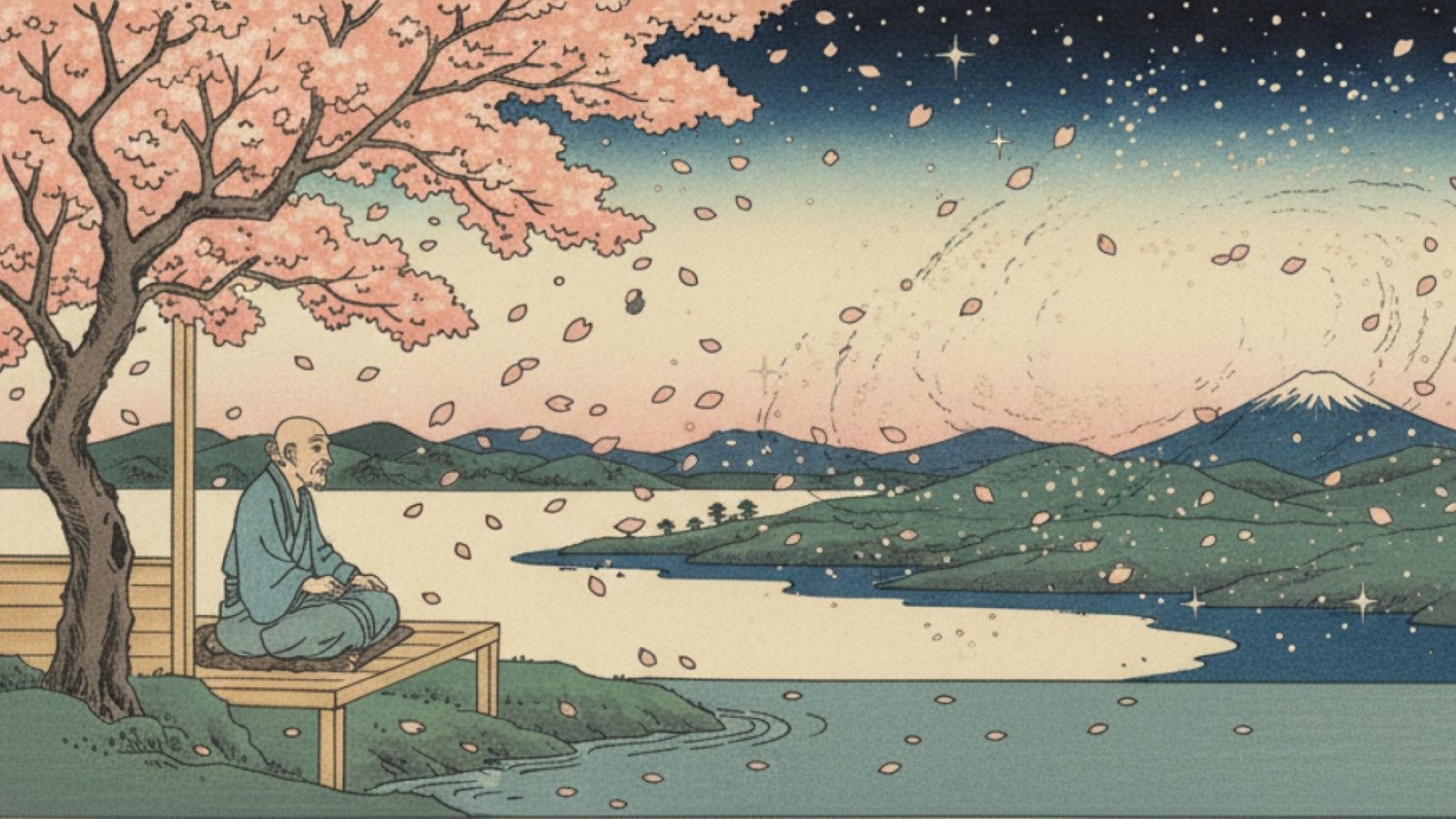
Japanese Views on Seasons - The Gaze of Literary Figures
Japanese literary figures have deeply engaged with the shifting seasons and the workings of life through various forms of expression such as novels and essays. Their delicate sensibilities and keen powers of observation open the door to a dialogue with nature for us, teaching us the beauty and philosophy hidden within everyday landscapes.
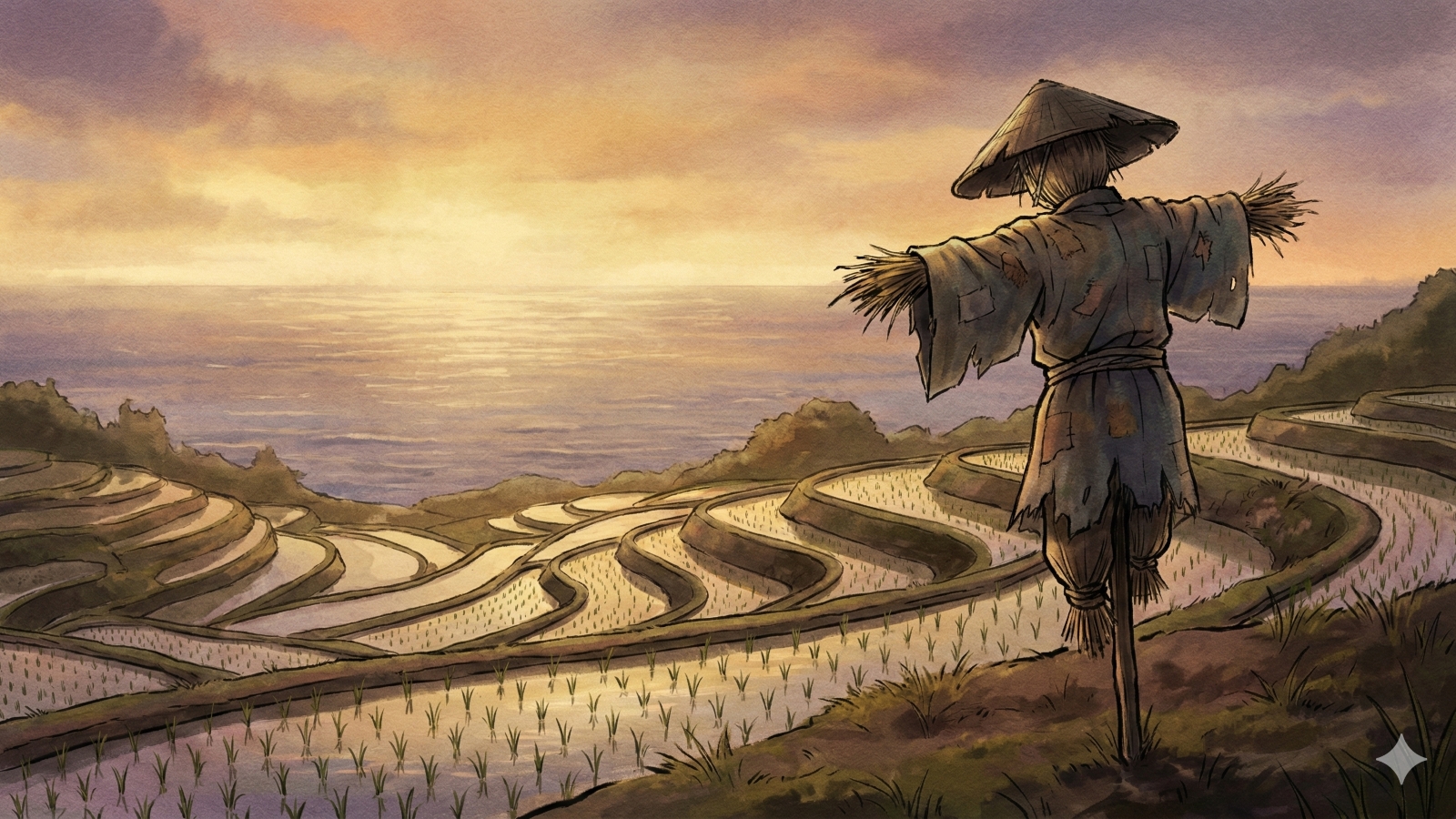
Japan's Primal Landscapes - A Tale of Memories Told by the Land
Superimposing the deceased onto the buzzing of flies, seeing gods in one-legged scarecrows. For Japanese people, these mysterious stories were not fantasy, but "life" itself, right next door. Longing for lands beyond the sea, legends remaining in ancient mounds. Why not travel through the frightening yet gentle "primal landscapes of the heart" gathered by Kunio Yanagita, Lafcadio Hearn, and others?
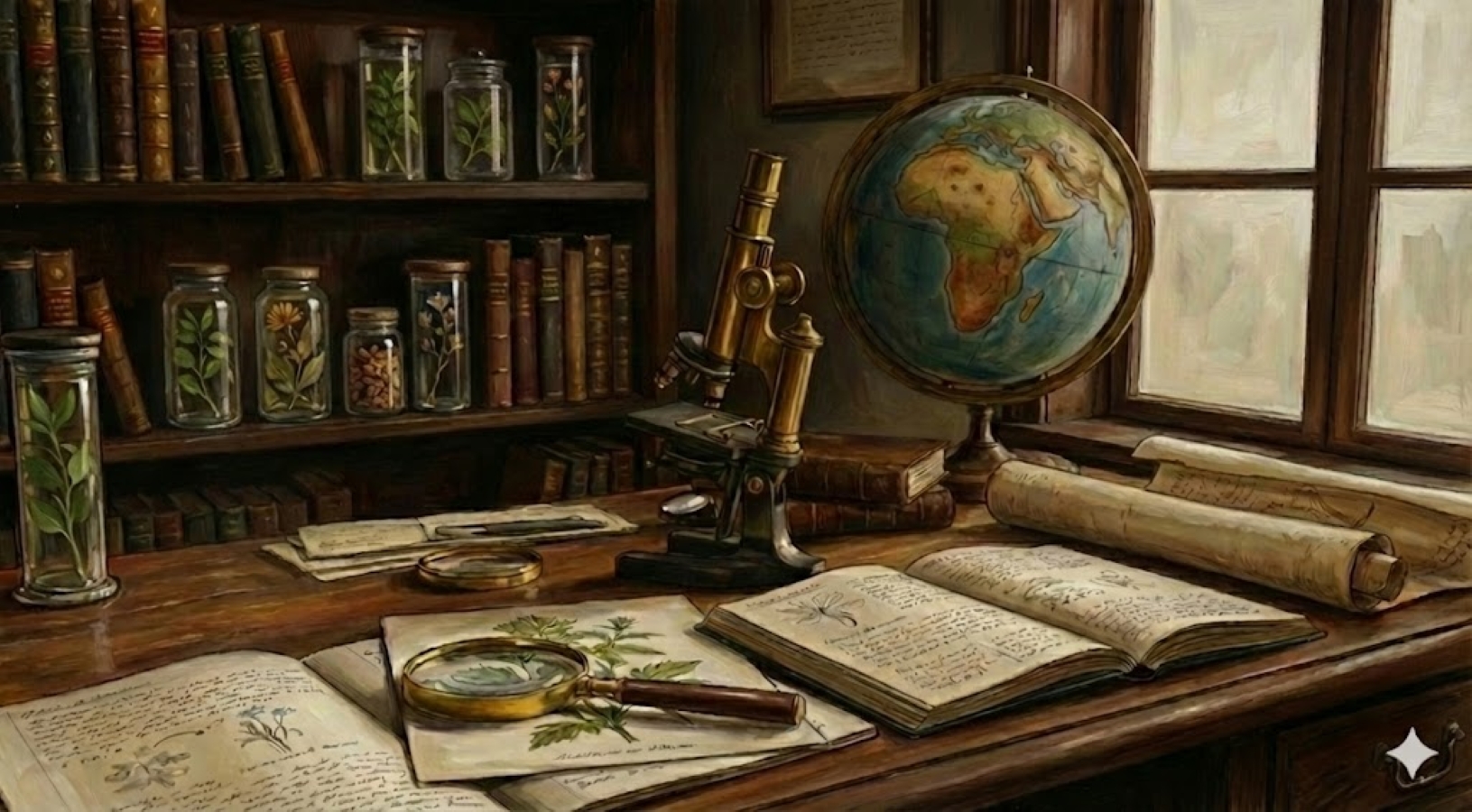
To Wonders Beyond Logic - The Beautiful Abyss Peered into by Scientists
Science is not just cold calculations. It is awe for nature beyond human understanding and an endless quest for beauty. Seeing the universe in a snowflake, feeling the ferocity of life in roadside grass... These are the adventurers of knowledge who confronted the overwhelming "mysteries" that appear only at the end of logic. We touch upon the records of their quiet yet passionate souls.
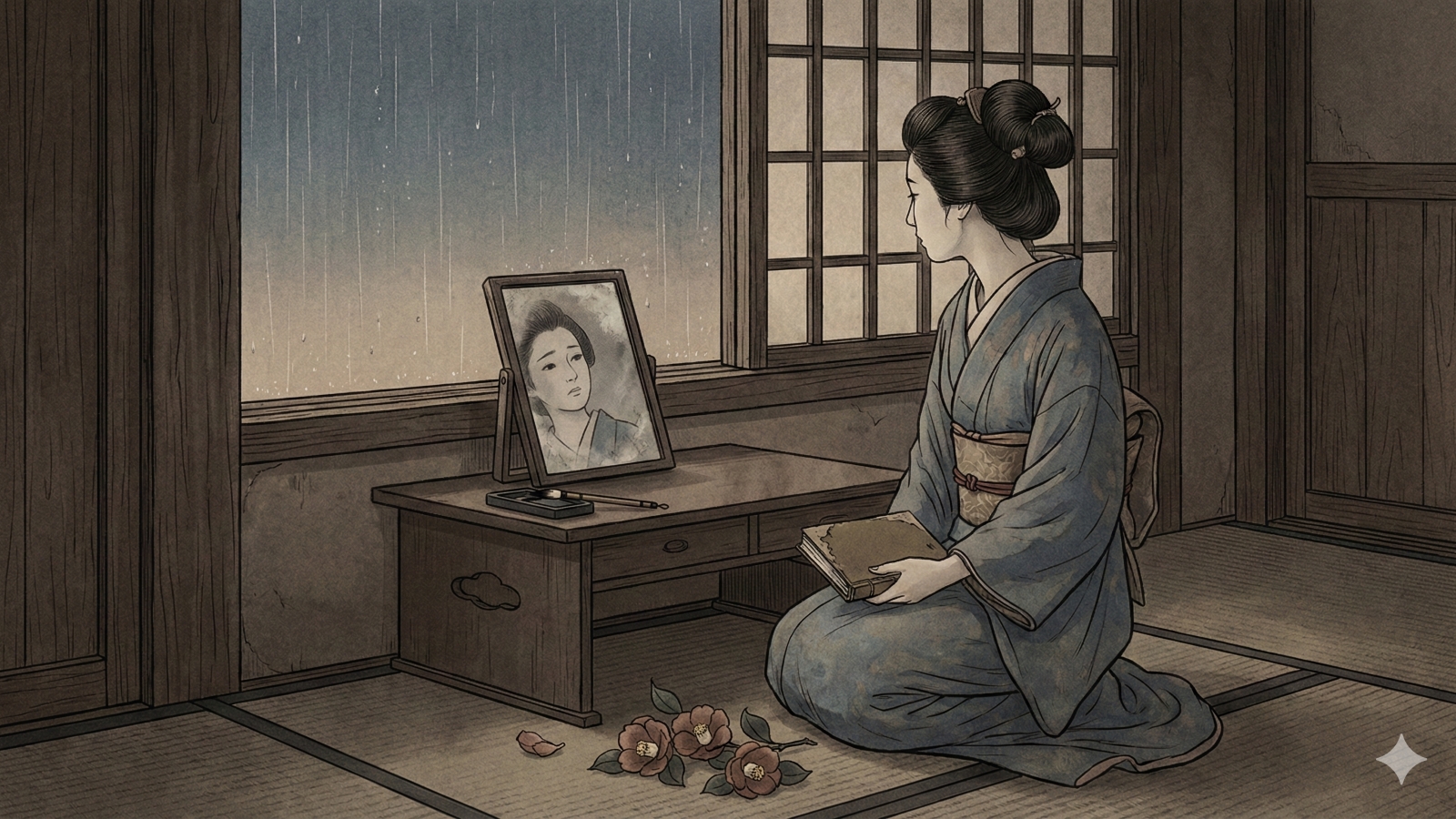
The Soul Screaming "I" - Stories of Fate and Pride by Modern Women
Should women's lives be plastered over with resignation to fate? Or is it a battle to break through social barriers and win one's own "life"? The dry self-mockery spat out by Ichiyō, the poignant scream released by Akiko for her beloved. We listen to the cries of their souls as they resisted the chains of their era, struggling through the mud to establish the "self."