

Prometheus - The god of Fire, Deception, and Eternal Punishment
Explore the myth of Prometheus, the god who deceived the gods to give humanity the gift of fire and civilization, and suffered Zeus's terrible, eternal punishment for his defiance.

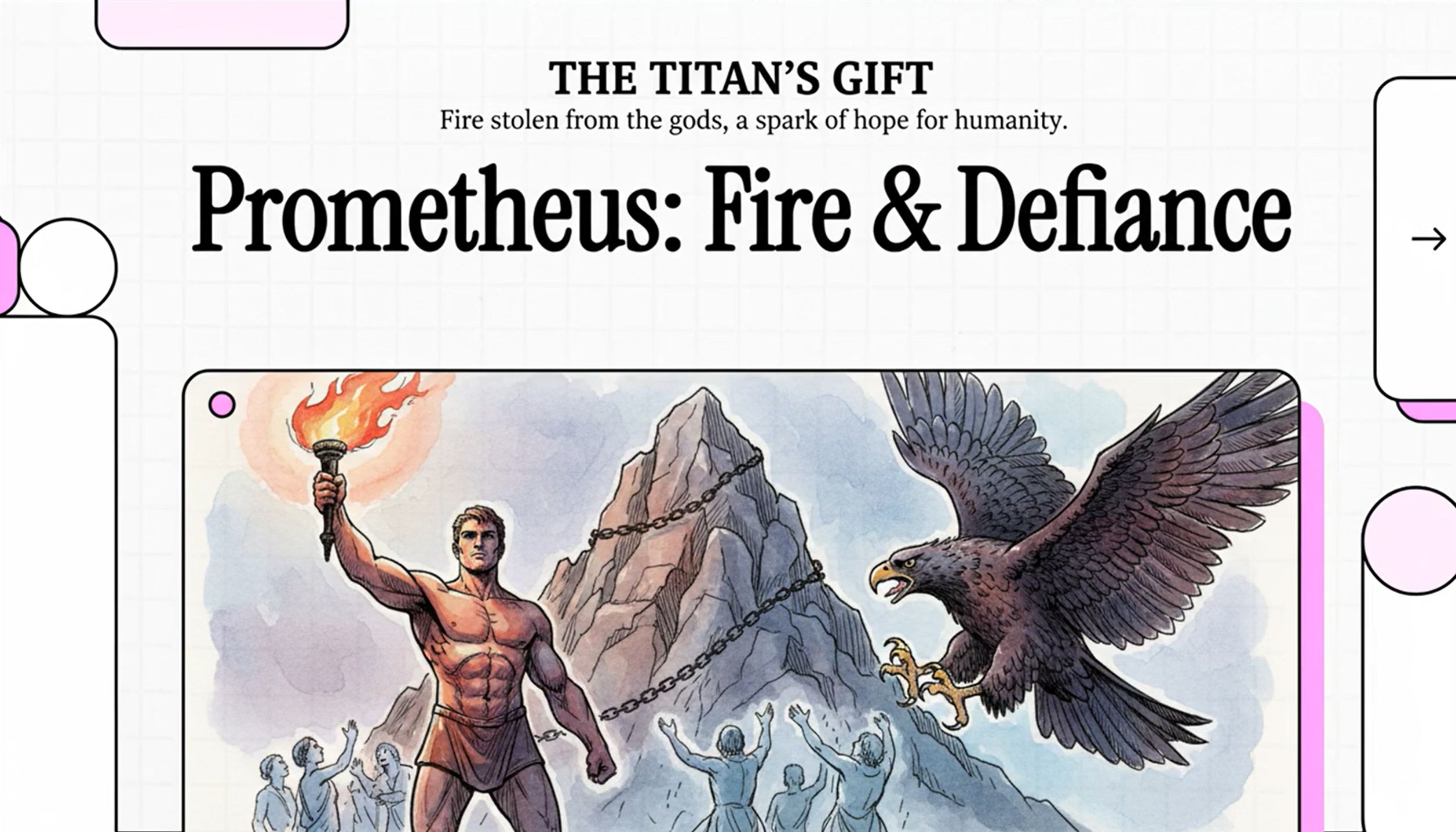
Prometheus - The Titan of Fire, Deception, and Eternal Punishment
Fire is the light of civilization and the wellspring of technology. In the world of Greek mythology, however, its radiance was once the exclusive possession of the gods. To bestow this forbidden gift upon humanity, one god dared to defy Zeus, the king of the gods. His name was Prometheus, “the one who thinks ahead.” This is the epic tale of his profound love for humanity, his cunning deception, and the eternal punishment he endured as a consequence.
The Deception at Mecone - Dividing Shares Between Gods and Mortals
In an age when gods and mortals still dined together, a pivotal assembly was held at Mecone to determine their respective roles and privileges. The issue at hand was the division of the sacrifice-how to apportion the parts to be offered to the gods and the parts to be eaten by mortals. It was here that Prometheus, a descendant of the Titans, stood as champion for humankind (Hesiod Theogony 535-537).
He slaughtered a great ox and divided it into two portions. In one, he hid the appetizing meat and entrails beneath the unappealing stomach. In the other, he artfully arranged the worthless bones and covered them with glistening white fat to make them look desirable (Hesiod Theogony 538-541). The all-knowing Zeus saw through this trick. Yet, he deliberately feigned deception and chose the pile of bones covered in fat. With irony, Zeus declared, “Son of Iapetus, most glorious of all lords, my good sir, how unfairly you have divided the portions!” (Hesiod Theogony 543-544).
This choice established the custom for all future sacrifices: mortals would eat the meat and burn the bones as an offering to the gods (Hesiod Theogony 556-557). But the deception kindled a profound anger in Zeus’s heart. As retribution, he resolved to take from humanity its most vital asset: fire (Hesiod Theogony 562-564).
The Forbidden Fire - A Gift to Humanity
Deprived of fire, humanity was helpless. According to the myth relayed by Plato, in the early stages of creation, the gods assigned Prometheus and his brother Epimetheus the task of distributing abilities to all living creatures (Plato Protagoras 320d). The thoughtless Epimetheus gave animals fangs, claws, swift feet, and thick fur, leaving nothing for humans when their turn came. When Prometheus arrived to inspect the work, he found humankind left in a pitiful state, “naked and unshod, without bedding or weapons” (Plato Protagoras 321c).
Facing this desperate situation, Prometheus made a bold decision. He slipped past Zeus’s watchful guard and snuck into the workshop shared by Hephaestus, the god of craft, and Athena, the goddess of wisdom. There, he stole not only fire but also the “technical wisdom” that would be useless without it, and gave them to humanity as a gift (Plato Protagoras 321d-e). He concealed the stolen embers of fire in the hollow stalk of a giant fennel plant to carry them to earth (Aeschylus Prometheus Bound 109; Apollodorus Library 1.7.1).
With this fire, humanity could protect itself from the cold, cook food, and, most importantly, gain the fundamental power to develop all manner of arts and technologies (Aeschylus Prometheus Bound 254-256). It was not merely a tool for survival but the very light that heralded the dawn of civilization.
The Wrath of Zeus and Eternal Punishment
Prometheus’s act provoked the full fury of Zeus. The crime of violating divine privilege and disrupting the established order was unforgivable. To show both gods and mortals the fate of those who defied his authority, Zeus decreed an unprecedented and cruel punishment.
Aeschylus’s tragedy Prometheus Bound vividly depicts the moment of this punishment’s execution. The setting is the desolate Scythian wilderness, upon a rugged cliff in the Caucasus Mountains. Zeus’s loyal servants, Kratos (Power) and Bia (Violence), drag Prometheus to the site. Hephaestus, the smith god, is ordered to chain his own kinsman to the rock and suffers in anguish: “Against my will, I must chain you, against your will, to this desolate crag” (Aeschylus Prometheus Bound 19-20). But sympathy is powerless before Kratos’s cold rebuke: “All is toil, save to be lord of the gods, for none is free but Zeus” (Aeschylus Prometheus Bound 49-50).
Thus, Prometheus was nailed to the rock face with unbreakable chains of adamant, unable to move. But his suffering did not end there. Zeus sent a great eagle to peck at Prometheus’s liver each day. As he was an immortal god, his liver would regenerate during the night, destining him to repeat this agony for eternity (Hesiod Theogony 521-525).
An Unbroken Spirit in Chains
Though his body was bound in chains, Prometheus’s spirit remained unyielding. He did not regret his actions; rather, he took pride in them. Acknowledging that his crime was his “love for mankind,” he declared, “Willingly, willingly I erred, I do not deny it. In helping mortals, I found these sufferings for myself” (Aeschylus Prometheus Bound 268-269).
As he suffered, Zeus’s messenger, Hermes, appeared. Using a mix of threats and persuasion, Hermes demanded that Prometheus reveal the future secret he held-a secret that could threaten Zeus’s throne. But Prometheus refused with scorn. His reply has been remembered through the ages as a symbol of indomitable resistance against tyranny.
τῆς σῆς λατρείας τὴν ἐμὴν δυσπραξίαν, σαφῶς ἐπίστασʼ, οὐκ ἂν ἀλλάξαιμʼ ἐγώ.
Know this for certain: I would not exchange my own misfortune for your servitude.
(Aeschylus Prometheus Bound 966–967)
He valued his freedom, even in agony, more than comfortable servitude. Declaring that he hated all the gods who repaid his good deeds with injustice, he swore that no torture would ever compel him to reveal his secret (Aeschylus Prometheus Bound 975-976, 989-996).
The Path to Liberation - Prophecy and the Hero’s Arrival
The secret Prometheus held was a prophecy: if Zeus were to unite with a certain goddess, she would bear a son more powerful than his father, who would overthrow him just as Zeus himself had overthrown his father, Cronus (Aeschylus Prometheus Bound 947-949). That goddess was the sea-goddess Thetis (Hyginus Astronomica 2.15.4).
Millennia passed, and Prometheus’s torment continued. But the story took a turn when the hero Heracles, a son of Zeus, came to the Caucasus Mountains during his legendary labors. Seeing the god chained to the rock, he took pity on his suffering and shot down the eagle that devoured his liver (Hesiod Theogony 526-528).
This liberation was not against Zeus’s will. Needing to avert the threat of the prophecy, Zeus consented to Prometheus’s release in exchange for the secret. Furthermore, this act served to enhance the glory of his great son, Heracles (Hesiod Theogony 529-532).
Thus, Prometheus was freed from his eternal punishment. However, to uphold an oath that Prometheus would never be fully released from his bonds, Zeus is said to have commanded him to wear a ring made from the iron of his chains and a piece of the rock to which he was bound (Hyginus Astronomica 2.15.4). This is sometimes cited as the origin of the human custom of wearing rings.
The story of Prometheus is a hymn to resistance against tyranny, the power of intellect, and boundless love for humanity. He challenged the divine order and paid for it with unimaginable suffering, yet his indomitable spirit, like the fire he bestowed, continues to kindle a light of hope in the hearts of people to this day.
(Edited with the assistance of Yuki Suzuki)
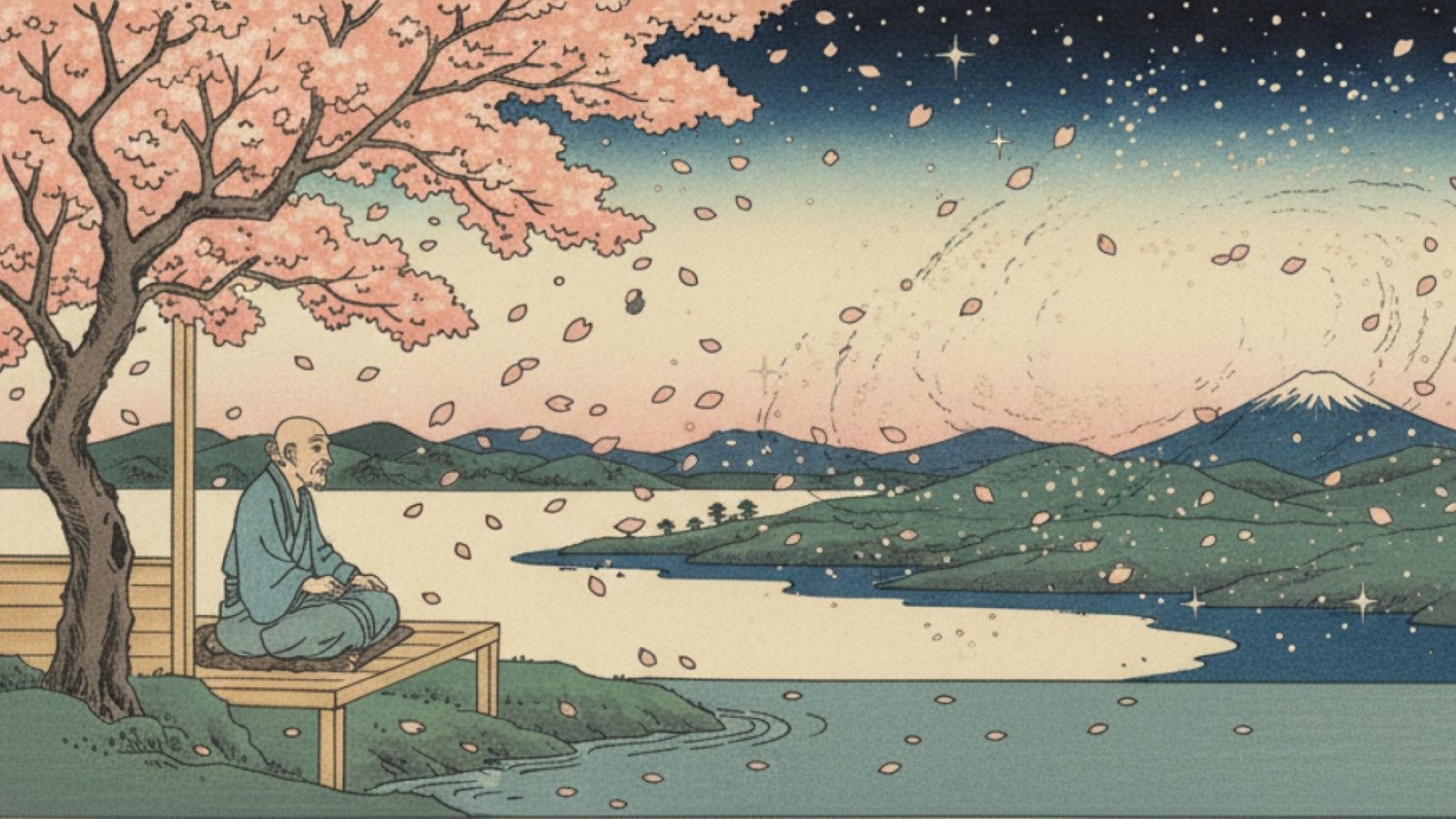
Japanese Views on Seasons - The Gaze of Literary Figures
Japanese literary figures have deeply engaged with the shifting seasons and the workings of life through various forms of expression such as novels and essays. Their delicate sensibilities and keen powers of observation open the door to a dialogue with nature for us, teaching us the beauty and philosophy hidden within everyday landscapes.
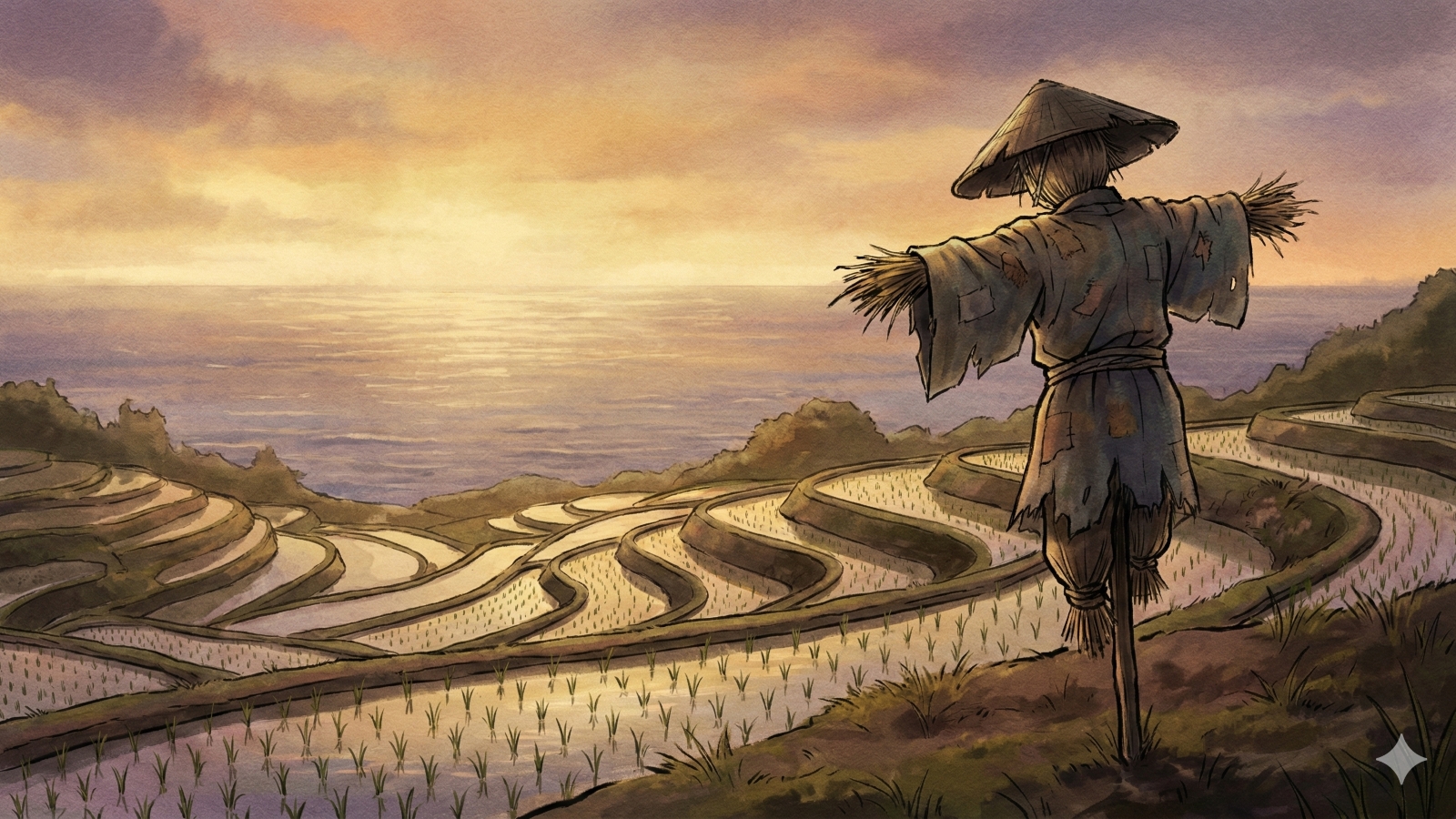
Japan's Primal Landscapes - A Tale of Memories Told by the Land
Superimposing the deceased onto the buzzing of flies, seeing gods in one-legged scarecrows. For Japanese people, these mysterious stories were not fantasy, but "life" itself, right next door. Longing for lands beyond the sea, legends remaining in ancient mounds. Why not travel through the frightening yet gentle "primal landscapes of the heart" gathered by Kunio Yanagita, Lafcadio Hearn, and others?

To Wonders Beyond Logic - The Beautiful Abyss Peered into by Scientists
Science is not just cold calculations. It is awe for nature beyond human understanding and an endless quest for beauty. Seeing the universe in a snowflake, feeling the ferocity of life in roadside grass... These are the adventurers of knowledge who confronted the overwhelming "mysteries" that appear only at the end of logic. We touch upon the records of their quiet yet passionate souls.
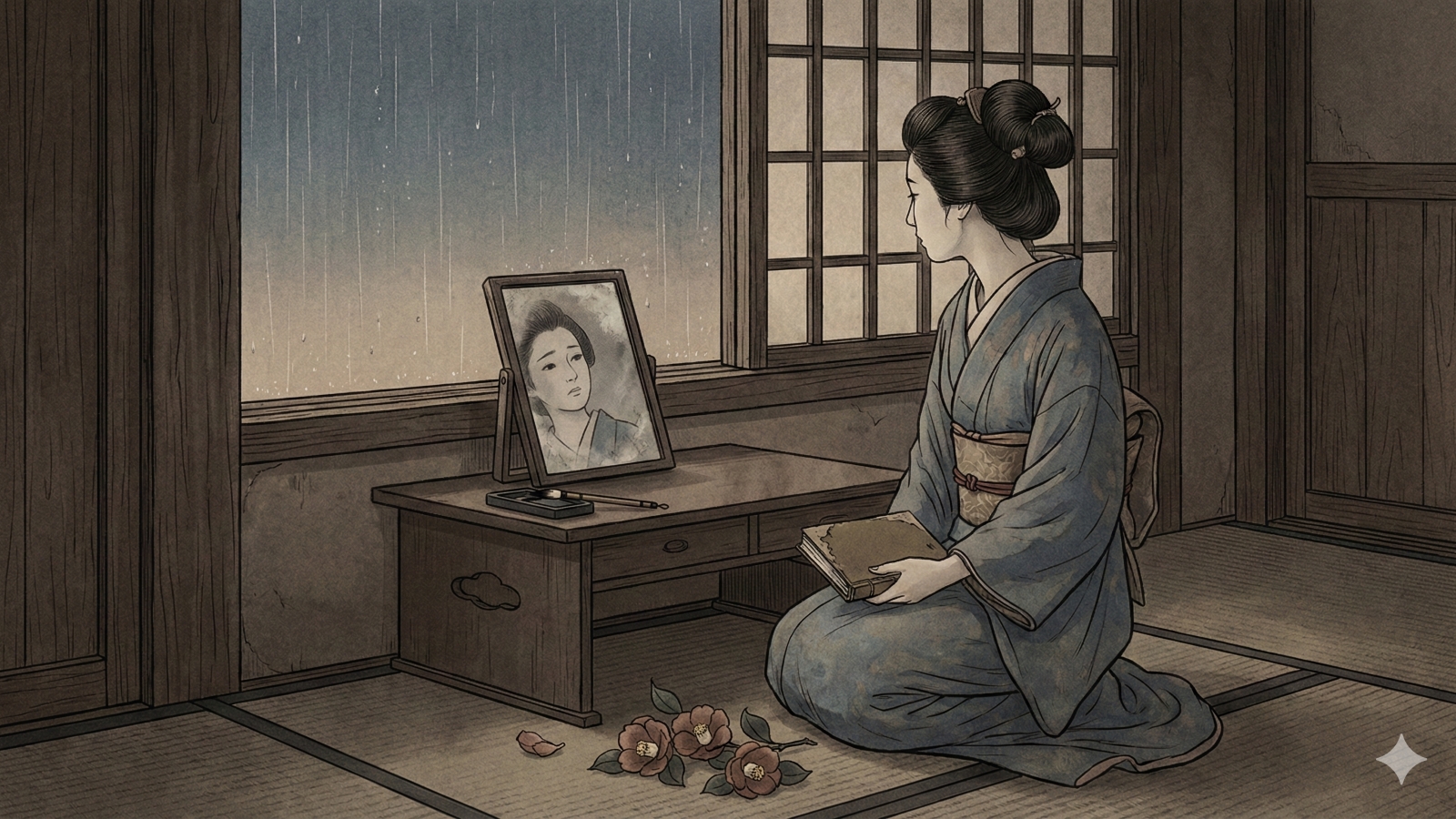
The Soul Screaming "I" - Stories of Fate and Pride by Modern Women
Should women's lives be plastered over with resignation to fate? Or is it a battle to break through social barriers and win one's own "life"? The dry self-mockery spat out by Ichiyō, the poignant scream released by Akiko for her beloved. We listen to the cries of their souls as they resisted the chains of their era, struggling through the mud to establish the "self."