

Pandora's Jar - The Beautiful Calamity and the Hope That Remained
Pandora, the first woman in Greek mythology. Why were all the evils of the world released when she opened a jar, and why did only "Hope" remain? This article delves into the depths of this enigmatic story, drawing on the accounts of Hesiod and others.

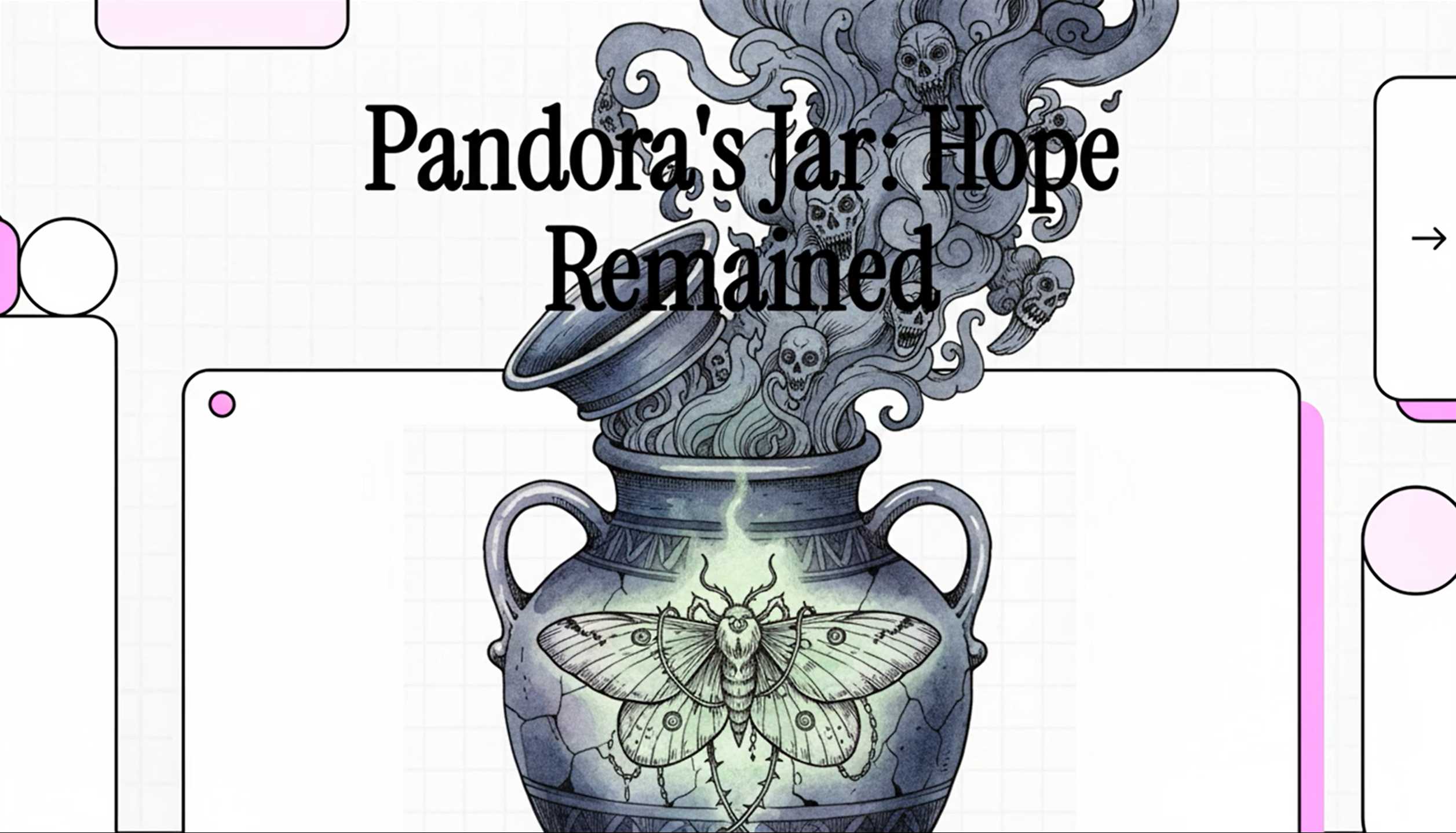
Pandora’s Jar - The Beautiful Calamity and the Hope That Remained
Pandora, the first human woman. Sent to earth as a gift from the gods, she opened a single jar and unleashed every calamity upon the world. But why was “Hope” the only thing left at the bottom? This ancient story is more than a simple origin tale of misfortune; it poses a sharp question about the nature of humanity and the dual-sided nature of hope.
The Birth of a Beautiful Calamity
The story of Pandora begins when Prometheus deceived the gods, stealing fire from the heavens and giving it to humanity. Enraged, the almighty god Zeus resolved to create a “beautiful calamity” as a punishment for mankind (Hesiod Works and Days 57–58, Hesiod Theogony 585).
At Zeus’s command, the gods each contributed their powers to create a woman. Hephaestus, the god of the forge, molded a beautiful form like that of a goddess from earth and water (Hesiod Works and Days 60–63). The goddess Athena clothed her in a silvery gown and taught her the art of weaving (Hesiod Works and Days 63–64, Hesiod Theogony 573–575). Aphrodite, the goddess of love and beauty, bestowed upon her an irresistible charm and “heart-tormenting sorrows,” while Hermes, the messenger of the gods, placed in her breast “the mind of a dog and a thievish nature” (Hesiod Works and Days 65–68, 77–78).
Thus, as a “gift” (dōron) from “all” (pan) the Olympian gods, she was named “Pandora” (Hesiod Works and Days 81–82). Yet, behind her splendid creation lay Zeus’s cunning trap. She was, for humanity, an inescapable and hopeless stratagem (Hesiod Theogony 589). The later writer Dio Chrysostom also noted that something created jointly by many gods would never be wise and, as a result, brought diverse troubles upon those who received it (Dio Chrysostom Orationes 77/78. 25).
A Gift and a Warning
Once complete, Pandora was led by Hermes, the messenger of the gods, and presented to Epimetheus, the brother of Prometheus (Hesiod Works and Days 84–85). Prometheus, whose name means “Forethought,” had long and sternly warned his brother “never to accept a gift from Zeus” (Hesiod Works and Days 86–88). If he did, it would surely bring disaster upon mortals.
But Epimetheus, whose name means “Afterthought,” completely forgot this warning and took the breathtakingly beautiful woman as his wife (Hesiod Theogony 511–514). He realized his mistake only after the calamity was already in his hands (Hesiod Works and Days 89). The contrasting names and actions of these brothers seem to symbolize the dilemma humans constantly face: the wisdom to foresee and the folly of regretting after the fact.
The Jar Opened, Calamities Unleashed
Until Pandora came to earth, humanity lived a peaceful life, free from hard labor and sickness (Hesiod Works and Days 90–92). But that peace came to an abrupt end. With her own hands, Pandora lifted the lid of the great jar she had brought from the gods (Hesiod Works and Days 94).
In that instant, countless calamities that had been sealed inside the jar flew out and scattered across the earth (Hesiod Works and Days 95, 100). Sickness, pain, sorrow, poverty—every evil filled the land and sea, wandering silently among people day and night. Zeus had deprived the evils of their voices, so they crept upon mortals without a sound to inflict their suffering (Hesiod Works and Days 102–104). Everything went according to Zeus’s plan to punish humanity for stealing fire (Hesiod Works and Days 99, 105).
The Enigma of “Elpis” Left Behind
After all the calamities had escaped, only one thing remained inside the jar: “Elpis,” or “Hope.” By the will of Zeus, Pandora hastily shut the lid just before Hope could fly out (Hesiod Works and Days 96–99).
This conclusion has been the subject of much debate since antiquity. Why was Hope inside a jar filled with evils? And what is the significance of it being the only thing left behind?
In modern interpretations, Hope is often seen as the sole comfort that sustains humanity in a world full of suffering. However, a closer look at ancient Greek literature reveals that this interpretation is not so straightforward. The poet Hesiod, in the same Works and Days, speaks of the hope held by an idle man as an “evil hope,” using the word with a negative connotation (Hesiod Works and Days 500).
The poet Pindar also sang that “the limbs of men are tied by shameless hope,” suggesting that hope could be a kind of shackle that makes people turn away from reality (Pindar Nemean Odes 11. 45–46). Furthermore, Dio Chrysostom compared hope to a “fetter” on a person’s foot, arguing that it is a chain that binds people to a life of hardship, forcing them to endure it (Dio Chrysostom Orationes 30. 22).
What emerges from these accounts is a more complex ancient view in which hope is not necessarily a good thing. The “Elpis” left at the bottom of the jar may not have been a light to save humanity from despair, but rather the “final calamity”—one that prolongs suffering by diverting our eyes from harsh reality and making us cling to futile expectations.
The story of Pandora is not merely a myth explaining the origin of evil. It depicts the powerlessness of humans at the mercy of the gods’ whims, as well as the very nature of humanity to believe in something even amidst hardship. Whether the hope left at the bottom of the jar is a comfort or a curse is a question that, more than two millennia later, is still posed to each and every one of us.
(Editorial assistance: Yuki Suzuki)

Japanese Views on Seasons - The Gaze of Literary Figures
Japanese literary figures have deeply engaged with the shifting seasons and the workings of life through various forms of expression such as novels and essays. Their delicate sensibilities and keen powers of observation open the door to a dialogue with nature for us, teaching us the beauty and philosophy hidden within everyday landscapes.
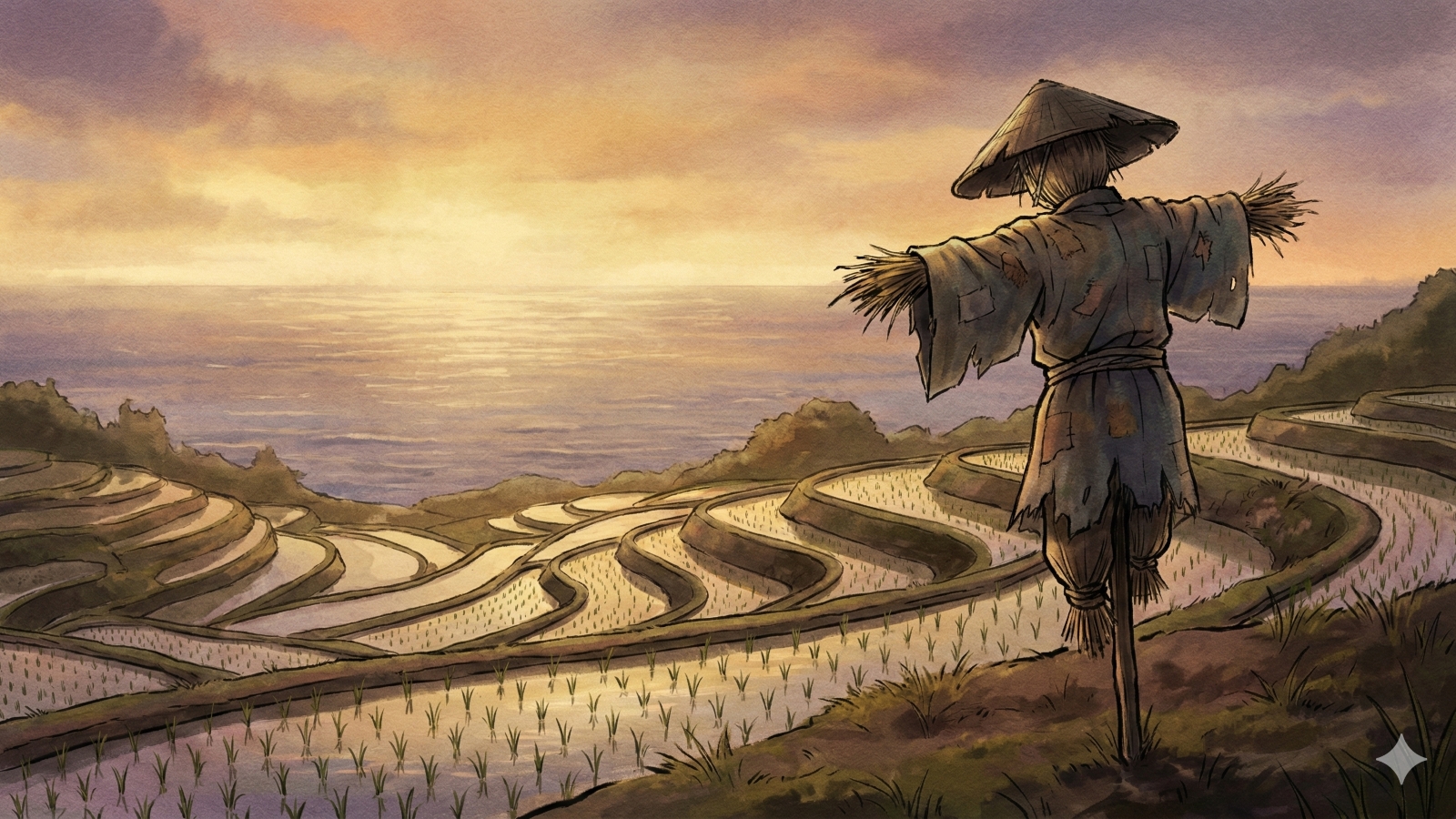
Japan's Primal Landscapes - A Tale of Memories Told by the Land
Superimposing the deceased onto the buzzing of flies, seeing gods in one-legged scarecrows. For Japanese people, these mysterious stories were not fantasy, but "life" itself, right next door. Longing for lands beyond the sea, legends remaining in ancient mounds. Why not travel through the frightening yet gentle "primal landscapes of the heart" gathered by Kunio Yanagita, Lafcadio Hearn, and others?
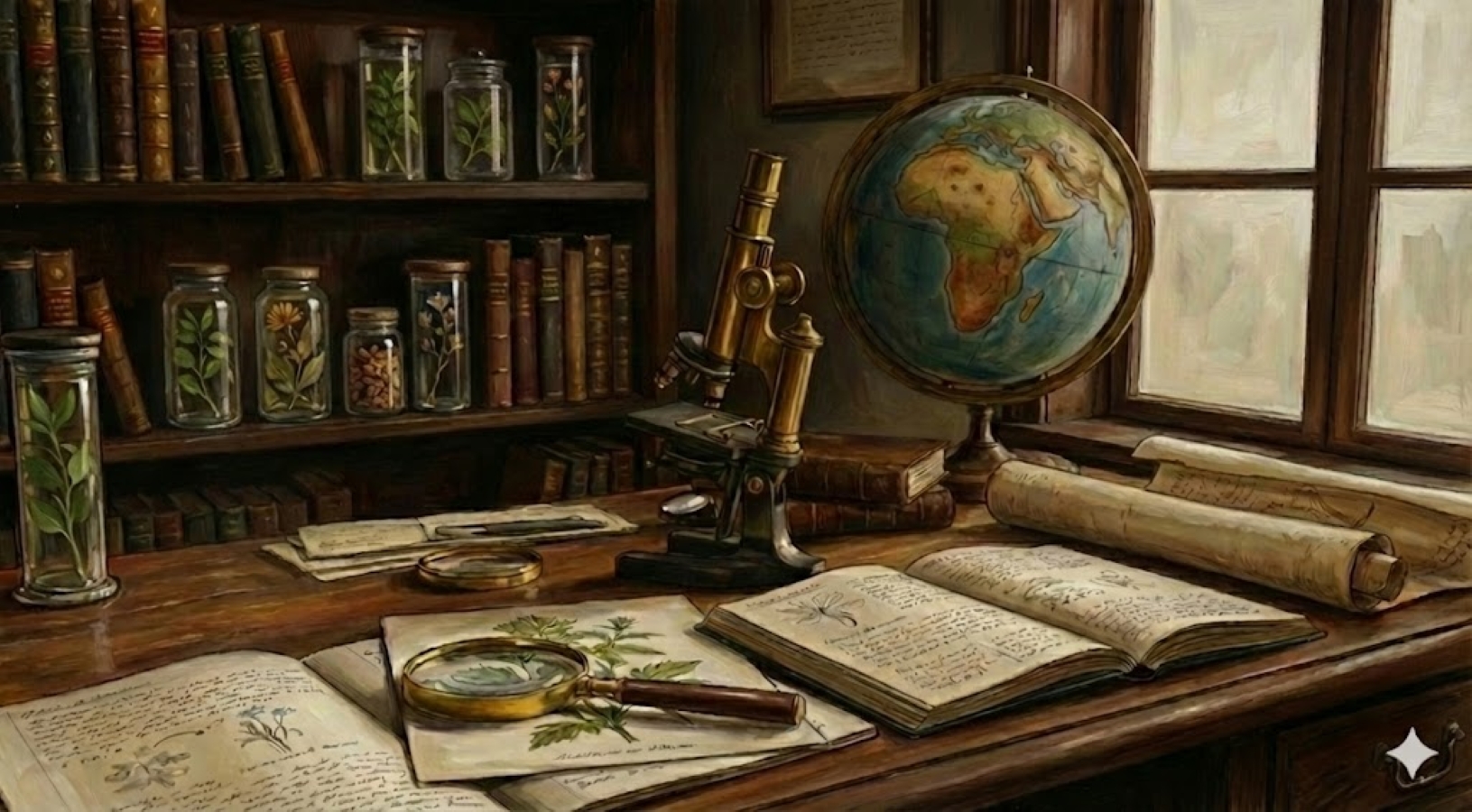
To Wonders Beyond Logic - The Beautiful Abyss Peered into by Scientists
Science is not just cold calculations. It is awe for nature beyond human understanding and an endless quest for beauty. Seeing the universe in a snowflake, feeling the ferocity of life in roadside grass... These are the adventurers of knowledge who confronted the overwhelming "mysteries" that appear only at the end of logic. We touch upon the records of their quiet yet passionate souls.
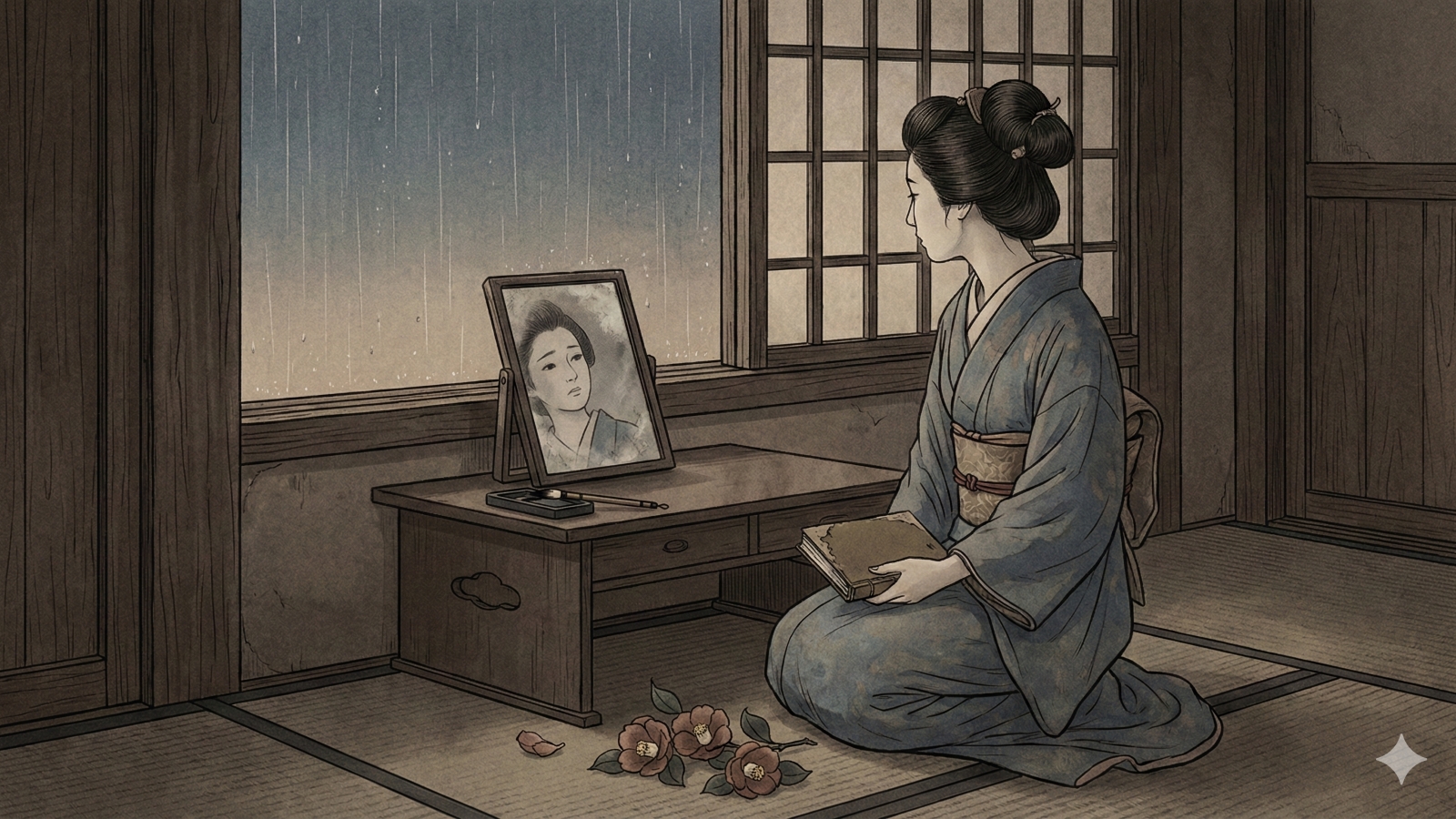
The Soul Screaming "I" - Stories of Fate and Pride by Modern Women
Should women's lives be plastered over with resignation to fate? Or is it a battle to break through social barriers and win one's own "life"? The dry self-mockery spat out by Ichiyō, the poignant scream released by Akiko for her beloved. We listen to the cries of their souls as they resisted the chains of their era, struggling through the mud to establish the "self."