

Miraculous Return - The Legend of Arion and the Dolphin
A desperate crisis befalling Arion, the greatest musician of ancient Greece, and the miracle of the dolphin that saved him. We unravel the story of betrayal, art, and divine salvation as handed down by Herodotus and Ovid.


Miraculous Return - The Legend of Arion and the Dolphin
In the seas of ancient Greece sleep countless stories woven by gods, humans, and nature. Among them, the legend of “Arion and the Dolphin,” where the power of music is said to have wrought a miracle transcending species, is one of the most beautiful and dramatic episodes depicting a return from the depths of betrayal and despair.
The Peerless Musician and the Voyage of Death
Around the 7th century BC, there lived a man named Arion from Methymna on the island of Lesbos. He enjoyed unparalleled fame as a cithara (lyre) player of his time and was treated with great favor at the court of Periander, the tyrant of Corinth. Arion was not merely a performer; he was an innovative artist who first composed, named, and performed the choral dance “dithyramb” in honor of the wine god Dionysus in Corinth (Herodotus Histories 1.23).
At one point, Arion resolved to travel to Italy and Sicily for a performance tour. His fame had roared across the seas, and he succeeded in amassing vast wealth in various lands (Herodotus Histories 1.24). Having achieved success in foreign lands, he decided to return to Corinth. However, here he was forced to make a fateful choice. Carrying a large fortune, he carefully considered whose ship to board and, trusting the Corinthians above all others, decided to hire their ship (Herodotus Histories 1.24).
However, that trust was to be betrayed in the worst possible way. When the ship was out at sea, the sailors conspired to throw Arion overboard and seize the fortune he had earned (Herodotus Histories 1.24). According to Plutarch, Arion had perceived this conspiracy in advance through a tip-off from the captain. He was helpless and without aid, driven into a desperate situation (Plutarch The Dinner of the Seven Wise Men 18).
Ovid depicts this tense scene as a dramatic moment where the captain stands blocking the way with a drawn sword.
quid tibi cum gladio? dubiam rege, navita, puppem: non haec sunt digitis arma tenenda tuis.
“Sailor, what are you doing with a sword? You should be steering the unsteady ship. That weapon is not for your fingers to hold.”
(Ovid Fasti 2.101–102)
Arion begged for his life in exchange for surrendering all his money, but the sailors’ murderous intent did not waver. They coldly commanded Arion to either take his own life if he wished to be buried on land, or otherwise to jump into the sea immediately (Herodotus Histories 1.24).
The Swan Song and the Leap to Death
Having lost all means of escape, Arion asked as his final wish to be allowed to dress in full costume and sing a song. The sailors, feeling joy at the prospect of hearing the world’s greatest singer, retreated from the stern to the middle of the ship (Herodotus Histories 1.24).
Arion donned his splendid robes and took his lyre in hand. Dio Chrysostom likens Arion’s appearance at this moment to a swan anticipating death, entrusting its soul to a song at the very end.
ὥσπερ φασὶ τοὺς κύκνους μέλλοντας ἀποθνῄσκειν καὶ προορωμένους τὸν θάνατον ἐμβιβάζειν τὴν ψυχὴν οἷον εἰς ὄχημα τὸ μέλος.
“Just as they say swans, when about to die and foreseeing death, embark their soul upon the melody as if upon a vehicle.”
(Dio Chrysostom Orationes 37.2)
Standing at the stern, Arion played and sang a high-styled melody called the “Orthios,” filled with prayers to the gods (Herodotus Histories 1.24). As the sun began to set into the sea and the mountains of the Peloponnese were visible in the distance, the moment he finished singing, he threw himself into the sea, still wearing his costume (Plutarch The Dinner of the Seven Wise Men 18).
The sailors assumed he had drowned and continued their voyage to Corinth. However, a miracle beyond human imagination was occurring beneath the waves. Dolphins, charmed by Arion’s beautiful singing voice, had gathered around the ship. As soon as Arion fell into the sea, one dolphin took him upon its back (Plutarch The Dinner of the Seven Wise Men 18).
The dolphin cut through the waves with him on board and carried him to Cape Taenarum in Laconia. Ovid sings of this incredible spectacle as follows:
inde (fide maius) tergo delphina recurvo se memorant oneri supposuisse novo; ille sedens citharamque tenet pretiumque vehendi cantat et aequoreas carmine mulcet aquas,
“There (a thing beyond belief), they say a dolphin placed its curved back beneath the new burden. He sits holding the lyre, and as the price of his carriage, he sings and soothes the ocean waters with his song.”
(Ovid Fasti 2.113–116)
Proceeding on the dolphin’s back across the silent sea under the starry sky, Arion realized that the eyes of the gods were watching over everything, and his heart shifted from despair to hope (Plutarch The Dinner of the Seven Wise Men 18).
The Revelation of Truth and Eternal Memorial
Having landed safely at Cape Taenarum, Arion headed from there to Corinth. Upon reaching Periander, he recounted everything that had happened to him. However, as the story was too incredible, Periander did not immediately believe him; he placed Arion under strict guard and waited for the sailors’ return (Herodotus Histories 1.24).
Eventually, when the sailors arrived in Corinth, Periander summoned them and inquired about Arion’s whereabouts. The sailors lied in unison, saying, “We left him safe and living in Italy, succeeding in Taras (Tarentum)” (Herodotus Histories 1.24).
At that moment, Arion, who had been hiding, appeared before them in the same splendid costume he wore when he jumped into the sea. Seeing the man who was supposed to be dead standing before their eyes, the sailors were thunderstruck and could no longer make excuses (Herodotus Histories 1.24). According to Hyginus, they were subsequently executed (Hyginus Astronomica 2.17.3).
This miraculous event came to be handed down to posterity along with gratitude to the gods. At Cape Taenarum, a small bronze votive statue depicting a human figure riding a dolphin was erected (Herodotus Histories 1.24; Pausanias Description of Greece 3.25.7). Furthermore, it is said that the gods, seeing this benevolent deed, raised the dolphin to the heavens and made it into a constellation of nine stars (Delphinus) (Ovid Fasti 2.117–118).
The story of Arion was deeply engraved in the hearts of ancient people as a symbol of the mystique held by the power of art and the victory of justice over malice.
(Editorial Assistance: Yuki Suzuki)
```
Japanese Views on Seasons - The Gaze of Literary Figures
Japanese literary figures have deeply engaged with the shifting seasons and the workings of life through various forms of expression such as novels and essays. Their delicate sensibilities and keen powers of observation open the door to a dialogue with nature for us, teaching us the beauty and philosophy hidden within everyday landscapes.
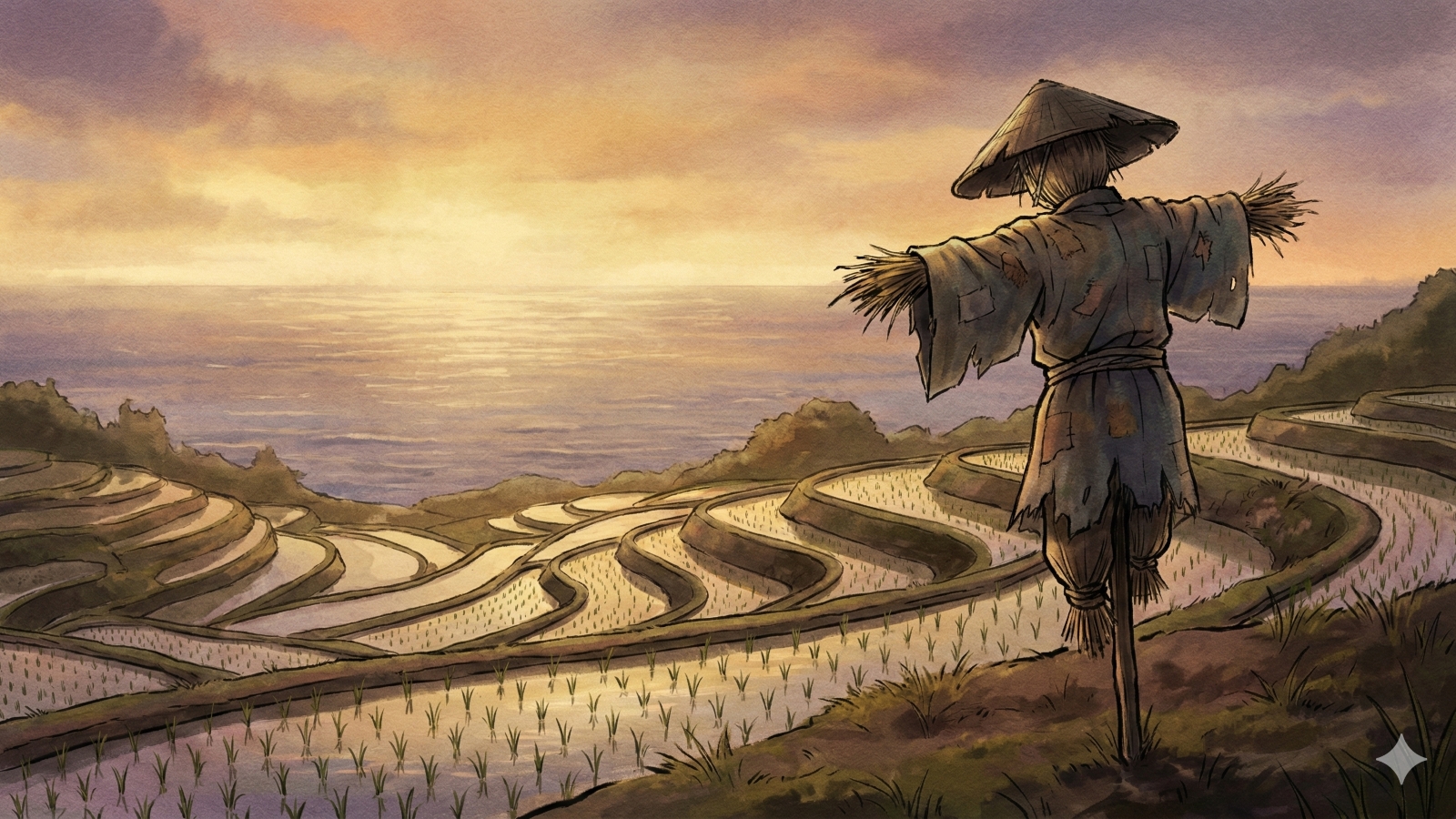
Japan's Primal Landscapes - A Tale of Memories Told by the Land
Superimposing the deceased onto the buzzing of flies, seeing gods in one-legged scarecrows. For Japanese people, these mysterious stories were not fantasy, but "life" itself, right next door. Longing for lands beyond the sea, legends remaining in ancient mounds. Why not travel through the frightening yet gentle "primal landscapes of the heart" gathered by Kunio Yanagita, Lafcadio Hearn, and others?

To Wonders Beyond Logic - The Beautiful Abyss Peered into by Scientists
Science is not just cold calculations. It is awe for nature beyond human understanding and an endless quest for beauty. Seeing the universe in a snowflake, feeling the ferocity of life in roadside grass... These are the adventurers of knowledge who confronted the overwhelming "mysteries" that appear only at the end of logic. We touch upon the records of their quiet yet passionate souls.
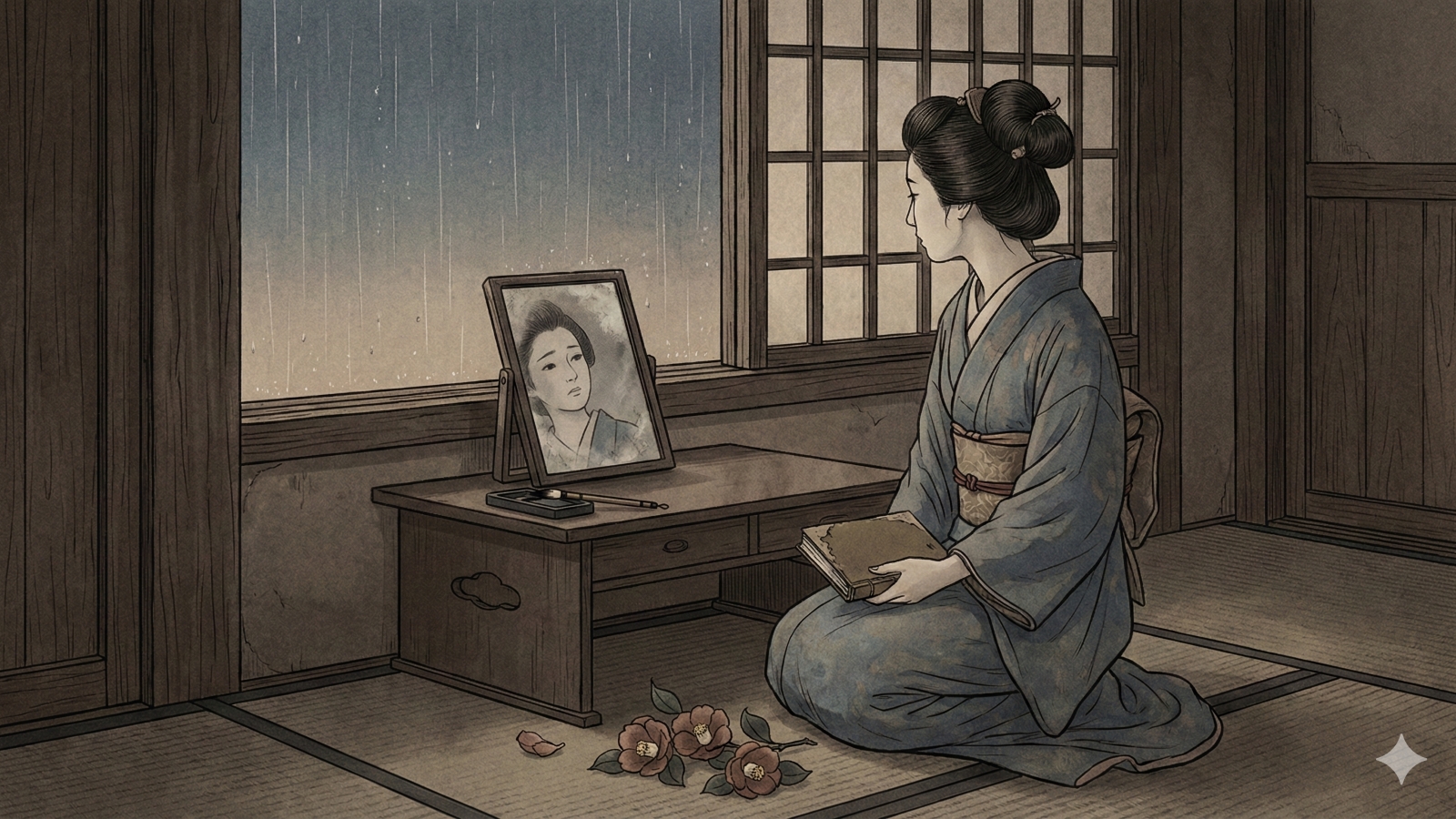
The Soul Screaming "I" - Stories of Fate and Pride by Modern Women
Should women's lives be plastered over with resignation to fate? Or is it a battle to break through social barriers and win one's own "life"? The dry self-mockery spat out by Ichiyō, the poignant scream released by Akiko for her beloved. We listen to the cries of their souls as they resisted the chains of their era, struggling through the mud to establish the "self."