

Pride's Two Faces - A Force that Polishes the Soul, a Poison that Corrodes the Heart
Inazo Nitobe taught that a way of life you believe to be right, even if others laugh at you, is true pride. Yet, as seen in Kan Kikuchi's obsession with "form" and Atsushi Nakajima's "The Moon Over the Mountain," self-esteem can sometimes become a monster that corners a person. Does it become a weapon that strengthens you, or a poison that destroys you? Through their words, let us peer into the abyss of pride that lurks in the depths of the soul.


「人に笑はれるほど恐ろしいものは無いと云ふのが、今日の所では日本人の一つの天性だ。」
“To say there is nothing more terrifying than being laughed at by others is, at present, one of the innate characteristics of the Japanese people.”
— Inazo Nitobe, The Aims of Education
【解説】
The invisible chains that bind our actions may be the “gaze of society.” Nitobe, while arguing that no profession is inherently noble or base, deeply considers the Japanese temperament. He points out that whereas Westerners are moved by profit and loss, the Japanese place immense importance on honor and the evaluation of others. This sentence is a sharp analysis that avoiding social dishonor, especially in the form of being “laughed at,” lies at the root of the Japanese principles of action. In a good sense, it is a strong sense of honor; in a bad sense, it can be a hypersensitive shame before the eyes of others. This innate characteristic has likely influenced the social order and individual choices, for better or for worse.
「勝つとは吾が意を遂げるなりと定義したい。」
“I wish to define victory as the fulfillment of one’s own will.”
— Inazo Nitobe, A Record of Self-Vigilance
【解説】
Who is it that decides the contents of the cup of victory and the bitter cup of defeat? Citing anecdotes such as Han Xin’s “crawling through the legs,” Nitobe explains how relative and transient societal standards of winning and losing are. Though temporarily laughed at and scorned, it was Han Xin who ultimately left his name in history. This short definition is a powerful declaration that true victory is not about dominating or subjugating others, but about carrying through the will in which one believes. It shows a way of honor that is unshakeable, rooted not in the external measure of others’ evaluations, but in one’s own inner pride and sense of purpose.
「これより先は一歩も半歩も譲ることが出来ぬ。」
“From this point on, I cannot yield a single step, not even half a step.”
— Inazo Nitobe, A Record of Self-Vigilance
【解説】
The branches of a willow bend in the wind, but they never break. The author preaches the strength of being “gentle on the outside, strong on the inside,” which is flexible yet never loses its essence, over a brittleness that merely feigns fortitude. Though one may seem to make concessions endlessly and accept the other’s demands, there exists a final line concerning one’s own dignity and life. This phrase expresses the resolute will when that inviolable boundary is reached. It can be called a quiet, yet stronger than anything, expression of pride for protecting the core of one’s honor and character. True strength may lie in possessing both the flexibility to endure and the firm resolve to protect the line that cannot be yielded.
「天にも地にも人にも恥じぬ人であろう。」
“Be a person who feels no shame before heaven, earth, or man.”
— Inazo Nitobe, A Record of Self-Vigilance
【解説】
Can we look at our reflection in the mirror with our heads held high? Nitobe questions the difference between doing “a man’s work” and being “a man.” He believes it is crucial not just to perform daily duties, but to ensure that those actions conform to universal reason. This passage can be said to concisely present the ultimate ethical standard. It represents a noble state of mind that aspires to a way of life that has nothing to be ashamed of, not only in the face of social evaluation and the gaze of others, but also before beings that transcend human intellect, such as heaven and earth. It quietly tells us that inner sincerity is the source of true pride.
「人を
“To win by intimidating others is a base victory of which one should be ashamed.”
— Inazo Nitobe, A Record of Self-Vigilance
【解説】
Perhaps there are victories to be proud of and victories to be ashamed of. Nitobe argues that the strength to subjugate others through physical force or intimidation belongs to uncivilized societies and is different from true strength in a civilized society. Citing the example of Han Xin enduring the humiliation of crawling through another’s legs, he argues that true strength lies rather in the power of endurance. This sentence declares that a victory gained by intimidating an opponent is merely a superficial win, a moral defeat, and an act one should be ashamed of. It shows a strict ethical view that it is not about basking in a temporary sense of superiority, but rather the means by which victory was achieved that determines a person’s pride and honor.
「そして自分の形だけすらこれほどの力をもっているということに、かなり大きい誇りを感じていた。」
“And he felt a rather great pride in the fact that his form alone possessed such power.”
— Kan Kikuchi, Form
【解説】
Just as the saying goes about a paper tiger, prestige based on appearance alone can sometimes destroy its owner. This describes the feelings of the veteran warrior Nakamura Shinbei, who lent his symbolic, flashy armor to a young man and went to the battlefield in plain attire. Seeing the youth, clad in his “form,” overwhelm the enemy, he feels pride in its prestige. However, this was also the moment when the honor that should have been one with his skill began to take on a life of its own as a symbol. This pride, verging on arrogance, leads to an ironic end where he, having lost his “form,” is underestimated by the enemy and loses his life. The story sharply depicts how honor and pride rest on a precarious balance between “form,” such as appearance and reputation, and the “soul,” the actual ability that supports it.
「共に、我が臆病な自尊心と、尊大な羞恥心との
“It is all due to my cowardly pride and my arrogant shame.”
— Atsushi Nakajima, The Moon Over the Mountain [Li Zheng]
【解説】
Why are there people who, despite having talent, cannot master their craft? This sentence is a poignant self-analysis by the poet Li Zheng, turned into a tiger, as he explains the reason for his downfall to his old friend Yuan. He confesses that the cause of his ruin lay in two conflicting emotions: a cowardly pride that feared being hurt, and an arrogant shame that refused to mingle with the common herd. Because of the “pride” that made him believe in his talent, he avoided engaging with others to hone his skills; at the same time, from a “shame” that feared his lack of talent would be exposed, he neglected to put in the effort. Being caught between these ambivalent emotions isolated him and finally led to him being consumed by his inner beastliness. The words of a man devoured by the fierce beast of his own heart sharply question the nature of our own self-consciousness in the modern age.
「性、
“His nature was obstinate and aloof; he had far too much faith in himself and did not deign to content himself with a lowly official’s post.”
— Atsushi Nakajima, The Moon Over the Mountain
【解説】
Pride that is too high can sometimes become not a pillar of support, but a cage that immobilizes. This sentence, at the beginning of the story, succinctly explains the character of the protagonist, Li Zheng, who became an official at a young age, and the reason he quit the post so soon. “Kenkai” refers to a nature that rigidly adheres to one’s own beliefs and does not cooperate with others. He thought so highly of his own talent that his pride would not allow him to settle for a low-ranking position. This excessively puritanical self-esteem was the first trigger that sent his life spiraling out of control. His choice to scorn the honor of worldly success and pursue only immortal fame as a poet would eventually isolate him from society and deepen his internal conflict. Li Zheng’s perilous nature, which foreshadows the later tragedy, is condensed in this single sentence.
「産を破り心を狂わせてまで自分が生涯それに執着したところのものを、一部なりとも後代に伝えないでは、死んでも死に切れないのだ。」
“Having ruined my fortune and driven myself mad in lifelong devotion to my craft, I cannot die in peace if I do not pass on even a fraction of it to posterity.”
— Atsushi Nakajima, The Moon Over the Mountain [Li Zheng]
【解説】
Perhaps it is only by leaving behind a testament to what one has devoted oneself to that a person can attain eternity. This is the sorrowful cry of Li Zheng in a scene where, amidst the terror of turning into a tiger and his human memories fading, he entrusts his only wish to his old friend Yuan. These words tell of how he had wagered his entire life on the craft of poetry. The poetic works he pursued, even to the point of losing his fortune and sanity, were the very proof of his existence. For it to vanish without anyone knowing was a pain more unbearable than physical death. Here, his unshakeable pride as a poet and his desperate craving for honor in the form of posthumous fame are expressed. Even as he was reduced to a beast, this obsession alone did not vanish from his soul. The deep sorrow of the story is carved into the paradox where the very obsession that caused his self-destruction becomes the final proof of his humanity.
「人生は何事をも為さぬには余りに長いが、何事かを為すには余りに短い」
“Life is too long to do nothing, but too short to achieve something.”
— Atsushi Nakajima, The Moon Over the Mountain [Li Zheng]
【解説】
Have you ever felt the anxiety of time passing by while wishing to accomplish something? The protagonist of this work, Li Zheng, is a man who harbored the great ambition of making a name for himself as a poet, only to fail and turn into a tiger. He tells his old friend Yuan of the regret he only realized now that he has become a beast. The quoted phrase was an aphorism he once used to justify his inaction when he feared his talent was drying up. But now, as a tiger, he realizes it was nothing more than an excuse. What is truly important is to find what one must do and devote oneself to it wholeheartedly; by standing still before one’s pride and sloth, no honor can be obtained. These words are his poignant self-criticism, and at the same time, a mirror that forces us to re-examine our own use of time.
(Editorial Assistance: Haruna Ishita, Momona Sassa)
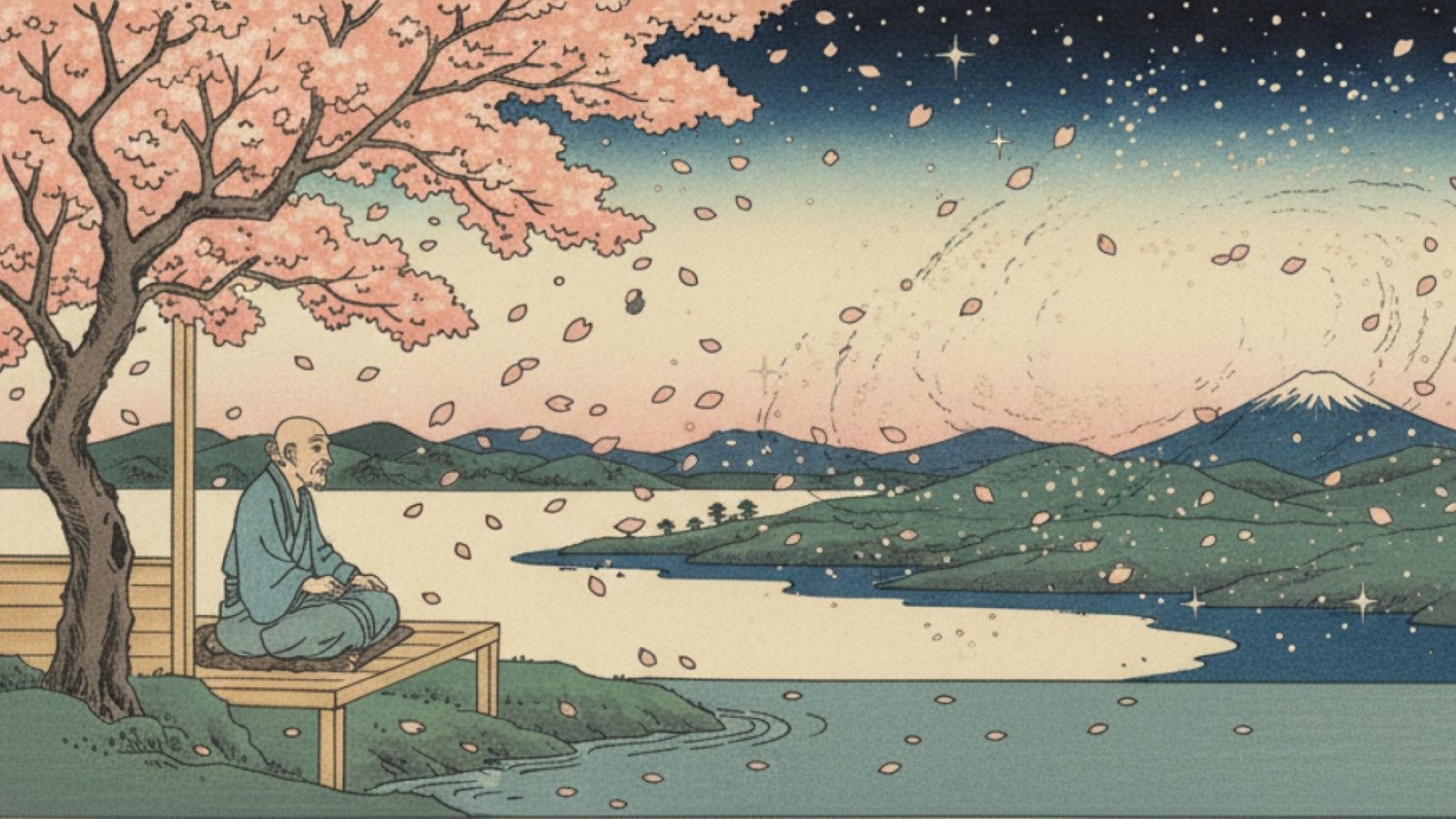
Japanese Views on Seasons - The Gaze of Literary Figures
Japanese literary figures have deeply engaged with the shifting seasons and the workings of life through various forms of expression such as novels and essays. Their delicate sensibilities and keen powers of observation open the door to a dialogue with nature for us, teaching us the beauty and philosophy hidden within everyday landscapes.
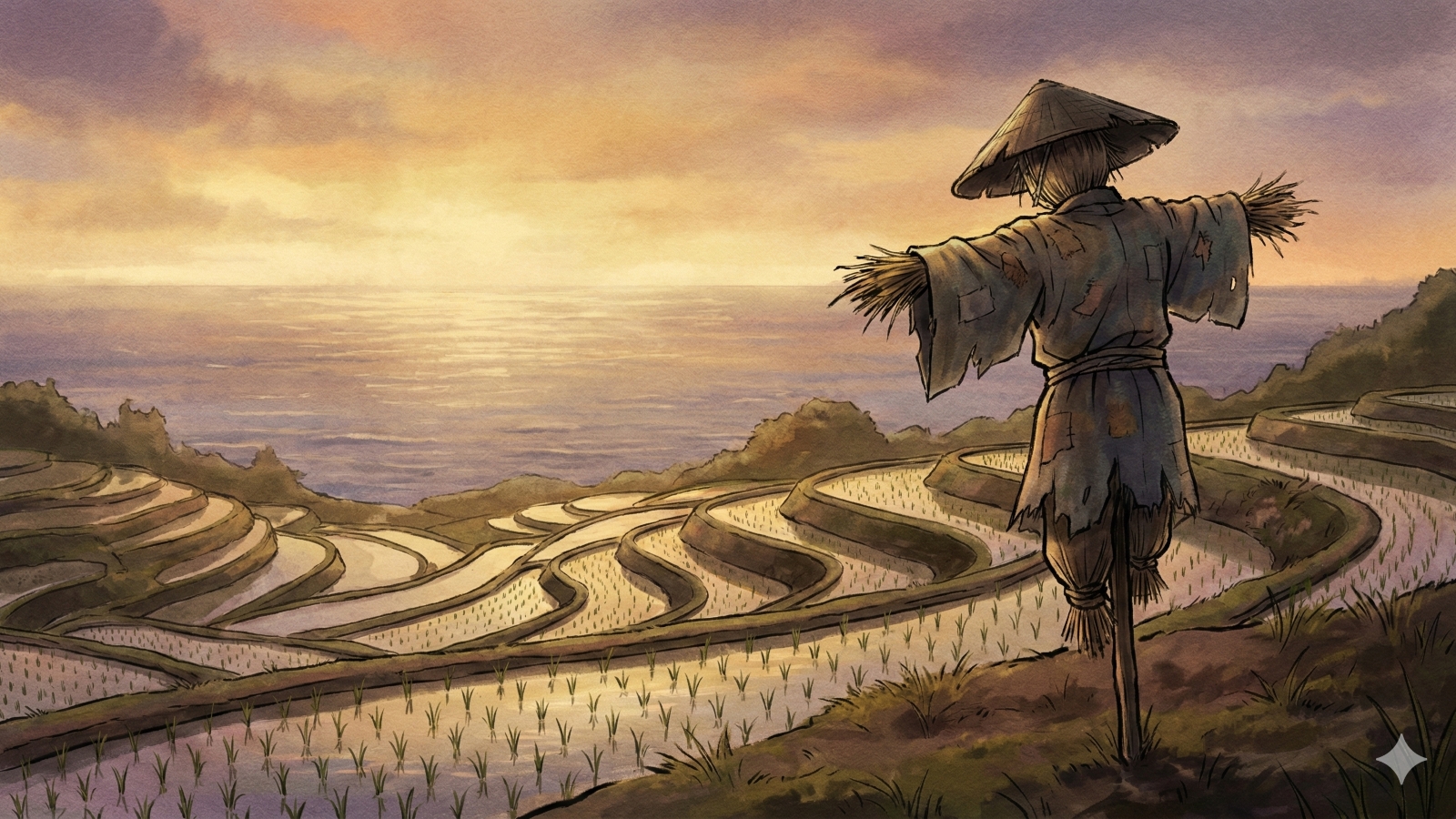
Japan's Primal Landscapes - A Tale of Memories Told by the Land
Superimposing the deceased onto the buzzing of flies, seeing gods in one-legged scarecrows. For Japanese people, these mysterious stories were not fantasy, but "life" itself, right next door. Longing for lands beyond the sea, legends remaining in ancient mounds. Why not travel through the frightening yet gentle "primal landscapes of the heart" gathered by Kunio Yanagita, Lafcadio Hearn, and others?

To Wonders Beyond Logic - The Beautiful Abyss Peered into by Scientists
Science is not just cold calculations. It is awe for nature beyond human understanding and an endless quest for beauty. Seeing the universe in a snowflake, feeling the ferocity of life in roadside grass... These are the adventurers of knowledge who confronted the overwhelming "mysteries" that appear only at the end of logic. We touch upon the records of their quiet yet passionate souls.
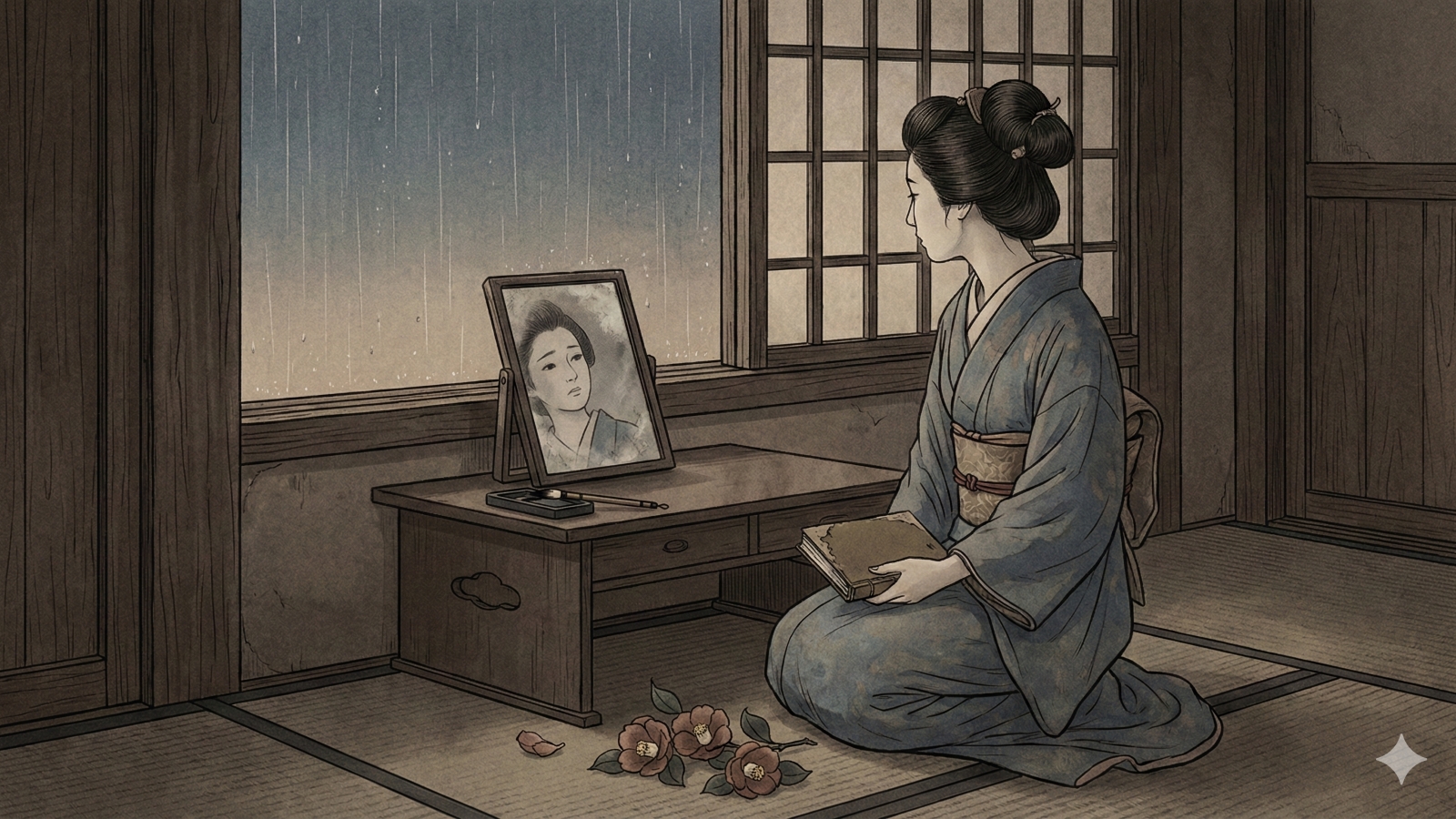
The Soul Screaming "I" - Stories of Fate and Pride by Modern Women
Should women's lives be plastered over with resignation to fate? Or is it a battle to break through social barriers and win one's own "life"? The dry self-mockery spat out by Ichiyō, the poignant scream released by Akiko for her beloved. We listen to the cries of their souls as they resisted the chains of their era, struggling through the mud to establish the "self."