

The Life of Asclepius - Love, Betrayal, and Forbidden Medicine
Asclepius, the greatest physician in Greek mythology. Based on original sources, we unravel his dramatic life—from the tragic romance of Apollo surrounding his birth and his upbringing by the sage Chiron, to his fall by Zeus's thunderbolt for crossing the boundary of death.


The Life of Asclepius - Love, Betrayal, and Forbidden Medicine
At the very moment a life was about to be extinguished atop a burning funeral pyre, another great life let out its first cry. The story of Asclepius, the physician god revered in ancient Greece, begins as a drama of love and hatred between god and mortal, and as a testament to the insatiable human quest to overturn the very laws of death.
Birth in the Flames: Coronis’s Error and Apollo’s Grief
To speak of the life of Asclepius, one cannot avoid the tragic secret of his birth. In one tradition, the story begins with the meeting of Coronis, daughter of Phlegyas, King of Thessaly, and Apollo, the god of light. Apollo loved this beautiful princess deeply, and she eventually conceived the god’s child. However, the gears of fate began to turn in a cruel direction. While carrying the divine child, Coronis committed adultery with a mortal man named Ischys (Apollodorus Library 3.10.3).
The poet Pindar severely judges Coronis’s folly as typical of the human foolishness that “hunts for things far off, ignoring the happiness at hand.” She hastened her marriage without her father’s knowledge, breaking her promise to the god (Pindar Pythian Odes 3.16–23). Regarding how this betrayal was exposed, Apollodorus relays a tradition that a crow (or raven), a messenger of Apollo, witnessed her infidelity and reported it (Apollodorus Library 3.10.3).
In Ovid’s Metamorphoses, Apollo’s complex rage toward the tattling bird is depicted vividly. The crow’s feathers, once shining silver-white, were turned jet black as punishment for bringing bad news.
Lingua fuit damno: lingua faciente loquaci qui color albus erat, nunc est contrarius albo.
“The tongue was the cause of the misfortune: because of that loquacious tongue, that which was white in color is now the opposite of white.”
(Ovid Metamorphoses 2.540–541)
Apollo’s wrath was terrible, and a deadly arrow was loosed at Coronis. Yet, as her body lay upon the funeral pyre and the flames began to lick at her flesh, the god could not bear to destroy his own child. He snatched the fetus from the fire. Thus, Asclepius was born into this world through a form of Caesarean section, in exchange for his mother’s death (Ovid Metamorphoses 2.600–630).
It is worth noting that Pausanias conveys a slightly different tradition from the land of Epidaurus. In this version, Coronis secretly gave birth in the mountains while visiting the Peloponnese with her father, then abandoned the infant and departed. A goat suckled the child, and a watchdog stood guard over him. When a shepherd found the baby, he saw lightning-like brilliance radiating from the child’s body; realizing this was a divine offspring, he turned away in awe (Pausanias Description of Greece 2.26.4–5). In either case, his birth was one wrapped in supernatural light, existing side-by-side with death.
Upbringing by the Sage Chiron and a Prophesied Fate
Having lost his mother, the young Asclepius was not raised by Apollo himself but was entrusted to the sage Chiron, who dwelt on Mount Pelion. Although Chiron was a Centaur—half-man, half-horse—he was unlike his savage kin; he was a being filled with justice and wisdom. He is also known as the mentor of the hero Achilles (Apollodorus Library 3.13.6).
In Chiron’s cave, Asclepius was taught the arts of the hunt, but above all, he was initiated into the mysteries of medicine (Apollodorus Library 3.10.3). He absorbed every technique of healing: knowledge of herbs, surgical incisions, and treatments through incantations. Pindar vividly describes how he treated those suffering from naturally occurring sores, wounds from bronze or stone, or summer fevers, healing them with gentle charms, potions, or surgery (Pindar Pythian Odes 3.47–53).
Ovid recounts an intriguing episode from this period of apprenticeship. Ocyrhoe, the prophetess daughter of Chiron, looked upon the young Asclepius and foretold his singular destiny.
“toto” que “salutifer orbi cresce, puer!” dixit; “tibi se mortalia saepe corpora debebunt; animas tibi reddere ademptas fas erit, idque semel dis indgnantibus ausus posse dare hoc iterum flamma prohibebere avita eque deo corpus fies exsangue, deusque, qui modo corpus eras, et bis tua fata novabis. […]”
“[Ocyrhoe] said: ‘Grow, boy, bringer of health to the whole world! Often will mortal bodies owe their lives to you; it will be permitted for you to return taken souls. But having dared this once against the will of the gods, you will be stopped by your grandfather’s flame from doing so again, and from a god you will become a bloodless corpse, and then a god again, who was just a corpse, and twice you will renew your fates. […]’”
(Ovid Metamorphoses 2.642–648)
She divined his “double fate”: that Asclepius would possess power enough to revive the dead, but for that very reason would incur divine wrath, die once, and then be revived as a god. This prophecy suggested that his medicine would go beyond mere healing, stepping into a dangerous realm that interfered with the laws of the world.
The Forbidden Art: Resurrection and the Blood of the Gorgon
As Asclepius grew, his skill came to surpass even that of his master, Chiron. His medicine was no longer merely human art; it had reached the domain of the divine. According to Apollodorus, the “blood of the Gorgon,” given to him by the goddess Athena, was a key source of this power. The blood flowing from the Gorgon’s left veins was a deadly poison, but the blood from the right veins possessed the saving power to resurrect the dead (Apollodorus Library 3.10.3).
Asclepius is said to have used this power to actually bring the dead back to life. The list of those resurrected includes Capaneus, one of the Seven Against Thebes; Lycurgus; and Hippolytus, the son of Theseus (Apollodorus Library 3.10.3). The resurrection of Hippolytus is particularly famous; after dying a tragic death due to the lust and slander of his stepmother Phaedra, he was brought back to breath by the hands of Asclepius (Eratosthenes Catasterismi 6).
But why did he revive the dead, defying the providence of nature? Was it out of pure compassion? The poet Pindar suggests a more human, and tragic, motivation: “gold.” It is said that he was blinded by a massive reward and brought back a man who had already been captured by death (Pindar Pythian Odes 3.55–58). Whatever the motive, his action was a grave violation that upset the balance between the heavens and the Underworld.
Zeus’s Thunderbolt and Ascension to the Stars
As the fame of Asclepius grew, Hades, the King of the Underworld, grew increasingly alarmed. He appealed to Zeus, complaining that the number of the dead was diminishing and the authority of the Underworld was being threatened (Diodorus Siculus Historical Library 4.71.2). Alternatively, it is said that Zeus himself feared that if humans obtained the cure for death and helped one another, they would approach the realm of immortality (Apollodorus Library 3.10.4).
To preserve the order of the world, Zeus made a decision. He hurled his almighty thunderbolt at Asclepius, taking the life of the great physician.
χερσὶ δʼ ἄρα Κρονίων ῥίψαις διʼ ἀμφοῖν ἀμπνοὰν στέρνων κάθελεν ὠκέως, αἴθων δὲ κεραυνὸς ἐνέσκιμψεν μόρον.
“The son of Cronus [Zeus] cast the lightning bolt from his hands, and quickly took the breath from the chests of both [Asclepius and the resurrected man]; the burning thunderbolt inflicted their doom.”
(Pindar Pythian Odes 3.57–58)
This death spawned a new chain of tragedy. Apollo, enraged by the murder of his son, could not raise his hand directly against the supreme god Zeus. Instead, he slaughtered the Cyclopes who had forged the thunderbolt for Zeus. As punishment for this retaliation, Apollo was forced to serve a humiliating term of servitude for one year, tending livestock for the mortal King Admetus (Apollodorus Library 3.10.4).
However, the story does not end with mere death. Due to Asclepius’s achievements and Zeus’s desire to reconcile with Apollo, he was raised to the heavens. He became the constellation Ophiuchus (“the Serpent-bearer”), shining in the night sky holding a serpent in his hands (Eratosthenes Catasterismi 6).
[…] λέγεται δὲ εἶναι Ἀσκληπιός, ὃν Ζεὺς χαριζόμενος Ἀπόλλωνι εἰς τὰ ἄστρα ἀνήγαγεν […]
“[The Serpent-bearer] is said to be Asclepius, whom Zeus raised up among the stars as a favor to Apollo.”
(Eratosthenes Catasterismi 6)
Thus, Asclepius—born from fire, who revived the dead, and was slaughtered by lightning—continues to shine eternally as a star. The serpent he carries watches over us still as the symbol of medicine. His life speaks to us of the eternal tension between the preciousness of human wisdom seeking to transcend limits and the strict laws of the gods that forbid it.
(Editing cooperation: Yuki Suzuki)
```
Japanese Views on Seasons - The Gaze of Literary Figures
Japanese literary figures have deeply engaged with the shifting seasons and the workings of life through various forms of expression such as novels and essays. Their delicate sensibilities and keen powers of observation open the door to a dialogue with nature for us, teaching us the beauty and philosophy hidden within everyday landscapes.
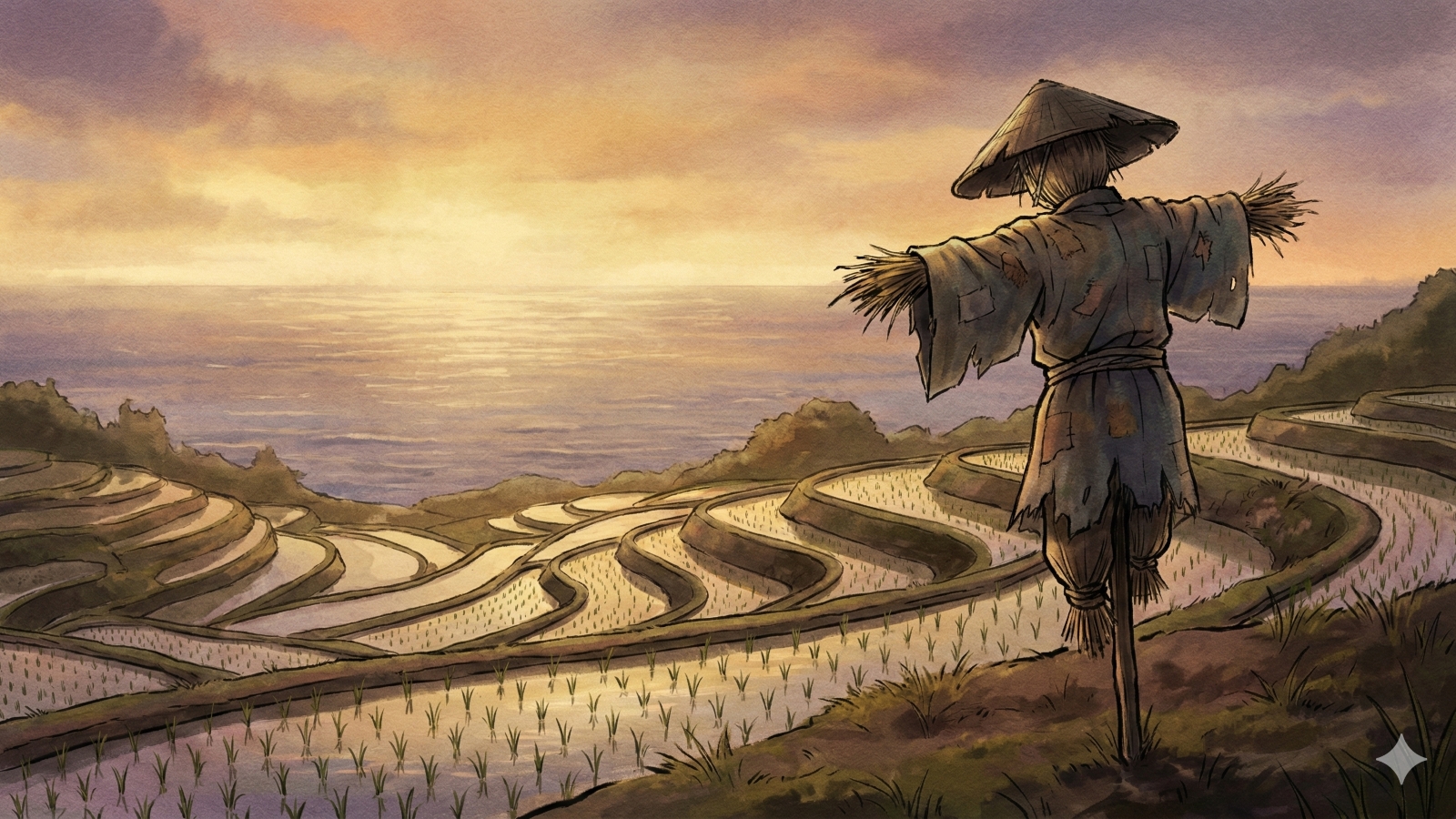
Japan's Primal Landscapes - A Tale of Memories Told by the Land
Superimposing the deceased onto the buzzing of flies, seeing gods in one-legged scarecrows. For Japanese people, these mysterious stories were not fantasy, but "life" itself, right next door. Longing for lands beyond the sea, legends remaining in ancient mounds. Why not travel through the frightening yet gentle "primal landscapes of the heart" gathered by Kunio Yanagita, Lafcadio Hearn, and others?

To Wonders Beyond Logic - The Beautiful Abyss Peered into by Scientists
Science is not just cold calculations. It is awe for nature beyond human understanding and an endless quest for beauty. Seeing the universe in a snowflake, feeling the ferocity of life in roadside grass... These are the adventurers of knowledge who confronted the overwhelming "mysteries" that appear only at the end of logic. We touch upon the records of their quiet yet passionate souls.
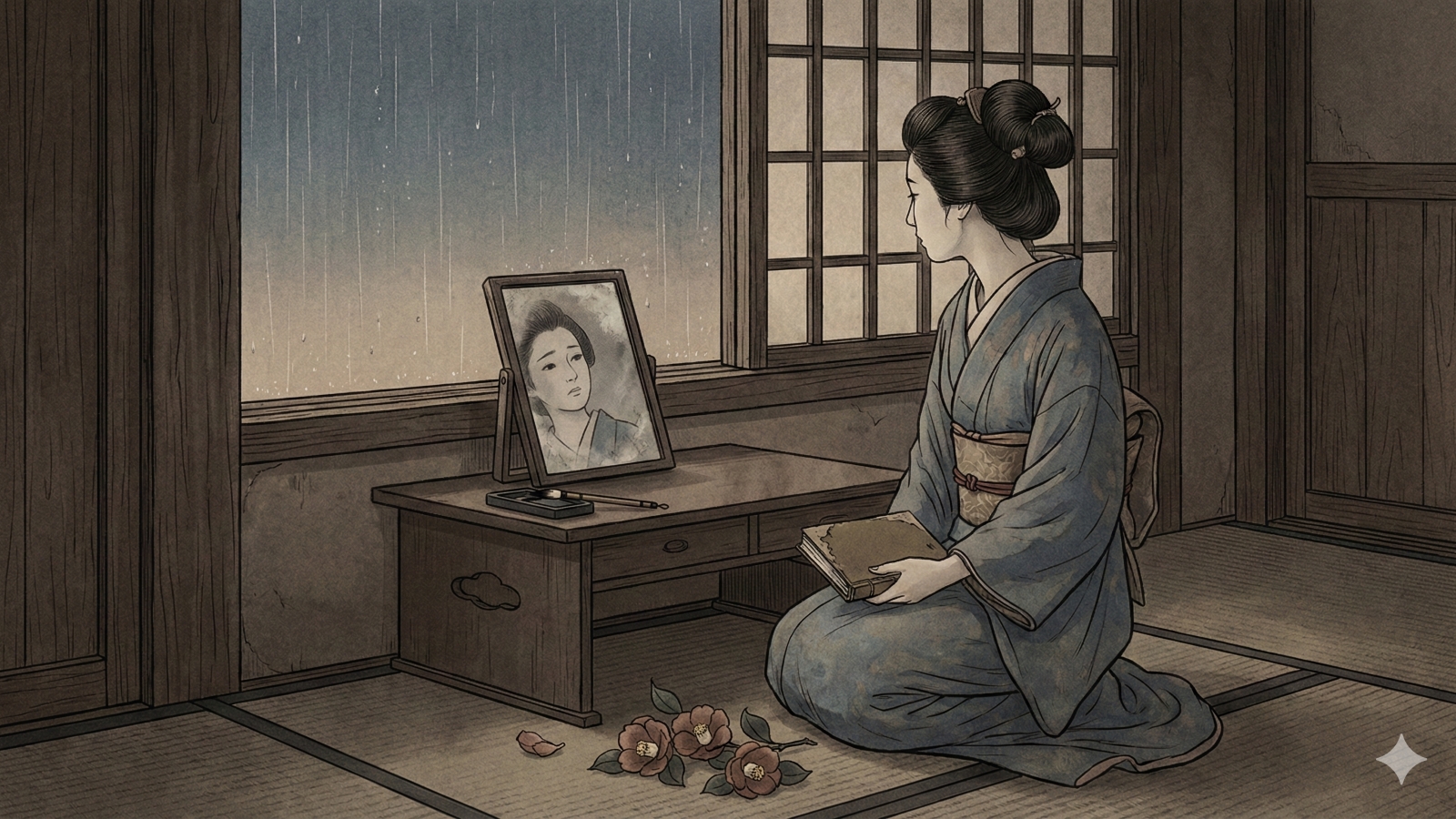
The Soul Screaming "I" - Stories of Fate and Pride by Modern Women
Should women's lives be plastered over with resignation to fate? Or is it a battle to break through social barriers and win one's own "life"? The dry self-mockery spat out by Ichiyō, the poignant scream released by Akiko for her beloved. We listen to the cries of their souls as they resisted the chains of their era, struggling through the mud to establish the "self."