

Transcending Distance and Time - The Bonds of Family Woven by Literary Giants
Physical distance may actually shorten the emotional distance within a family. This collection explores the love of a father sending his child off on a journey, as depicted by Shimazaki Toson, and the heart of a mother praying for her child's safety from afar. It touches upon the miracle of 'reunion' captured by Mori Ogai, and the endless longing for 'home' portrayed by Hayashi Fumiko. Delve into the poignant yet warm core of parent-child affection, strengthened precisely because of separation, as inscribed in the masterpieces of modern Japanese literature.

「とうさんなぞも旅をするたびに自分の道が開けて来た。」
It was through my own travels that my path in life opened up.
—— Shimazaki Toson, The Storm [Speaker: I (Father)]
【解説】
Life can sometimes be like a travel journal passed down from parent to child. These are words of encouragement spoken by a father on the eve of his second son, Jiro’s, departure to the countryside to start a new life. The scene of the family gathered around the dinner table, remembering their late mother, is tinged with the sadness of parting. Amidst this, the father reflects on his own experiences, explaining that it is the ‘journey’ into the unknown that fosters personal growth and forges one’s path. It is a profound expression of a father’s love, pushing his son forward with strength, even while worrying about his future.
「どうかして兄さまもよくやって下さるように、捨吉も無事で居りますように、毎日そう言って拝んでいる。」
Every day I pray that your older brother does well, and that you, Sutekichi, remain safe.
—— Shimazaki Toson, When the Cherries Ripen [Speaker: Mother]
【解説】
A mother’s prayer is like an invisible umbrella, protecting her children across the distant sky. These are the words of a mother who has traveled from the countryside to Tokyo to see her sons, spoken to the protagonist, Sutekichi. She quietly confides that she worries about him and his older brother living in the city, and that back home, she prays to the gods and buddhas every day for their safety and success. The image of a parent, in a place unknown to her children, single-mindedly wishing for their happiness. This deep, unwavering love profoundly moves the lonely Sutekichi, reminding him of the family bond he had nearly forgotten.
「まあ、俺も出て来て見て、これで
Well, now that I’ve come and seen you, I can finally rest easy.
—— Shimazaki Toson, When the Cherries Ripen [Speaker: Mother]
【解説】
Have you ever felt a sense of peace just by seeing someone’s face, even before exchanging words? This is a remark uttered with a sigh of relief by the mother who traveled from the countryside to Tokyo to visit her sons. Having worried about her sons living so far away, she journeyed a long distance. Seeing with her own eyes that they were striving to live well despite their hardships, she could finally let go of her burden. The moment she saw their faces, her heart, once filled with anxiety, was set free. In this, the depth of a parent’s love for their child is expressed more eloquently than any words could convey.
「その手はもはやいっぱしの若い百姓の手だった。」
Those hands were already the hands of a full-fledged young farmer.
—— Shimazaki Toson, The Storm
【解説】
A child’s growth can sometimes be read in the history etched upon their hands. This sentence expresses the quiet emotion of a father visiting his eldest son, Taro, who had started farming in the countryside. While discussing leaving his second son in Taro’s care, the father glances at his son’s hands. They were no longer the delicate hands of a city boy. Covered in dirt and gnarled, those strong hands spoke more eloquently than anything of how Taro had endured unfamiliar labor and put down roots as a proper farmer. The father’s deep emotion at realizing his son’s steady growth, even without exchanging words, is palpable.
「干した貝が水にほとびるように、両方の目に潤いが出た。」
Like a dried seashell softening in water, moisture returned to both her eyes.
—— Mori Ogai, Sansho the Bailiff
【解説】
Perhaps a miracle is the moment moisture returns to a dried-out heart. This sentence describes the change that occurs in a mother who is reunited with her son after more than a decade. Her eyes, which had lost their light after long years of hard labor, open again the moment she recognizes the young man before her as her child, Zushio. The metaphor ‘like a dried seashell softening in water’ signifies more than just the recovery of sight. It masterfully depicts a miracle of the heart—the mother’s soul, which had hardened like a fossil in the depths of despair, receiving the water of life from her son’s voice and regaining its softness. It is a masterful phrase that condenses the profound emotion of a parent-child reunion.
「涙は各自に分て泣かうぞ」
Let us share the tears and weep together.
—— Higuchi Ichiyo, The Thirteenth Night [Father]
【解説】
One person’s sorrow, when shared, can transform into a family bond. Hearing his daughter Oseki’s anguished confession, her father does not simply dismiss her and tell her to endure. After making her accept her harsh reality, he shows deep empathy and solidarity, saying, “Let us share those tears and weep together.” This is a powerful declaration of the will to embrace an individual’s suffering as a family unit and bear the burden together. With this one warm phrase, Oseki is freed from her lonely struggle and finds the strength to move forward, supported by her family’s love. Here lies one of the most profound and beautiful forms of parent-child affection.
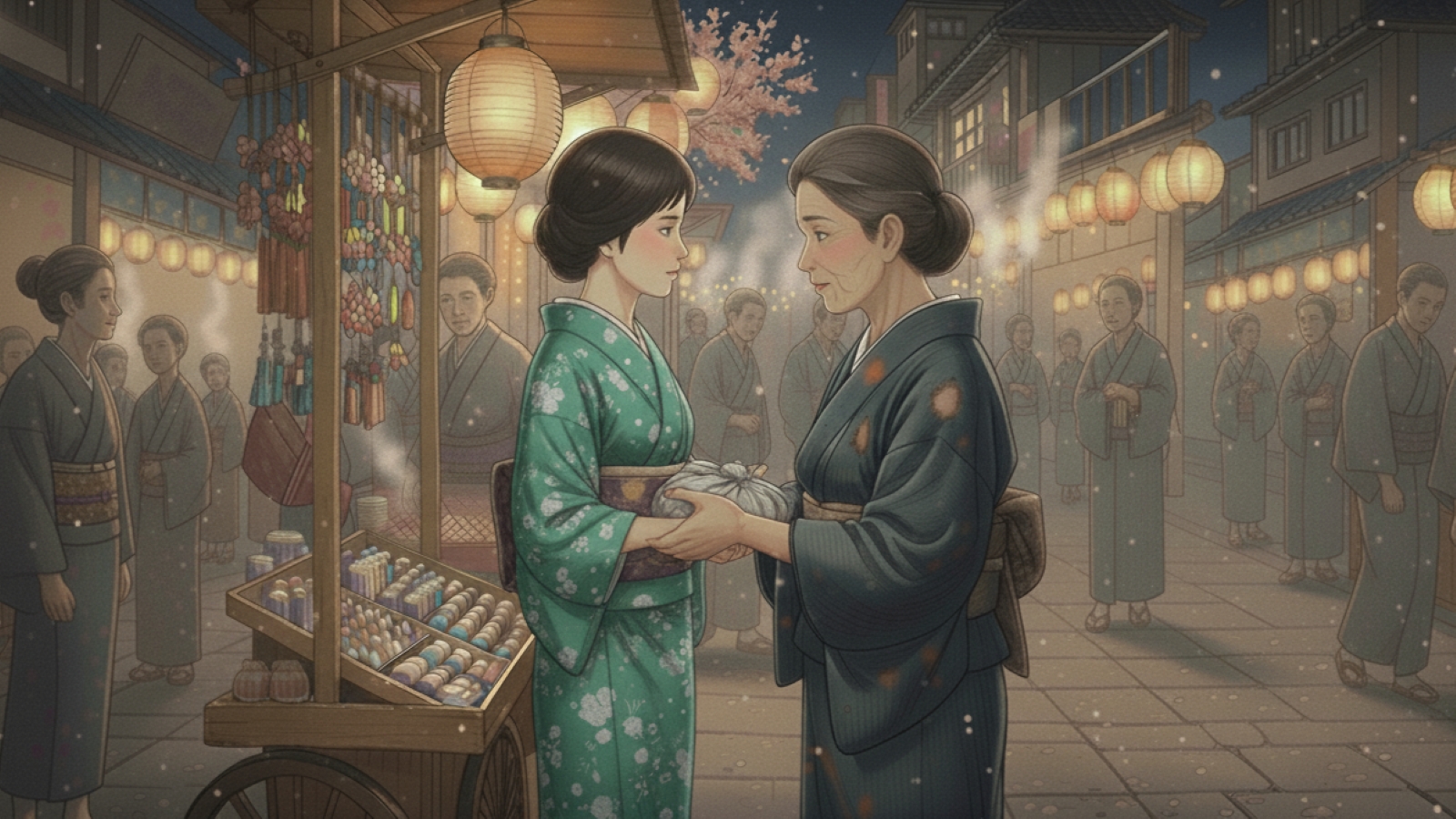
「暖かになると、妙に汚れが目にたつ、お母さんの着物も、さゝくれて来た。」
As it grew warmer, the dirt became strangely conspicuous, and my mother’s kimono had also grown frayed.
—— Hayashi Fumiko, Diary of a Vagabond (First Edition)
【解説】
Have you ever felt your heart tighten at a sudden change in a loved one? This passage comes from a scene where the protagonist has started a night stall in Tokyo, beginning her path to independence. Her concerned mother comes to deliver a homemade lunch, and at that moment, the protagonist notices that her mother’s kimono is old and dirty. It is a moment of seeing clearly the figure of her mother, who has endured hardship for her sake. This brief description seems to condense the daughter’s poignant love for her parent, her realization of her mother’s aging which she hadn’t noticed before, and a compassionate desire to do something for her. It is a quote that quietly speaks to the depth of the parent-child bond that exists even in a life of poverty.
「お母さんを手で叩きたい程可愛くなる。」
My mother becomes so dear to me I feel like I could strike her.
—— Hayashi Fumiko, Diary of a Vagabond (First Edition)
【解説】
Doesn’t love sometimes come with contradictory impulses? This sentence captures the protagonist’s complex feelings after reading a letter from her mother back home. The letter, written in faltering kana script, described the pain of rheumatism, financial struggles, and her earnest hope for her daughter and husband’s return. The content was so pitiable and endearing that the protagonist is overcome with affection and feels that her mother is “so dear to me I feel like I could strike her.” This is not a simple expression of love, but rather a fierce outburst of emotion—a mix of frustration with her mother for causing her to worry, and a sense of helplessness about her own situation. It is a powerful passage where an unbreakable attachment to family is expressed paradoxically.
「私んとこのパパあんなにいつもニコニコ笑ってるけど、とても淋しいのよ。」
My papa is always smiling like that, but he’s very lonely, you know.
—— Hayashi Fumiko, Diary of a Vagabond (First Edition) [Speaker: Beni]
【解説】
How much loneliness do people hide beneath a smiling mask? This is a line from Beni, a young girl who is the protagonist’s neighbor in an apartment building. She lives with her father, who at first glance seems cheerful and wants for nothing. However, with the sharp intuition unique to a child, she sees through to the deep loneliness hidden behind her father’s constant smile. Do these words not show the universal affection of a child looking deeply at a parent and worrying about their heart? The unspoken subtleties of the heart, perceptible only because they are family, are conveyed here.
「たった一人のお母さんに送ってあげる事が出来るだろうか」
Will I ever be able to send anything to my one and only mother?
—— Hayashi Fumiko, Diary of a Vagabond (First Edition)
【解説】
How helpless must one feel, caught between the love for one’s parents and a reality that won’t bend to one’s will? This is the inner voice of the protagonist, lamenting her circumstances while in Osaka. She wanders from man to man, from job to job, without a steady income. She asks herself if a daughter like her could ever, even in her entire lifetime, send a decent amount of money to her “one and only mother” who is struggling back home. This question is steeped in deep despair and self-loathing over her desire to be a good daughter and her inability to do so. It is precisely because of her pure love for her parent that her own inadequacy feels all the more acute. It is a poignant sentence that makes one feel the weight of responsibility and love for family.
「私の古里は遠い四国の海辺、そこには父もあり母もあり」
My hometown is on a distant shore in Shikoku, and there I have a father and a mother.
—— Hayashi Fumiko, Diary of a Vagabond (First Edition)
【解説】
A hometown is a port for the heart, and parents may be the unwavering lighthouse that shines there. This poetic passage is written in a scene where the protagonist, while connecting with a woman living alongside her amidst the city’s clamor, lets her thoughts drift to her distant home. No matter how much she wanders or gets hurt in the city, the primordial landscape of her hometown as a place to return to lives on in the depths of her heart. And at the center of that landscape were always her father and mother. These words symbolize the immense presence of family as a constant source of support, transcending physical distance and the passage of time. Precisely because the protagonist lives a vagrant life, the longing for her parents that comes to mind resonates all the more poignantly, and warmly.
(Editorial Cooperation: Haruna Ishita, Momona Sassa)
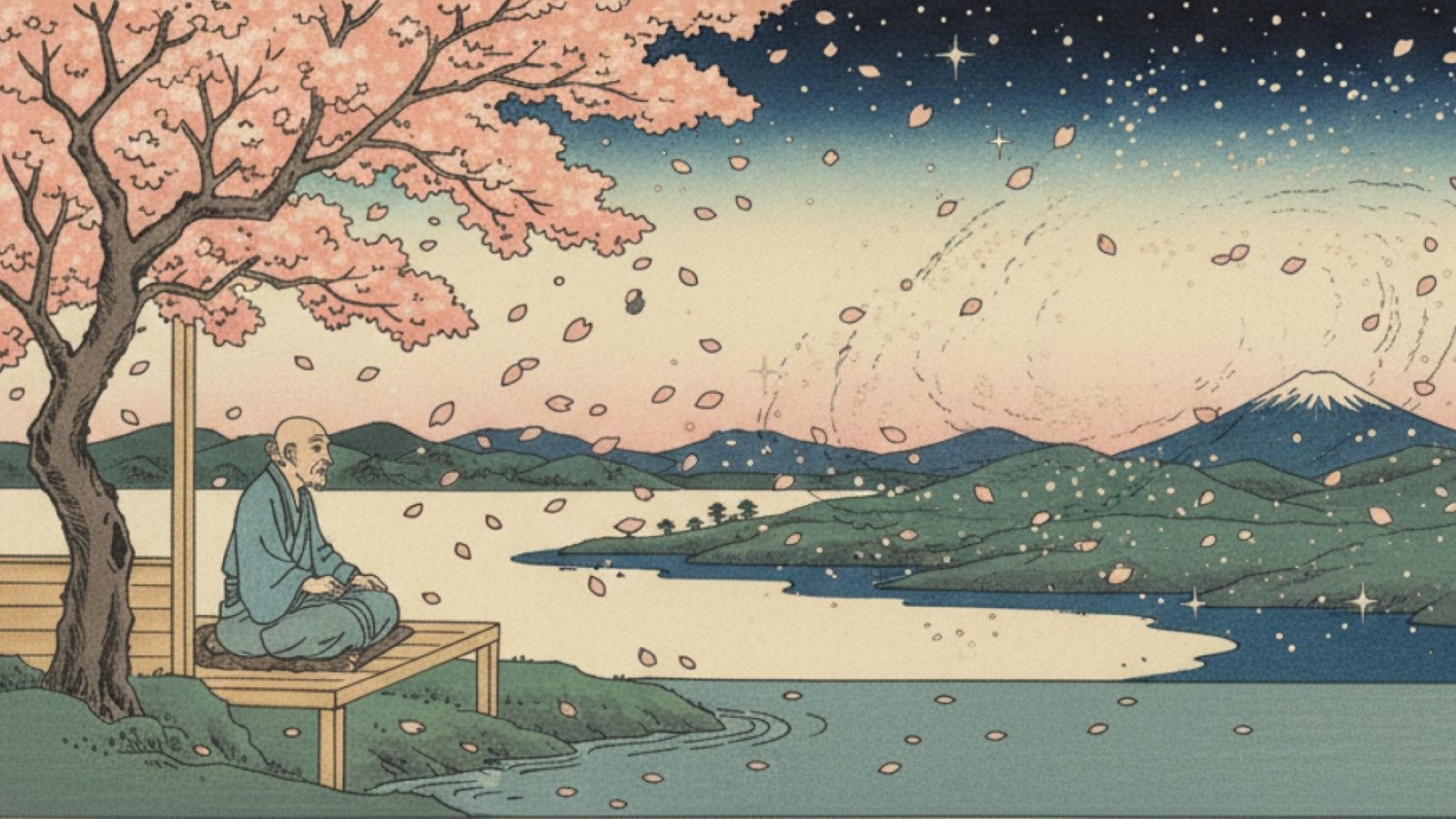
Japanese Views on Seasons - The Gaze of Literary Figures
Japanese literary figures have deeply engaged with the shifting seasons and the workings of life through various forms of expression such as novels and essays. Their delicate sensibilities and keen powers of observation open the door to a dialogue with nature for us, teaching us the beauty and philosophy hidden within everyday landscapes.
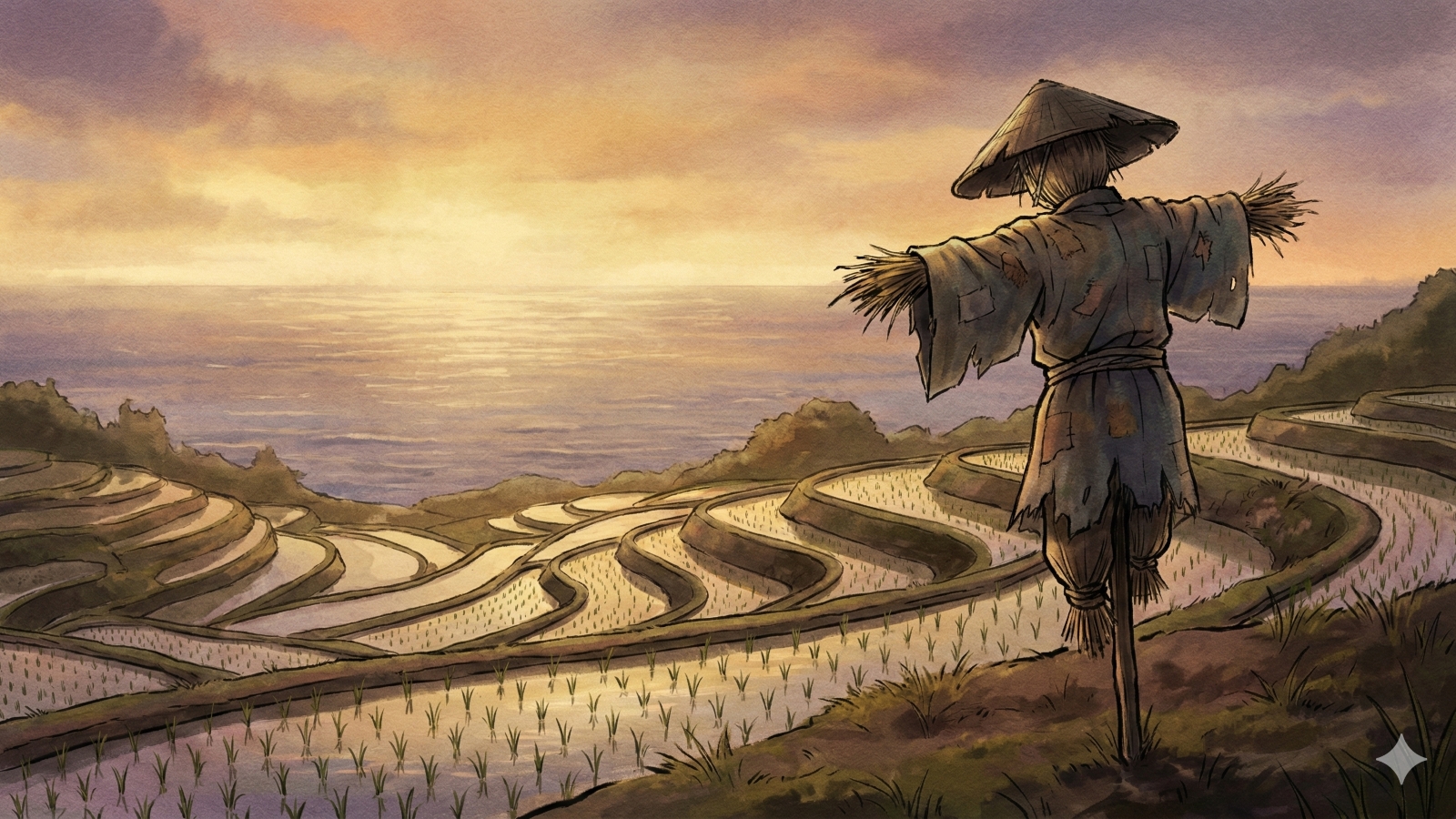
Japan's Primal Landscapes - A Tale of Memories Told by the Land
Superimposing the deceased onto the buzzing of flies, seeing gods in one-legged scarecrows. For Japanese people, these mysterious stories were not fantasy, but "life" itself, right next door. Longing for lands beyond the sea, legends remaining in ancient mounds. Why not travel through the frightening yet gentle "primal landscapes of the heart" gathered by Kunio Yanagita, Lafcadio Hearn, and others?
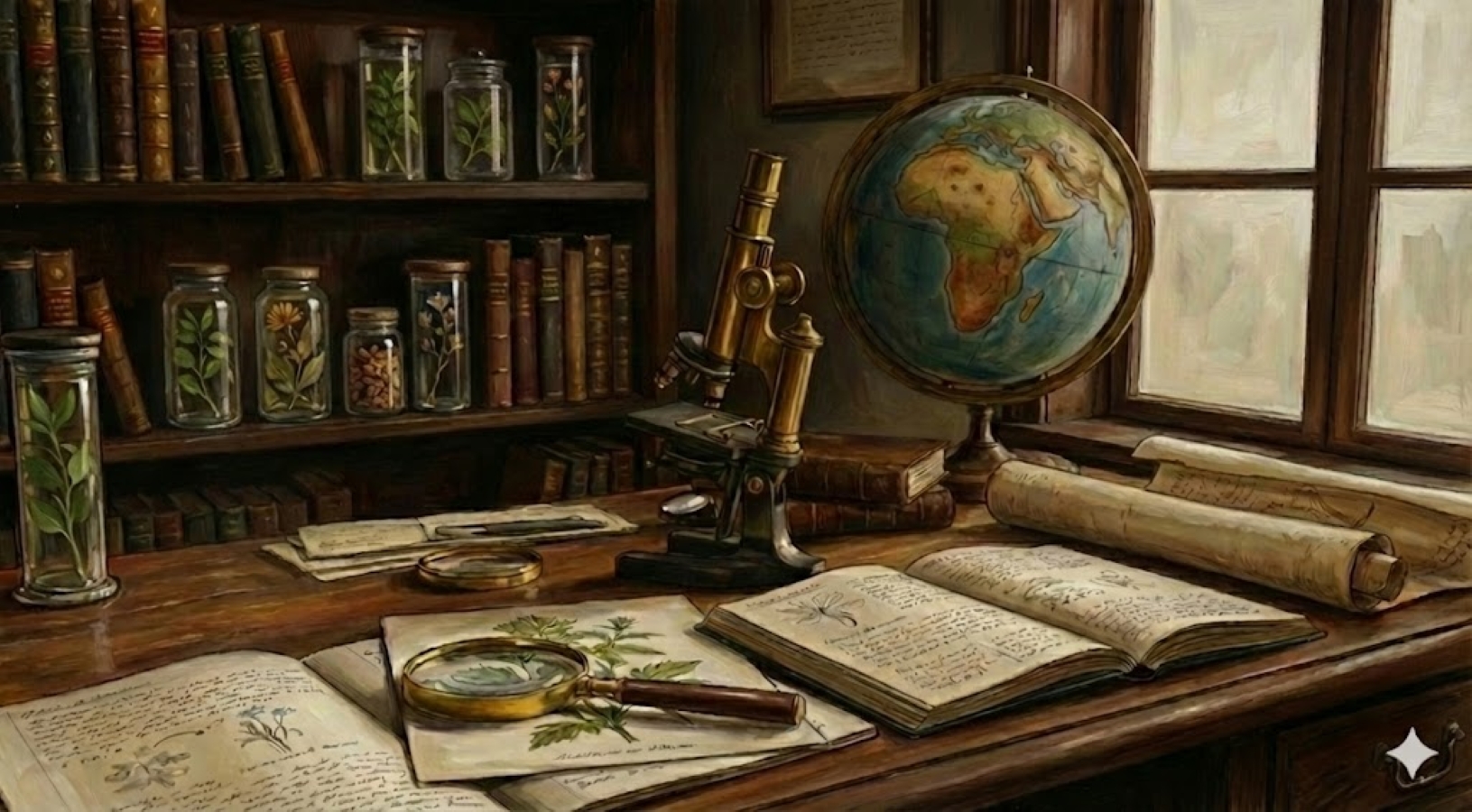
To Wonders Beyond Logic - The Beautiful Abyss Peered into by Scientists
Science is not just cold calculations. It is awe for nature beyond human understanding and an endless quest for beauty. Seeing the universe in a snowflake, feeling the ferocity of life in roadside grass... These are the adventurers of knowledge who confronted the overwhelming "mysteries" that appear only at the end of logic. We touch upon the records of their quiet yet passionate souls.
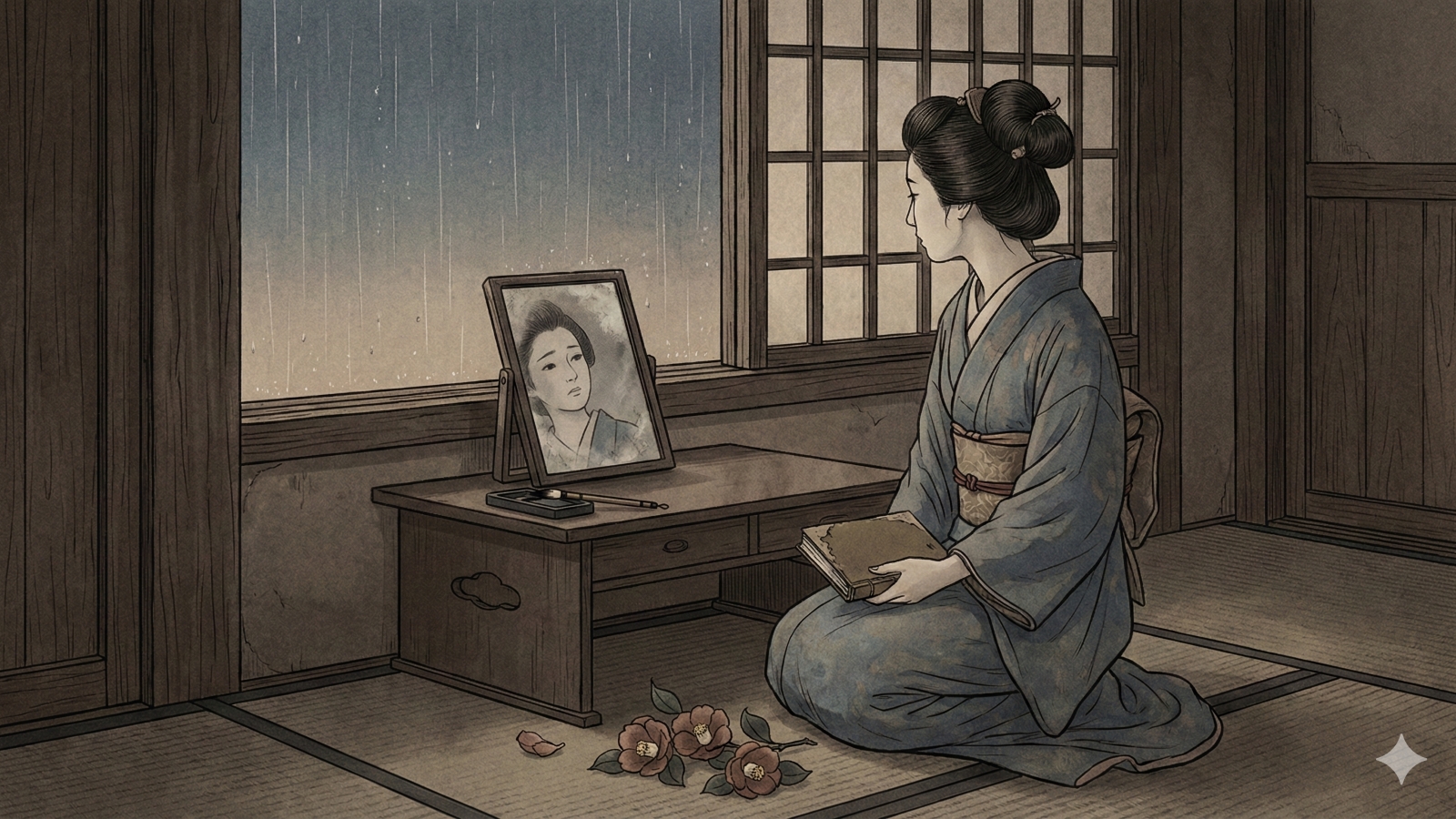
The Soul Screaming "I" - Stories of Fate and Pride by Modern Women
Should women's lives be plastered over with resignation to fate? Or is it a battle to break through social barriers and win one's own "life"? The dry self-mockery spat out by Ichiyō, the poignant scream released by Akiko for her beloved. We listen to the cries of their souls as they resisted the chains of their era, struggling through the mud to establish the "self."