

The Mark of Sorrow Blooming from Fresh Blood - The Death of Hyacinthus and His Metamorphosis into a Flower
We unravel the story of the tragic accidental death of Hyacinthus, the beautiful youth loved by Apollo, and the eternal lament "AI" inscribed upon the flower born from his blood, drawing from ancient primary sources.


The Mark of Sorrow Blooming from Fresh Blood: The Death of Hyacinthus and His Metamorphosis into a Flower
In the land of Sparta, scorched by the midday sun, a throwing contest enjoyed by a god and a mortal turned into a tragedy in the blink of an eye. As the life of the beloved youth slipped through his fingers, the desperate lament of the sun god Apollo came to be inscribed as an eternal “word” upon the petals of a flower blooming from the earth.
The Youth Loved by a God and the Midday Tragedy
In Greek mythology, Apollo is known as the radiant god of the lyre and the bow; however, there was a time when he set aside all his majestic accoutrements and became infatuated with a single youth. The boy’s name was Hyacinthus. Apollo poured extraordinary affection upon this beautiful youth from Amyclae. The god even left his temple at Delphi, the center of the world, unattended; he found joy in roaming the mountains and fields with unaccustomed nets and dogs, serving as the boy’s attendant (Ovid Metamorphoses 10.167–173).
On the fateful day, it was noon, the midpoint between day and night, when the sun reached the apex of the sky. The two stripped off their garments, made their bodies gleam with olive oil, and began a discus-throwing contest. When Apollo first cast the discus high into the sky, it flew with such force that it pierced through the clouds, falling to the solid ground only after a long time had passed. It was a throw that brilliantly demonstrated the god’s power and skill (Ovid Metamorphoses 10.174–181).
However, the tragedy begins here. Hyacinthus, driven by the impulse of youth and enthusiasm for the sport, dashed out to retrieve the discus. At that moment, the heavy discus, having hit the ground and rebounded, struck the boy full in the face (Ovid Metamorphoses 10.182–185).
Apollo turned as pale as the boy and caught his collapsing body. He desperately tried to nurse him, attempting to dry the wound and applying herbs to hold back the fleeing soul. However, the wound was no longer curable (Ovid Metamorphoses 10.185–189). Ovid describes this cruel scene by likening it to a broken flower.
Ut siquis violas rigidumve papaver in horto liliaque infringat fulvis horrentia linguis, marcida demittant subito caput illa vietum nec se sustineant spectentque cacumine terram:
“Just as if someone breaks violets or rigid poppies in a garden, or lilies bristling with yellow tongues, they suddenly droop their withered heads, unable to support themselves, and gaze at the ground with their tops.”
(Ovid Metamorphoses 10.190–193)
In this way, the neck of the dying Hyacinthus lost its strength, and unable to bear its own weight, it tilted onto his shoulder (Ovid Metamorphoses 10.194–195).
The Inscription of the Eternal Lament “AI”
Faced with the boy’s death, Apollo was driven by remorse. He lamented, “I have killed you,” and confessed the guilt of having destroyed his beloved with his own hand. Since he is a god and is not permitted to die, he cannot take his own life to join Hyacinthus (Ovid Metamorphoses 10.198–203).
Thus, Apollo promised a transformation to keep the boy in eternal memory. While Apollo was spinning these words, the blood that had stained the grass ceased to be blood and transformed into a brilliant flower. Its shape resembled a lily, but whereas a lily is silver, this flower was purple (Ovid Metamorphoses 10.210–213).
Furthermore, Apollo inscribed his own sorrowful cry upon this flower.
ipse suos gemitus foliis inscribit, et AI AI flos habet inscriptum, funestaque littera dicta est.
“He [Apollo] himself inscribes his groans upon the petals, and the flower bears the inscription ‘AI AI’; and the letters are said to be mournful.”
(Ovid Metamorphoses 10.215–216)
This text “AI” represents a cry of grief in Greek. Thus, the name of Hyacinthus remained as a flower, and in Sparta, the “Hyacinthia,” an event honoring him, came to be celebrated grandly every year (Ovid Metamorphoses 10.217–219).
The Jealousy of the Wind and the “Double Narrative”
Regarding the death of Hyacinthus, there is a theory that it was not a mere accident but that another will was at work. According to a version attributed to Palaephatus, it was not only Apollo who held affection for Hyacinthus. Zephyrus, the god of the West Wind, was also captivated by this youth (Palaiphatos De Incredibilibus 46).
While Apollo brought music and pleasure, Zephyrus was an entity that brought fear and agitation. Because the boy inclined his heart toward Apollo, Zephyrus, mad with jealousy, manipulated the wind while the two were throwing the discus. The discus thrown by Apollo was carried by Zephyrus’s wind and became the lethal weapon that took Hyacinthus’s life (Palaiphatos De Incredibilibus 46).
Moreover, the death of another famous hero is superimposed upon this “flower of Hyacinthus.” That hero is Ajax the Great (Aias) of the Trojan War. After being defeated by Odysseus in the contest for the arms of Achilles, he could not bear the humiliation and took his own life. According to Ovid, what was born from the blood shed by Ajax was also a purple flower staining the green turf, the same as that which had once been born from the wound of Hyacinthus (Ovid Metamorphoses 13.394–396).
The letters inscribed on this flower thus come to hold two meanings.
littera communis mediis pueroque viroque incripta est foliis, haec nominis, illa querellae.
“The common letters were inscribed upon the petals for both the boy [Hyacinthus] and the man [Ajax]; the one represents the name [AI of AIAS], the other the lament [AI].”
(Ovid Metamorphoses 13.397–398)
The naturalist Pliny also touches upon this tradition, noting that the flower of Hyacinthus is accompanied by a double narrative: “the loss of the youth loved by Apollo” or “the birth from the blood of Ajax.” He explains that the veins of the flower form the shape of the Greek letters “AI” (Pliny the Elder Naturalis Historia 21.66).
Pausanias also records a local tradition on the island of Salamis that this flower appeared for the first time after the death of Ajax. The flower he saw was white with a reddish tint and smaller than a lily. And there, too, the same letters as on the flower of Hyacinthus were inscribed (Pausanias Description of Greece 1.35.4).
The wailing for the premature death of a beautiful youth, and the regret of a proud hero. Perhaps the ancient people, observing the patterns emerging within the flowers blooming in the fields, read into them the inexhaustible sorrow of gods and heroes.
(Editorial Assistance: Yuki Suzuki)
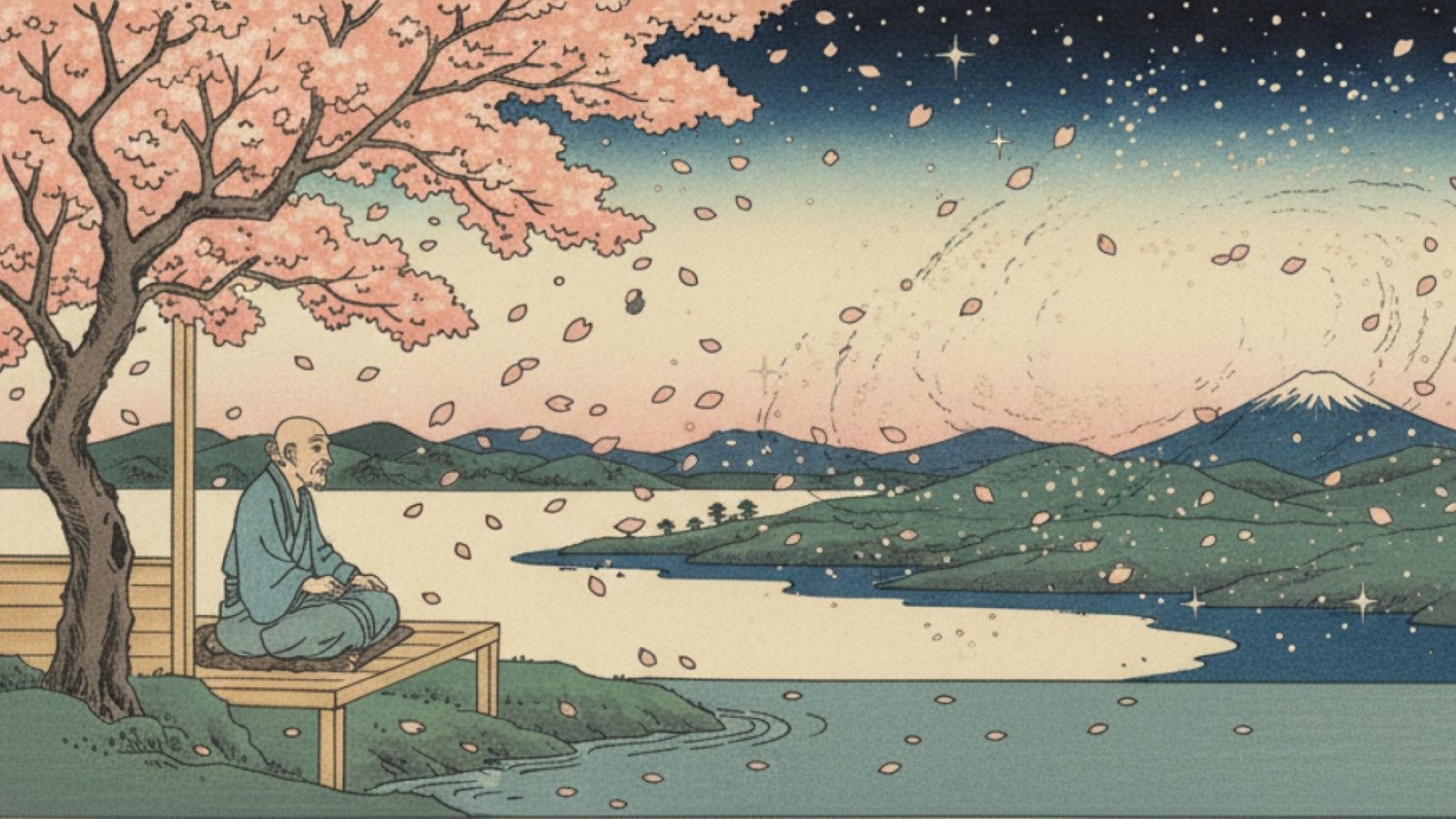
Japanese Views on Seasons - The Gaze of Literary Figures
Japanese literary figures have deeply engaged with the shifting seasons and the workings of life through various forms of expression such as novels and essays. Their delicate sensibilities and keen powers of observation open the door to a dialogue with nature for us, teaching us the beauty and philosophy hidden within everyday landscapes.
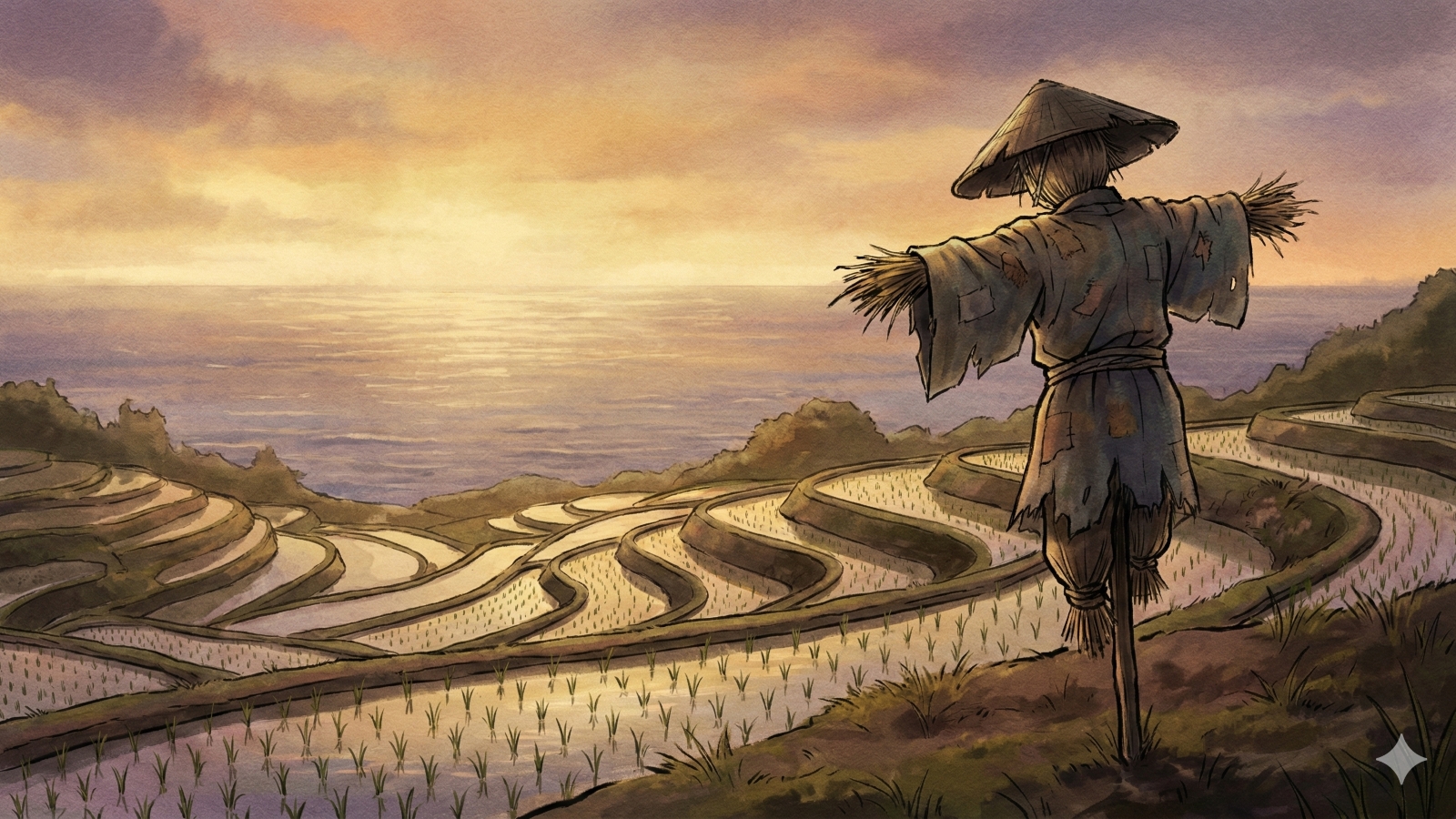
Japan's Primal Landscapes - A Tale of Memories Told by the Land
Superimposing the deceased onto the buzzing of flies, seeing gods in one-legged scarecrows. For Japanese people, these mysterious stories were not fantasy, but "life" itself, right next door. Longing for lands beyond the sea, legends remaining in ancient mounds. Why not travel through the frightening yet gentle "primal landscapes of the heart" gathered by Kunio Yanagita, Lafcadio Hearn, and others?

To Wonders Beyond Logic - The Beautiful Abyss Peered into by Scientists
Science is not just cold calculations. It is awe for nature beyond human understanding and an endless quest for beauty. Seeing the universe in a snowflake, feeling the ferocity of life in roadside grass... These are the adventurers of knowledge who confronted the overwhelming "mysteries" that appear only at the end of logic. We touch upon the records of their quiet yet passionate souls.
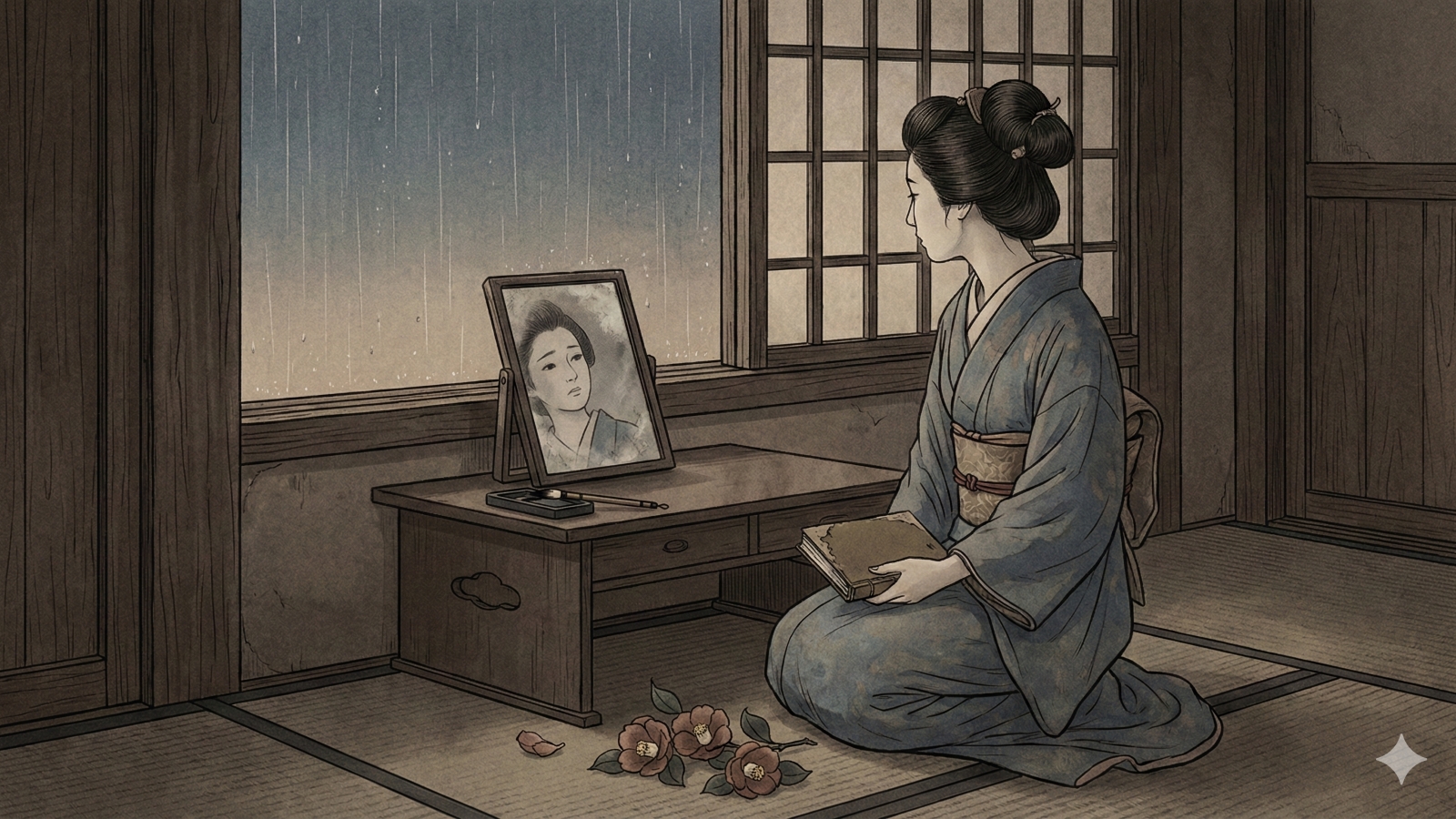
The Soul Screaming "I" - Stories of Fate and Pride by Modern Women
Should women's lives be plastered over with resignation to fate? Or is it a battle to break through social barriers and win one's own "life"? The dry self-mockery spat out by Ichiyō, the poignant scream released by Akiko for her beloved. We listen to the cries of their souls as they resisted the chains of their era, struggling through the mud to establish the "self."