



“γνῶθι σαυτόν καὶ μηδὲν ἄγαν.”
“Know thyself, and nothing in excess.”
—— Plato Protagoras 343b
【解説】
Before exploring the outer world, first explore your inner self. These two phrases, said to have been inscribed on the Temple of Apollo at Delphi, are the crystallization of ancient Greek wisdom. Through the mouth of Socrates, Plato praises the intelligence of the Spartans, who spoke few but meaningful words, and quotes the maxims of the Seven Sages as the pinnacle of this wisdom. “Self-knowledge,” which begins with knowing one’s own limits and ignorance, and the spirit of the “golden mean,” which avoids extremes and values harmony, are the foundations of all learning and culture. They transcend mere knowledge and continue to resonate in our hearts across the ages as guidelines for living well.
“τέχνην ἀσκητέον ἐστὶ διὰ παντὸς τοῦ βίου καὶ παραμένουσαν”
“One should practice a skill that remains with you throughout your life.”
—— Galen Adhortatio ad artes addiscendas 14
【解説】
The strength of youth will one day fade, but some things shine even brighter with age. Galen contrasts athletes and manual laborers, who rely on physical strength, with those who possess intellectual skills, strongly urging young people to choose the latter path. A skill dependent on manual labor loses its value as the body weakens. However, a rational “art” (τέχνη) such as medicine, law, or philosophy, once acquired, will support a person throughout their life and never abandon them. This phrase powerfully declares that the culture born of learning is an unchanging treasure that does not fade with time. Is it not like a wise and trustworthy friend who walks with you on the long journey of life?
“Σοφὸν γὰρ ἓν βούλευμα πολλὰς χεῖρας νικᾷ”
“For one wise counsel overcomes many hands.”
—— Galen Adhortatio ad artes addiscendas 13
【解説】
The brawn of countless soldiers or the strategy of a single general—which one decides the course of a battle? Galen speaks of the useless boasting of an athlete famous for his superhuman strength and, in contrast, praises Themistocles, who saved his country with his strategic mind. It is in this context that this line from the playwright Euripides is quoted. The words strike at the truth that an insight or plan born from a single superior intellect can possess far greater power than mere physical force or numerical advantage. Galen asserts that it is “wise counsel,” honed by learning and culture, that brings decisive victory in the various phases of life. Brute force is visible, but perhaps it is the invisible workings of the intellect that truly move the world.
“μᾶλλον ὁμονοοῦντας καὶ πλείω κατορθοῦντας τοὺς ταῖς δόξαις χρωμένους ἢ τοὺς τὴν ἐπιστήμην ἔχειν ἐπαγγελλομένους.”
“Those who use their judgment are more in agreement and accomplish more than those who profess to have knowledge.”
—— Isocrates Against the Sophists 8
【解説】
Those who brandish empty theories versus those who make judgments based on reality—who accomplishes more? Isocrates harshly criticizes the Sophists, who boasted of teaching an absolute “knowledge” (episteme) as if they could predict the future. According to him, it is not certain knowledge but practical judgment (doxa), which allows one to make sound decisions in complex real-world situations, that has the power to unite people and lead things to success. These words teach us that true learning and culture lie not merely in the accumulation of specialized knowledge, but in the wisdom to apply it to solve real problems. Knowledge is but a tool; it is the judgment of how to wield it that is the key to guiding us toward better practice.
“μεγάλας ποιοῦσι τὰς τέχνας οὐχ οἱ τολμῶντες ἀλαζονεύεσθαι περὶ αὐτῶν, ἀλλʼ οἵτινες ἂν, ὅσον ἔνεστιν ἐν ἑκάστῃ, τοῦτʼ ἐξευρεῖν δυνηθῶσιν.”
“It is not those who dare to boast about them who make the arts great, but those who are able to discover what is inherent in each.”
—— Isocrates Against the Sophists 10
【解説】
Like a rough stone that shines when polished, every field of study and every art holds unseen potential. Isocrates criticized teachers who touted that they could impart the art of rhetoric as easily as teaching the alphabet, and he explained what a true art is. According to him, what enhances the value of an art is not the one who exaggerates its effects, but the humble seeker who can deeply explore and discover its inherent potential. This passage suggests that learning is not about receiving completed knowledge, but a creative endeavor of delving into the depths of a subject and discovering its true worth with one’s own hands. An attitude of seeking the essence, without being swayed by superficial promotion, is perhaps the path to true culture.
“malim equidem indisertam prudentiam quam stultitiam loquacem”
“I would indeed prefer unspoken prudence to talkative folly.”
—— Cicero De Oratore 3.142
【解説】
A fool who speaks fluently and a sage of few words—to whose words would you rather listen? These are the words Cicero has the character Crassus say while discussing the ideal orator. He argues that oratory is not merely a verbal skill but requires a deep wisdom supported by all fields of learning. This passage sharply criticizes eloquence that lacks substance and vividly illustrates the value that even if the expression is clumsy, intelligence rooted in prudence is what is precious. True learning is not about showing off superficial knowledge, but about cultivating the wisdom to grasp the essence of things. This short antithesis encapsulates the firm conviction of the cultured Roman, who valued essential intelligence over ostentatious talent.
“οὐ γὰρ ὡς ἀγγεῖον ὁ νοῦς ἀποπληρώσεως ἀλλʼ ὑπεκκαύματος μόνον ὥσπερ ὕλη δεῖται, ὁρμὴν ἐμποιοῦντος εὑρετικὴν καὶ ὄρεξιν ἐπὶ τὴν ἀλήθειαν.”
“For the mind is not a vessel to be filled, but like a fuel to be ignited, needing something to spark an impulse for inquiry and a longing for the truth.”
—— Plutarch On Listening to Lectures 48c
【解説】
Is learning a task of pouring in knowledge, or is it an act of lighting a fire in the mind? In discussing the attitude of young people listening to lectures, Plutarch uses this famous metaphor to explain the essence of learning. He criticized passive learning that simply crams in information, believing that the intellect needs a “spark” to ignite itself. These words suggest that culture is not nurtured by the mere accumulation of knowledge, but by internal motivations such as a spirit of inquiry and a passion for truth. The purpose of education is not to fill a vessel, but to set fire to the kindling of the soul and impel it toward spontaneous inquiry.
“ἐν δὲ τῇ τοῦ λόγου χρείᾳ τὸ δέξασθαι καλῶς τοῦ προέσθαι πρότερόν ἐστιν.”
“In the use of words, to receive them well comes before sending them out.”
—— Plutarch On Listening to Lectures 38e
【解説】
Speaking and listening—which do you think is the starting point of learning? Plutarch points out that many young people are eager only to polish their speaking skills while neglecting the art of listening. While comparing the exchange of words to a ball game, he asserted that the ability to properly receive another’s words precedes the ability to utter one’s own. This passage strongly suggests that the foundation of learning and culture lies in “attentive listening.” Only through the process of accurately understanding the thoughts of others and reflecting on them can one’s own opinions be deepened. Here lies a timeless admonition: true dialogue begins not with sending, but with receiving.
“οὐ φευκτέον ἐστὶ τὰ ποιήματα τοῖς φιλοσοφεῖν μέλλουσιν, ἀλλὰ προφιλοσοφητέον τοῖς ποιήμασιν.”
“Those who intend to study philosophy should not avoid poetry, but rather should prepare for philosophy by means of poetry.”
—— Plutarch How the Young Man Should Study Poetry 15f-16a
【解説】
The pleasure of art and the rigor of scholarship—do these two conflict, or do they go hand in hand? Plutarch, while acknowledging that poetry sometimes contains falsehoods and exaggerations, argues that it should be used as a gateway to philosophy. Through the charm of poetry and the enjoyment of stories, young people are naturally guided toward ethical questions and the exploration of humanity. This passage masterfully expresses the important role of literature in the formation of culture. The idea is that familiarizing oneself with contemplation while enjoying the world of poetry, before directly tackling difficult philosophical theories, is the best warm-up for philosophy. The path of learning is not always arduous.
“μόνοι γὰρ ἃ δεῖ βούλεσθαι μαθόντες, ὡς βούλονται ζῶσι.”
“For only those who have learned what they ought to want, live as they want.”
—— Plutarch On Listening to Lectures 37e
【解説】
Is true freedom the ability to do whatever you please, or is it something gained through learning? Plutarch argues that when young people come of age and are freed from the constraints of childhood, they should make reason their new guide. He contrasted a life enslaved to desire with a life guided by reason, arguing that the latter is true freedom. These words reveal the deep connection between learning and liberty. Culture is not about being swayed by fleeting desires, but about learning what is truly “worth wanting” as a human being and having the power to choose one’s life based on that knowledge. This, it can be said, is the only way to “live as you want” as an autonomous individual.
(Editorial Cooperation: Tomomi Nakayama, Keito Utsumi)

Japanese Views on Seasons - The Gaze of Literary Figures
Japanese literary figures have deeply engaged with the shifting seasons and the workings of life through various forms of expression such as novels and essays. Their delicate sensibilities and keen powers of observation open the door to a dialogue with nature for us, teaching us the beauty and philosophy hidden within everyday landscapes.

Japan's Primal Landscapes - A Tale of Memories Told by the Land
Superimposing the deceased onto the buzzing of flies, seeing gods in one-legged scarecrows. For Japanese people, these mysterious stories were not fantasy, but "life" itself, right next door. Longing for lands beyond the sea, legends remaining in ancient mounds. Why not travel through the frightening yet gentle "primal landscapes of the heart" gathered by Kunio Yanagita, Lafcadio Hearn, and others?

To Wonders Beyond Logic - The Beautiful Abyss Peered into by Scientists
Science is not just cold calculations. It is awe for nature beyond human understanding and an endless quest for beauty. Seeing the universe in a snowflake, feeling the ferocity of life in roadside grass... These are the adventurers of knowledge who confronted the overwhelming "mysteries" that appear only at the end of logic. We touch upon the records of their quiet yet passionate souls.
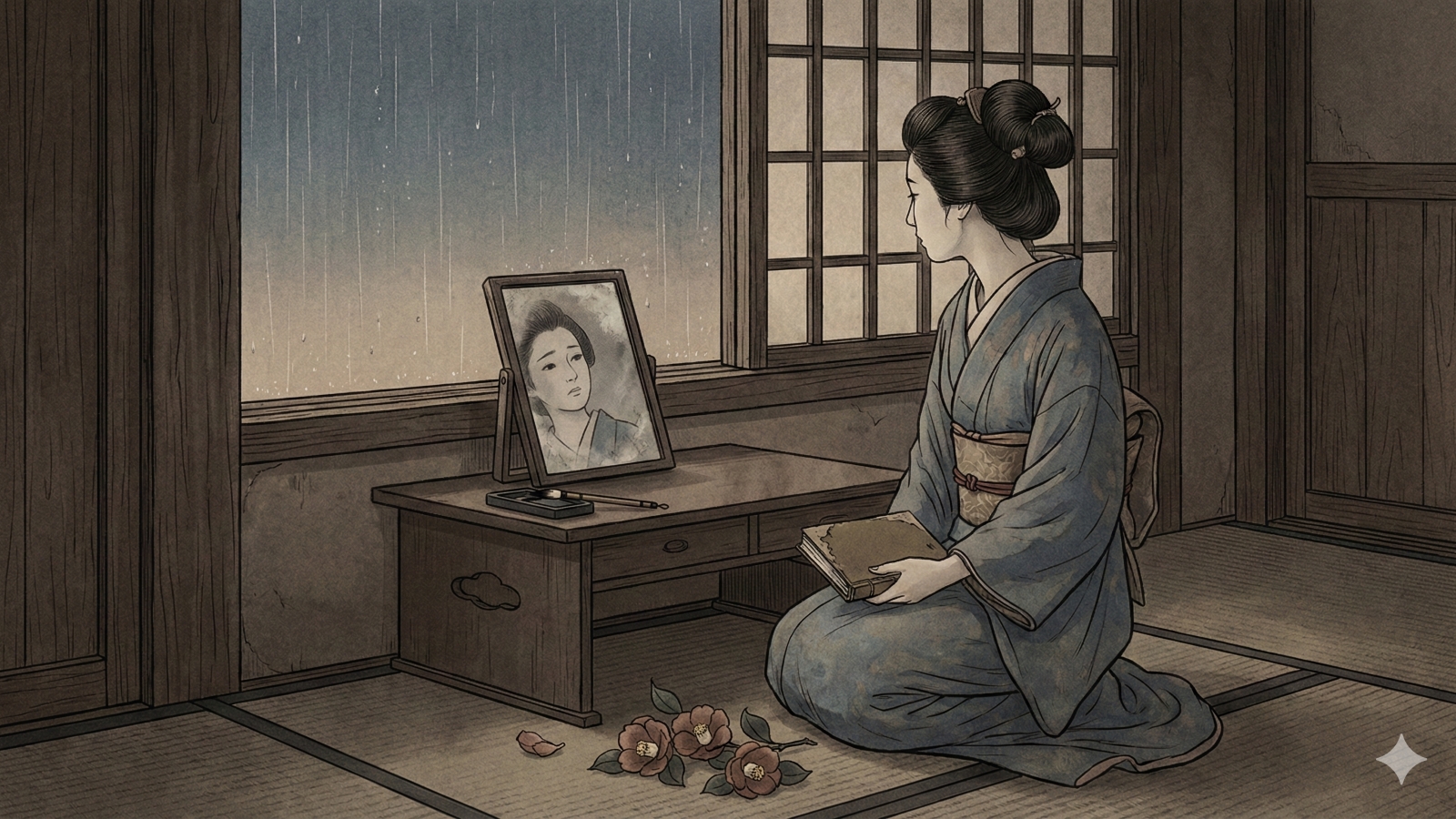
The Soul Screaming "I" - Stories of Fate and Pride by Modern Women
Should women's lives be plastered over with resignation to fate? Or is it a battle to break through social barriers and win one's own "life"? The dry self-mockery spat out by Ichiyō, the poignant scream released by Akiko for her beloved. We listen to the cries of their souls as they resisted the chains of their era, struggling through the mud to establish the "self."