

The Golden Touch and Donkey Ears - The Glory and Tragedy of King Midas
The ability to turn everything touched into gold, and a pair of hidden donkey ears. We unravel the singular fate of King Midas of ancient Phrygia through the writings of Ovid and Herodotus.


The Golden Touch and Donkey Ears - The Glory and Tragedy of King Midas
In the mythology of ancient Greece and Rome, no figure bears the themes of “desire,” “folly,” and “secrecy” quite like King Midas. He is known for two tales: the legend of the “Golden Touch,” turning all he touched into gold, and the “Donkey Ears” he could not conceal. Yet these are not mere fairy tales; they contain profound lessons striking at the very essence of human nature.
Meeting the Wine God’s Mentor and the Golden Wish
The story begins with the disappearance of an old man. Silenus, the mentor and foster father of the wine god Dionysus (also known as Bacchus), had gone missing while intoxicated. He was found by Phrygian peasants who captured the tottering old man, bound him with garlands of flowers, and brought him before King Midas (Ovid Metamorphoses 11.90–92).
King Midas was no mere tyrant. Having once learned sacred rites from Orpheus and Eumolpus, he immediately recognized the captive as a holy companion of Dionysus. The king welcomed this guest and hosted a grand banquet lasting ten days (Ovid Metamorphoses 11.93–96). According to the historian Herodotus, there was a place in Macedonia called the “Gardens of Midas,” where fragrant roses with sixty petals grew naturally; it is said that Silenus was captured in this very garden (Herodotus Histories 8.138.2–3).
When Midas safely returned Silenus to Dionysus, the god, as a token of gratitude, offered to grant him any single wish. Here, however, Midas made a fatal choice. Driven by an insatiable desire for wealth, he made this wish:
“effice, quidquid corpore contigero, fulvum vertatur in aurum.”
“Grant that whatever I touch with my body may be turned to brilliant gold.”
(Ovid Metamorphoses 11.102–103)
Though Dionysus foresaw that this wish would bring bane to the king, he granted the power as promised. Midas was ecstatic and immediately tested his new ability. He broke off a twig of oak, and it turned into a golden bough. He picked up a stone, and it became a nugget of gold; he touched a clod of earth, and it turned to golden gravel; he plucked an apple, and it became a golden fruit, as if gifted from the Garden of the Hesperides (Ovid Metamorphoses 11.108–114).
The Golden Curse and the Miracle of the Pactolus River
However, glory turned to despair in the blink of an eye. When a sumptuous meal was set before him, the true horror of Midas’s “Golden Touch” was revealed. When he touched the bread, it hardened into a lump of gold; when he tried to bite into the meat, a sheet of gold clattered between his teeth.
miscuerat puris auctorem muneris undis: fusile per rictus aurum fluitare videres.
He mixed the author of the gift [wine] with pure water; yet you could see liquid gold flowing through his open jaws.
(Ovid Metamorphoses 11.125–126)
An ironic torture began: suffering from hunger and thirst while surrounded by wealth. Midas came to hate the power he had wished for. He raised his arms—now shining gold—toward the heavens and begged Dionysus for forgiveness. “Father Lenaeus [Dionysus], I have sinned. Have pity, I pray, and save me from this glittering calamity” (Ovid Metamorphoses 11.131–133).
The god was merciful and heard the foolish king’s prayer. Dionysus ordered him to go to the source of the great river flowing near Sardis and submerge his head and body to wash away his sin. When the king obeyed and entered the stream, the magic power of transmutation left him and passed into the river’s waters. Since then, it is said that the banks of that river—the Pactolus—have produced golden sands, dyed by the power of the gold that seeped into them (Ovid Metamorphoses 11.136–145).
Incidentally, King Midas is not merely a mythical existence. Herodotus records that Midas was one of the first foreigners (non-Greeks) to dedicate a throne to the Oracle at Delphi. This throne, upon which he sat to give judgment, was “well worth seeing” and was later placed in the same location as the offerings of Gyges, King of Lydia (Herodotus Histories 1.14.3). This account suggests that Midas was indeed a historical king who possessed immense wealth.
The Judgment of Music and Blasphemy Against the God
Freed from the golden curse, Midas came to loathe wealth and love the forests and fields. He began to worship Pan, the goat-footed god, and lived in mountain caves. However, the “folly” rooted in his heart had not been washed away (Ovid Metamorphoses 11.146–149).
One day, the god Pan boasted of the music of his pipes and dared to challenge Apollo, the god of arts, to a musical contest. The mountain god Tmolus was chosen as the judge. Tmolus brushed away the trees hindering his ears and took his seat for the trial. Pan blew into his rustic pipes, and his melody charmed Midas, who happened to be nearby.
Then Apollo appeared. He was crowned with laurel, clad in a robe of Tyrian purple, and held a lyre inlaid with ivory and gems in his left hand. At the graceful melody he played, the judge Tmolus unhesitatingly declared Apollo the victor (Ovid Metamorphoses 11.153–171).
Everyone accepted this judgment, save for one: Midas alone voiced his objection. He shouted that the verdict was unjust. However, Apollo, the god of music, would not allow such tasteless ears to retain a human shape.
nec Delius aures humanam stolidas patitur retinere figuram, […] induiturque aures lente gradientis aselli.
The Delian god did not suffer ears so foolish to keep their human shape, […] and he put upon him the ears of a slow-moving donkey.
(Ovid Metamorphoses 11.174–179)
Apollo elongated Midas’s ears, covered them with long white hair, and made them unstable at the base so they could move. While the rest of his body remained human, his ears alone were transformed into those of a donkey.
The Hidden Secret and the Confession of the Wind
King Midas desperately tried to conceal this disgrace. He wrapped his head in a purple turban to hide his misshapen ears from public view. Yet, there was one person from whom he could not hide the truth: the barber who trimmed the king’s long hair.
The barber saw the secret but dared not speak of it to anyone for fear of the king’s wrath. At the same time, he found it unbearable to keep such an astonishing secret locked within his breast. Torn between silence and confession, he finally went to a secluded spot and dug a hole in the ground.
Then, he whispered into the hollow exactly what kind of ears his master possessed (Ovid Metamorphoses 11.180–187).
voce refert parva terraeque inmurmurat haustae indiciumque suae vocis tellure regesta obruit et scrobibus tacitus discedit opertis.
With a small voice, he murmured into the hollowed earth, and having buried the evidence of his voice by throwing the earth back, he departed in silence, the ditch having been covered.
(Ovid Metamorphoses 11.187–189)
The barber believed he had buried the secret forever. Nature, however, did not keep silence. A thicket of reeds eventually sprang up on that spot. After a year, when they had grown fully, the reeds drew up the words buried in the soil. Whenever the south wind blew gently, the swaying reeds murmured, repeating the words the barber had buried and exposing the secret of the king’s ears (Ovid Metamorphoses 11.190–193).
The story of King Midas depicts human folly through two errors: an obsession with visual wealth (gold) and a lack of understanding of auditory art (music). Yet at the same time, the unfolding of events—first forgiven by a god, then having his secret exposed by nature—conveys to the modern world, along with the sound of reeds swaying in the wind, the ancient lesson that hidden truths will inevitably be brought to light.
(Editorial Assistance: Yuki Suzuki)

Japanese Views on Seasons - The Gaze of Literary Figures
Japanese literary figures have deeply engaged with the shifting seasons and the workings of life through various forms of expression such as novels and essays. Their delicate sensibilities and keen powers of observation open the door to a dialogue with nature for us, teaching us the beauty and philosophy hidden within everyday landscapes.
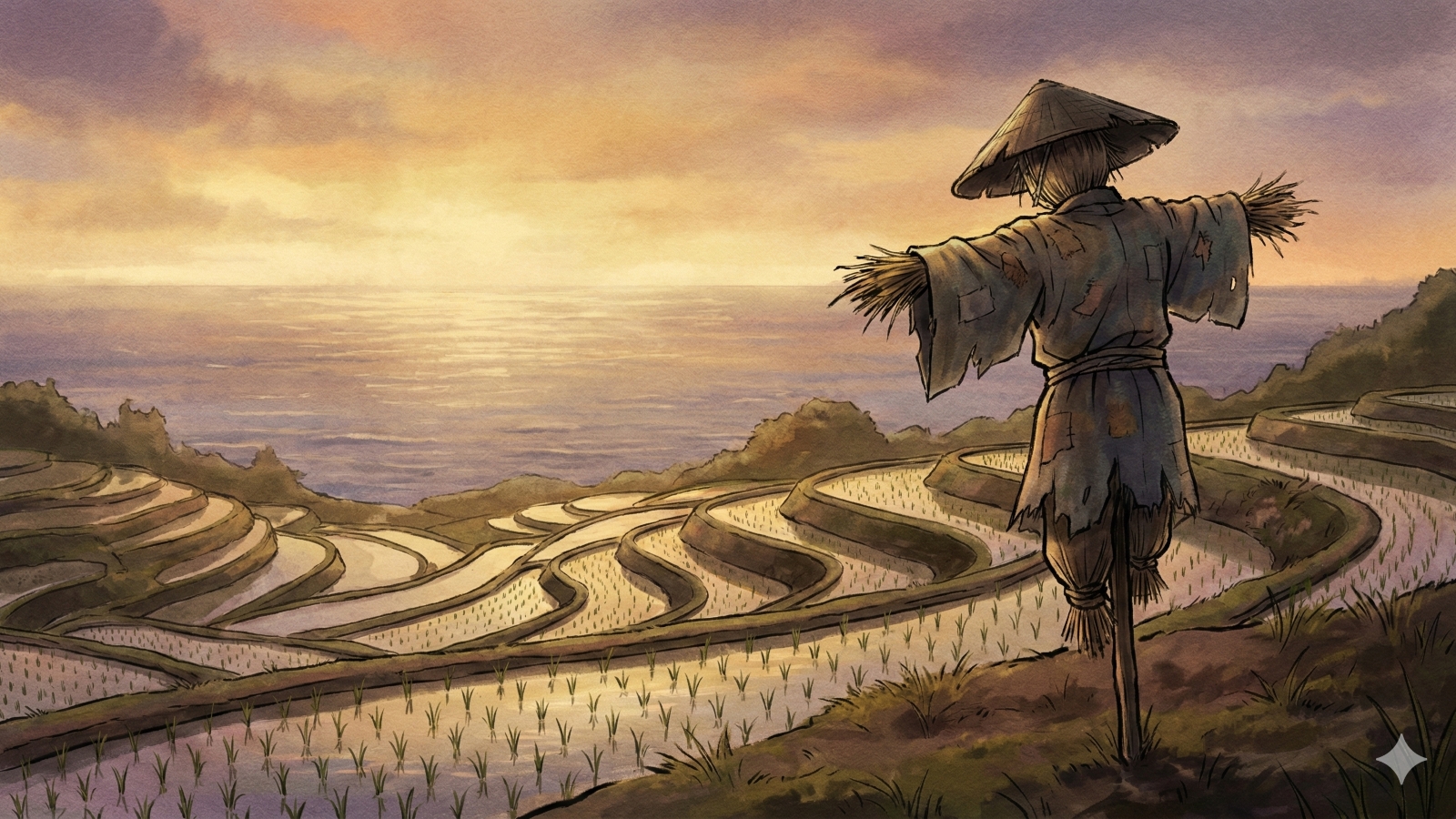
Japan's Primal Landscapes - A Tale of Memories Told by the Land
Superimposing the deceased onto the buzzing of flies, seeing gods in one-legged scarecrows. For Japanese people, these mysterious stories were not fantasy, but "life" itself, right next door. Longing for lands beyond the sea, legends remaining in ancient mounds. Why not travel through the frightening yet gentle "primal landscapes of the heart" gathered by Kunio Yanagita, Lafcadio Hearn, and others?

To Wonders Beyond Logic - The Beautiful Abyss Peered into by Scientists
Science is not just cold calculations. It is awe for nature beyond human understanding and an endless quest for beauty. Seeing the universe in a snowflake, feeling the ferocity of life in roadside grass... These are the adventurers of knowledge who confronted the overwhelming "mysteries" that appear only at the end of logic. We touch upon the records of their quiet yet passionate souls.
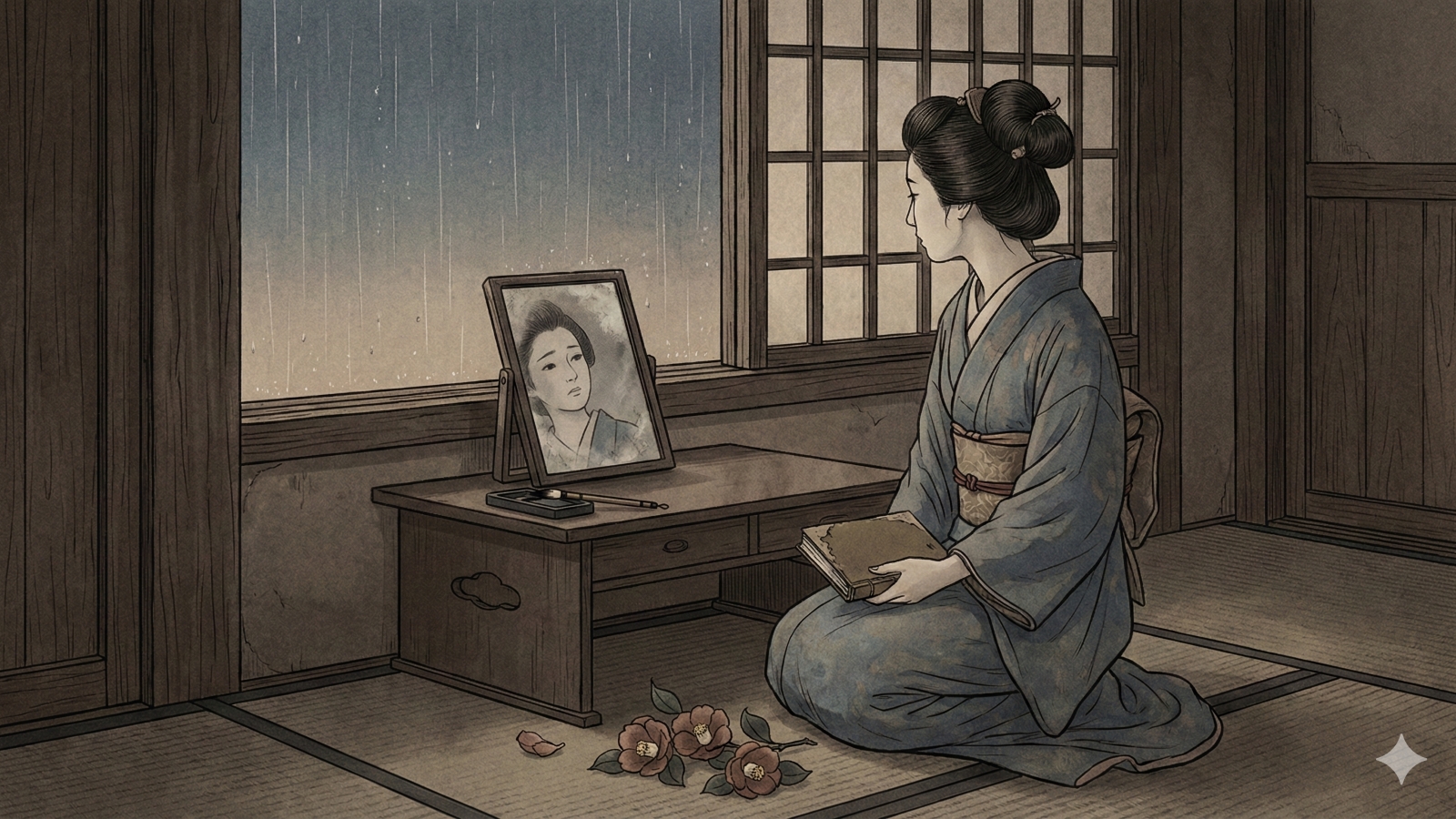
The Soul Screaming "I" - Stories of Fate and Pride by Modern Women
Should women's lives be plastered over with resignation to fate? Or is it a battle to break through social barriers and win one's own "life"? The dry self-mockery spat out by Ichiyō, the poignant scream released by Akiko for her beloved. We listen to the cries of their souls as they resisted the chains of their era, struggling through the mud to establish the "self."