

The Gigantomachy - A Cosmic War for the Fate of the Universe
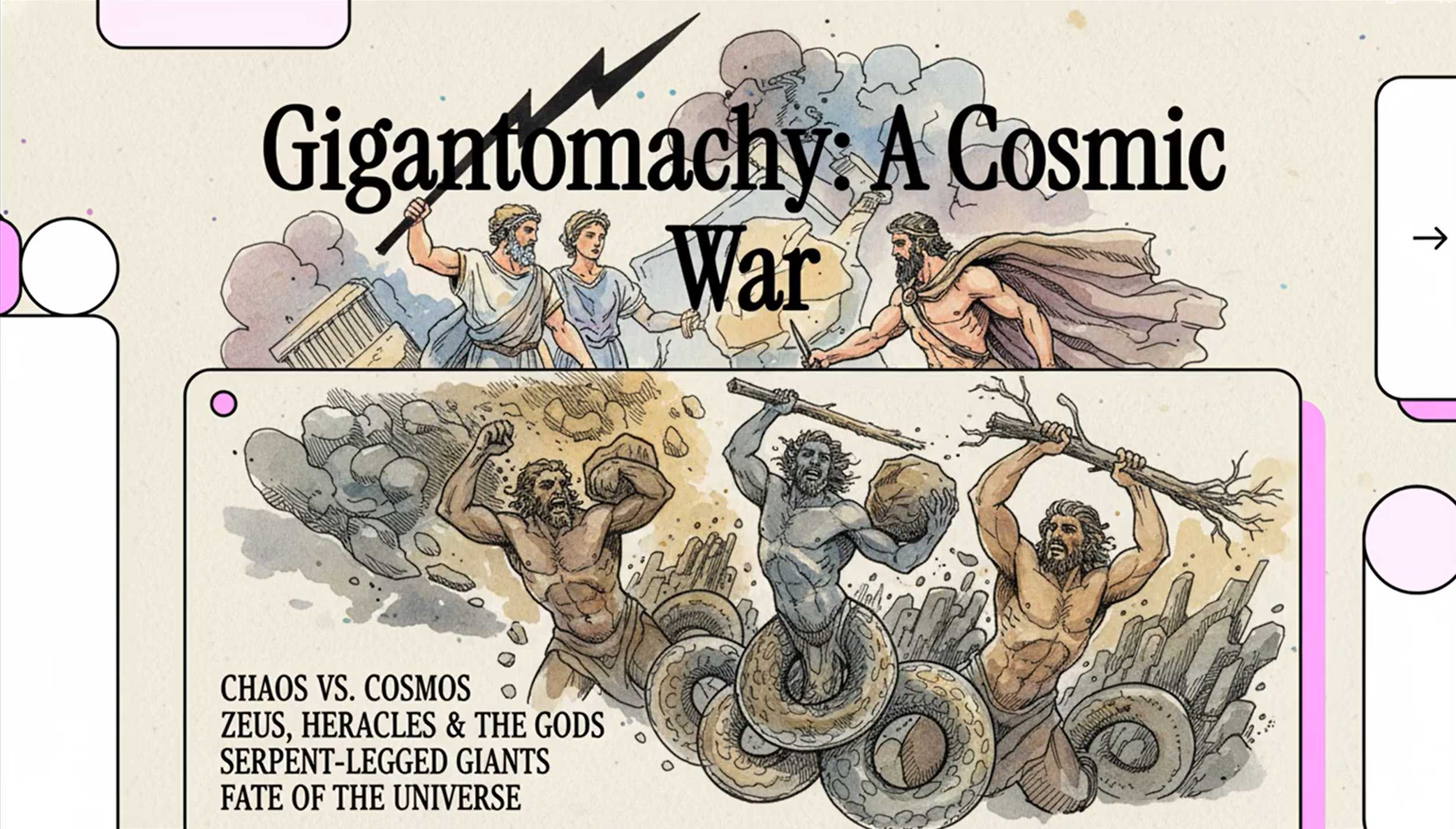
The Gigantomachy, a colossal battle in ancient Greek mythology between the Olympian gods and the Giants for control of the cosmos. This article explores the origins of this cosmic conflict, the decisive role of the hero Heracles, and the often-overlooked prowess of the goddess Athena, drawing from ancient texts.

The Gigantomachy - A Cosmic War for the Fate of the Universe
In the dawn of the cosmos, when the rule of the gods was not yet absolute, the Earth itself rose in anger to challenge the heavens. This is the story of the Gigantomachy, a cosmic war for survival between the Olympian gods and the Giants.
The Wrath of Gaia and the Birth of the Giants
It all began with the fury of Gaia, the primordial Earth. She was enraged that her children, the Titans, had been defeated by the Olympian gods led by Zeus in the Titanomachy and imprisoned in the depths of Tartarus (Apollodorus Library 1.6.1). In her desire for vengeance, she brought forth new children from the blood of the castrated sky god, Uranus. These were the Giants, or “Gigas.”
They were said to be unparalleled in size and invincible in strength. They had a fearsome appearance, with long hair flowing from their heads and chins, and their legs were covered in serpent scales (Apollodorus Library 1.6.1). According to legend, they were born in Phlegra (“the burning land”) in Thrace, or on the peninsula of Pallene (Apollodorus Library 1.6.1).
Hurling massive rocks and flaming oak trees toward the heavens, the Giants launched their assault on Olympus. The most powerful among them were Porphyrion and Alcyoneus. Alcyoneus, in particular, possessed a terrifying ability: he was immortal as long as he fought on the land of his birth (Apollodorus Library 1.6.1). The reign of the gods was now facing an unprecedented threat.
The Gods’ Crisis and the Need for a Mortal
Facing the Giants’ fierce onslaught, the Olympians received a prophecy. It was a dire message: the gods alone could not destroy the Giants; they would require the aid of a mortal (Apollodorus Library 1.6.1).
Learning of this prophecy, Mother Gaia sought a magical herb that could grant immortality to protect her sons. It seemed the gods could only await their defeat. But the great god Zeus acted swiftly. He forbade Eos (Dawn), Selene (Moon), and Helios (Sun) from shining, plunging the world into darkness. Then, before Gaia could find it, he harvested the herb himself (Apollodorus Library 1.6.1).
And so, as the gods’ trump card, the greatest hero of Greek mythology was summoned through the wisdom of the goddess Athena: Heracles (Apollodorus Library 1.6.1). The very survival of the gods now rested on the shoulders of this demigod hero.
The Prowess of Heracles and Athena
As the battle began, Heracles immediately shot the immortal giant Alcyoneus with his bow. However, as soon as the giant fell to the earth, he drew strength from his native soil and rose again. It was here that the strategic brilliance of the goddess Athena shone. Following her advice, Heracles dragged Alcyoneus away from the land of Pallene, finally succeeding in ending his life (Apollodorus Library 1.6.1).
Meanwhile, the giant Porphyrion attacked both Heracles and the goddess Hera simultaneously. At that moment, Zeus instilled in Porphyrion a lust for Hera. As the giant tore at Hera’s robes to assault her, Zeus struck him with a thunderbolt. Heracles then shot the staggered giant with an arrow, delivering the final blow (Apollodorus Library 1.6.2).
The contributions of the goddess Athena in this war were remarkable. She is said to have crushed the fleeing giant Enceladus by throwing the island of Sicily upon him, and to have flayed another giant, Pallas, using his skin for her own armor (Apollodorus Library 1.6.2). Another tradition holds that she was called “Hippia” (Horse-goddess) because she charged at Enceladus in her chariot (Pausanias Description of Greece 8.47.1).
The battle was an all-out war for the gods. Apollo shot out the left eye of Ephialtes, and Heracles shot out the right. Dionysus struck down Eurytus with his thyrsus, Hecate burned Clytius with her torches, and Hephaestus felled Mimas with volleys of red-hot metal (Apollodorus Library 1.6.2). And for every giant struck down and left dying by the gods, Heracles followed, finishing them with his arrows. Just as the prophecy foretold, victory would have been impossible without his help (Apollodorus Library 1.6.2).
Cosmic Order and the Legacy of the Gigantomachy
After a ferocious battle, the gods emerged victorious. Zeus honored the gods who participated by naming them the “Olympians.” Heracles and Dionysus, despite being born of mortals, were also granted this prestigious title for their immense contributions (Diodorus Siculus Historical Library 4.15.1-2).
This battle was more than a mere mythological event. For the ancient Greeks, it was a foundational story symbolizing the triumph of civilization over barbarism. In the sculptural groups dedicated on the Athenian Acropolis, the Gigantomachy was depicted alongside battles against the Amazons and the Battle of Marathon, serving as a mythical testament to Athens’ victory over barbarian forces (Pausanias Description of Greece 1.25.2).
The defeated Giants, on the other hand, were remembered as beings destroyed by their own arrogance. Pausanias, referencing Homer’s epic, portrays the Giants as a mortal and insolent race, distinct from the gods.
ὅς ποθʼ ὑπερθύμοισι γιγάντεσσιν βασίλευεν· ἀλλʼ ὁ μὲν ὤλεσε λαὸν ἀτάσθαλον, ὤλετο δʼ αὐτός.
He who once reigned over the arrogant Giants; but he brought ruin on his reckless people and was himself destroyed.
(Pausanias Description of Greece 8.29.2, quoting Homer, Odyssey 7.59-60)
The Giants buried beneath the earth sometimes remind humanity of their presence. It was believed that when Enceladus, pinned under Sicily, or the monster Typhon, also said to be sealed beneath Mount Etna, stirred in their prison, the earth would shake and the mountains would spew fire (Ovid Metamorphoses 5.346-356; Apollodorus Library 1.6.2).
The story of the Gigantomachy established the absolute rule of the gods and brought unshakeable order to the cosmos. As the final war for creation, it is deeply ingrained in the foundations of Western civilization. Perhaps it speaks to us across the ages, a timeless lesson that chaos can only be conquered when the strength of a hero and the wisdom of the gods unite.
(Editorial cooperation: Yuki Suzuki)
```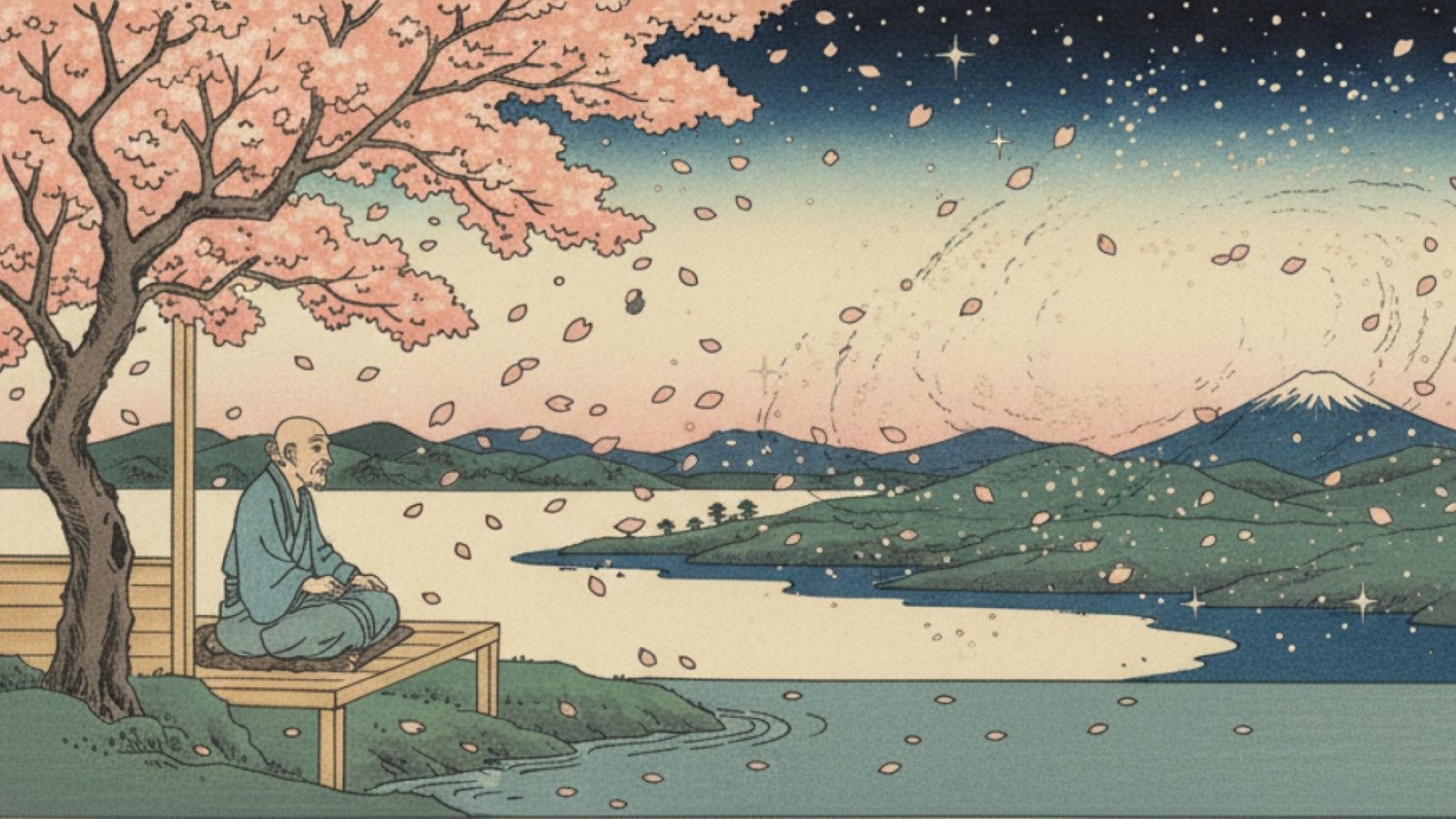
Japanese Views on Seasons - The Gaze of Literary Figures
Japanese literary figures have deeply engaged with the shifting seasons and the workings of life through various forms of expression such as novels and essays. Their delicate sensibilities and keen powers of observation open the door to a dialogue with nature for us, teaching us the beauty and philosophy hidden within everyday landscapes.
Japan's Primal Landscapes - A Tale of Memories Told by the Land
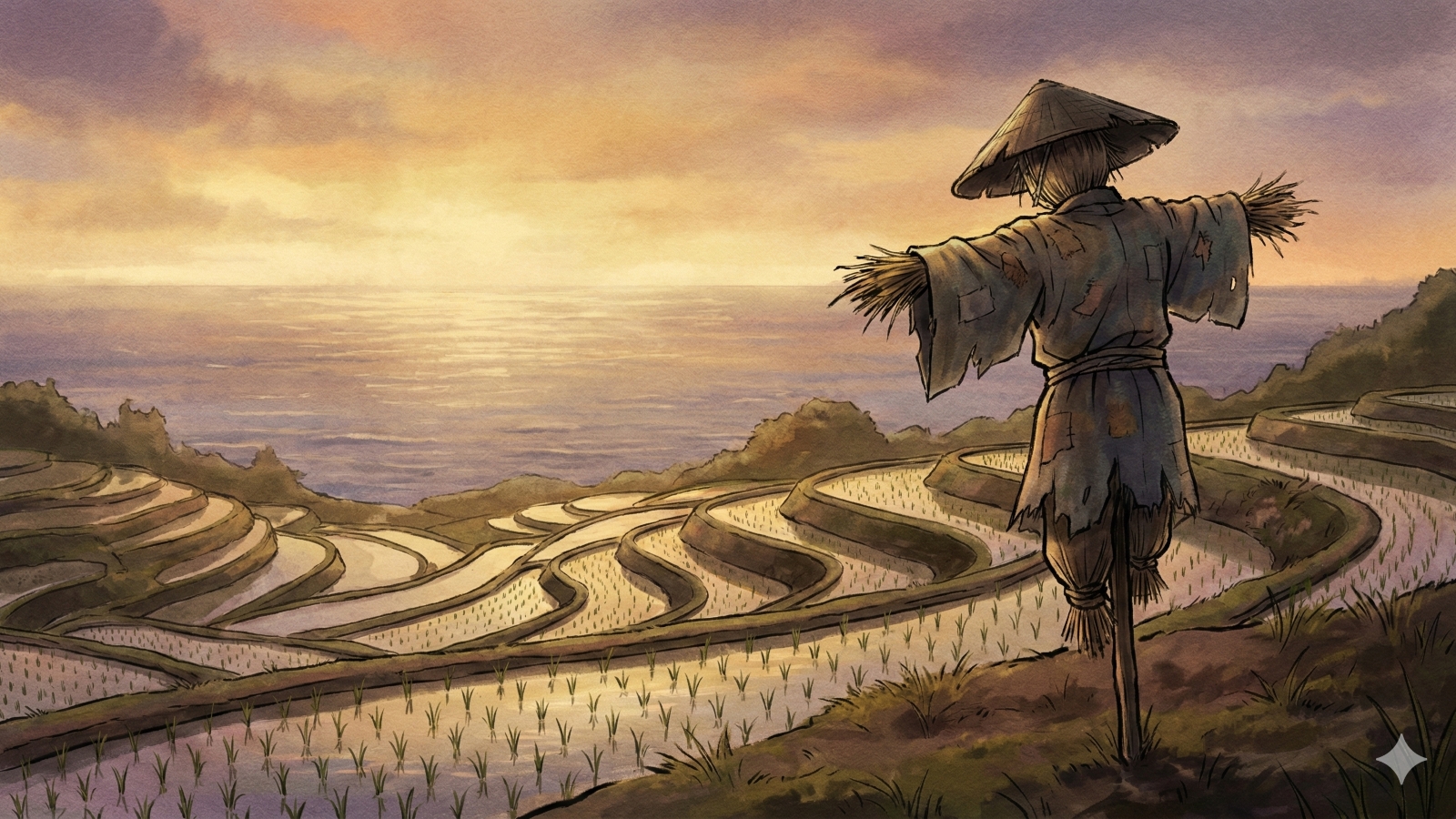
Superimposing the deceased onto the buzzing of flies, seeing gods in one-legged scarecrows. For Japanese people, these mysterious stories were not fantasy, but "life" itself, right next door. Longing for lands beyond the sea, legends remaining in ancient mounds. Why not travel through the frightening yet gentle "primal landscapes of the heart" gathered by Kunio Yanagita, Lafcadio Hearn, and others?

To Wonders Beyond Logic - The Beautiful Abyss Peered into by Scientists
Science is not just cold calculations. It is awe for nature beyond human understanding and an endless quest for beauty. Seeing the universe in a snowflake, feeling the ferocity of life in roadside grass... These are the adventurers of knowledge who confronted the overwhelming "mysteries" that appear only at the end of logic. We touch upon the records of their quiet yet passionate souls.
The Soul Screaming "I" - Stories of Fate and Pride by Modern Women
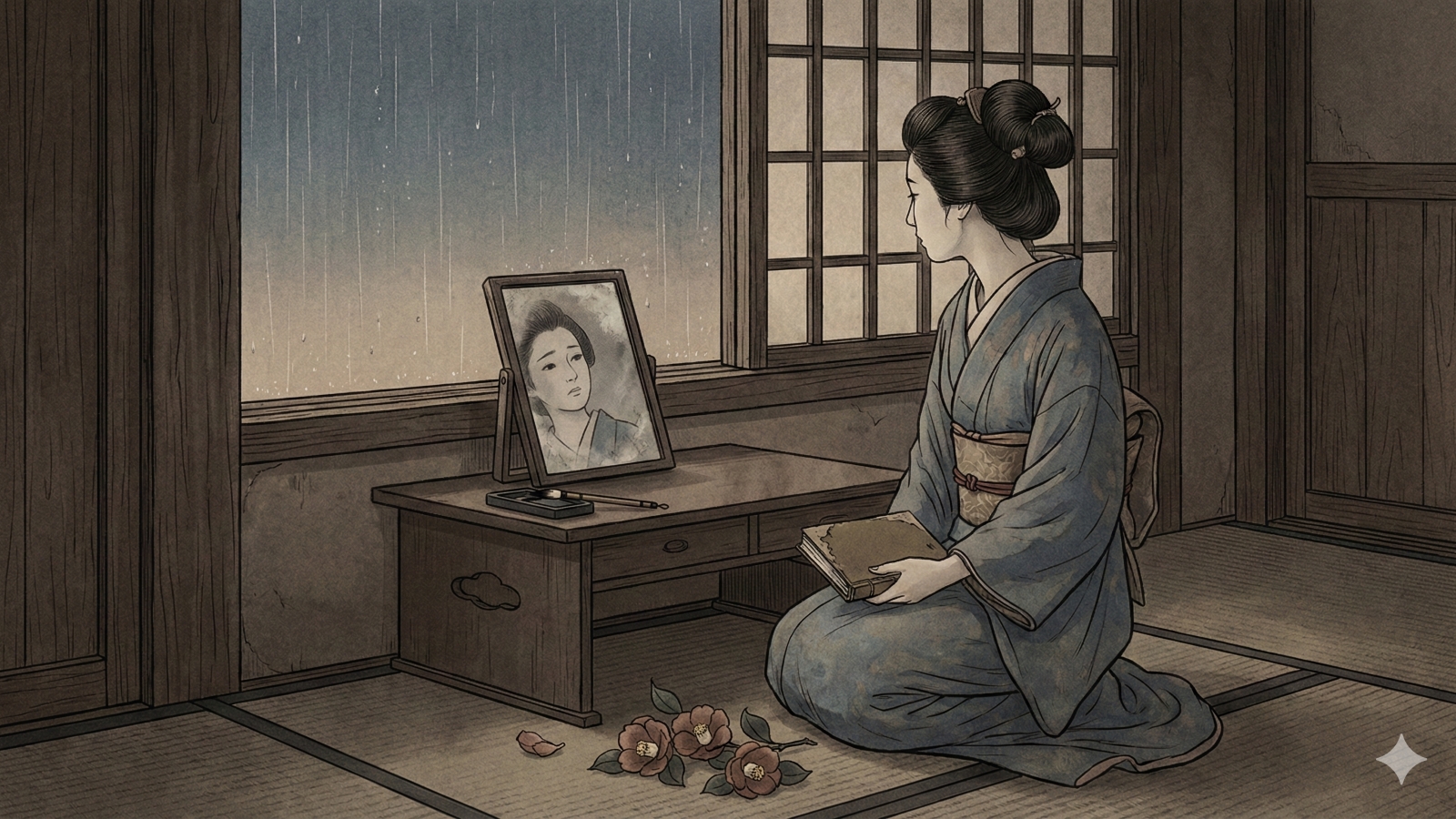
Should women's lives be plastered over with resignation to fate? Or is it a battle to break through social barriers and win one's own "life"? The dry self-mockery spat out by Ichiyō, the poignant scream released by Akiko for her beloved. We listen to the cries of their souls as they resisted the chains of their era, struggling through the mud to establish the "self."