

Athena and Poseidon - The Contest for the Patronage of Athens and the Miracle of the Olive
How was Athena chosen as the patron deity of ancient Athens? From the gift-giving competition with Poseidon and the judgment of the gods to the variant tradition of "women's voting" transmitted by Augustine, we unravel the full story from ancient literature.


Athena and Poseidon: The Contest for the Patronage of Athens and the Miracle of the Olive
Ancient Greece, the Acropolis of Athens. Are you aware that two great deities once contended fiercely for dominion over this sacred hill? This is not merely a myth; it is a story of a “choice” that determined the city’s destiny, its politics, and the identity of its people.
Divine Gifts and the Duel on the Acropolis
The tale dates back to the reign of the first king, Cecrops, when Athens was still known as “Cecropia.” He was a child of the earth, possessing a human upper body and a serpentine lower body (Apollodorus Library 3.14.1). At one point, the gods resolved to secure cities in which they would be worshipped; thus, the sea god Poseidon and the goddess of wisdom Athena laid claim to the dominion of Attica (the region surrounding Athens).
Poseidon was the first to arrive in this land. He struck the center of the Acropolis forcefully with his trident. From that spot, seawater gushed forth, serving as a testament to the sea god’s dominion (Apollodorus Library 3.14.1). The Roman poet Ovid depicts this dramatic moment vividly, as if he had witnessed it himself.
Stare deum pelagi longoque ferire tridente aspera saxa facit, medioque e vulnere saxi exsiluisse fretum, quo pignore vindicet urbem;
“He depicts the god of the sea standing and striking the rough rocks with his long trident. From the wound in the middle of the rock, a sea leaped forth, a pledge by which to claim the city.”
(Ovid Metamorphoses 6.75–77)
Athena, appearing after Poseidon, called upon King Cecrops as a witness to her claim of possession and planted a single olive tree (Apollodorus Library 3.14.1). According to Ovid’s description, the goddess, armed with her shield and spear, struck the earth with her spear to produce a pale olive tree laden with fruit (Ovid Metamorphoses 6.78–81).
Thus, two miracles stood side by side on the Acropolis: Poseidon’s “salt spring (sea)” and Athena’s “olive tree.” A fierce dispute ensued regarding which deity should become the guardian of this city.
The Judgment of the Twelve Gods and Athena’s Victory
To resolve the conflict between the two deities, Zeus intervened. While some traditions suggest that humans such as Cecrops or Cranaus rendered the verdict, according to Apollodorus, Zeus appointed the twelve Olympian gods as judges (Apollodorus Library 3.14.1).
In the divine court, it was Cecrops, the king of the land, who took the stand. He testified that Athena had planted the olive tree. Apollodorus records that this testimony proved decisive, resulting in a victory for Athena.
καὶ τούτων δικαζόντων ἡ χώρα τῆς Ἀθηνᾶς ἐκρίθη, Κέκροπος μαρτυρήσαντος ὅτι πρώτη τὴν ἐλαίαν ἐφύτευσεν.
“They [the twelve gods] decided, and since Cecrops testified that she was the first to plant the olive, the land was adjudged to Athena.”
(Apollodorus Library 3.14.1)
Following this verdict, the city came to be called “Athens” in honor of the goddess. However, the wrath of the defeated Poseidon was tremendous. Enraged, he flooded the Thriasian Plain and submerged the entire region of Attica beneath the sea (Apollodorus Library 3.14.1).
This mythical confrontation also influenced the political thought of later Athens. According to Plutarch, ancient kings cited the contention between Athena and Poseidon to steer citizens away from the sea and towards agriculture. They utilized the narrative that Athena triumphed over Poseidon (the symbol of the sea) by displaying the olive (the symbol of agriculture). In contrast, Themistocles later challenged this traditional interpretation; by integrating the city with the port, he transformed Athens into a maritime power (Plutarch Themistocles 19.3–6).
The Phoenix-like Olive Tree
The olive tree said to have brought victory to Athena was not merely a mythical entity but a tangible object of worship for the citizens of Athens. Within the Erechtheion on the Acropolis, this olive tree was enshrined alongside Poseidon’s salt water (Herodotus Histories 8.55).
The most poignant episode concerning this tree occurred during the Persian Wars. When the Persian army led by Xerxes occupied Athens and set fire to the temples of the Acropolis, this sacred olive tree was also consumed by the flames. However, on the following day, when Athenian exiles ascended to offer sacrifices at the command of the Persian king, they witnessed an astonishing sight.
δευτέρῃ δὲ ἡμέρῃ ἀπὸ τῆς ἐμπρήσιος Ἀθηναίων οἱ θύειν ὑπὸ βασιλέος κελευόμενοι ὡς ἀνέβησαν ἐς τὸ ἱρόν, ὥρων βλαστὸν ἐκ τοῦ στελέχεος ὅσον τε πηχυαῖον ἀναδεδραμηκότα.
“On the second day after the burning, when the Athenians who were ordered by the King to sacrifice went up to the sanctuary, they saw a shoot about a cubit [approx. 45 cm] long springing from the stump.”
(Herodotus Histories 8.55)
Pausanias also records a tradition stating that this olive tree grew two cubits on the very day it was burned (Pausanias Description of Greece 1.27.2). The olive tree rising from the ashes was passed down as a symbol of the indomitable vitality of the city of Athens.
Variant Tradition: Citizens’ Vote and the Suffering of Women
Now, regarding this contest for the patron deity, there exists a highly intriguing alternative version introduced by Augustine as the theory of the Roman scholar Varro. In this account, the decision was made not by the gods, but through a “democratic vote” by the citizens.
At one time, the mysterious phenomena of an olive tree and a gushing spring appeared in Athens. When the king inquired of the Delphic oracle regarding their meaning, the response was that the olive symbolized Athena and the water Poseidon, and that the citizens should decide which deity’s name the city would bear (Augustine De Civitate Dei 18.9).
Consequently, King Cecrops summoned all citizens to cast their votes. It is said that at that time in Athens, women also held the right to participate in public decisions. The result was that all the men voted for Poseidon, while all the women voted for Athena. Since the women outnumbered the men by exactly one, Athena emerged victorious (Augustine De Civitate Dei 18.9).
However, here too, Poseidon was enraged and ravaged the seas. To appease him, severe punishments were imposed upon the women of Athens.
ut nulla ulterius ferrent suffragia, ut nullus nascentium maternum nomen acciperet, ut ne quis eas Athenaeas uocaret.
“That hereafter they should cast no vote, that no child born should take the mother’s name, and that no one should call them ‘Athenaeas’ [Athenian women].”
(Augustine De Civitate Dei 18.9)
Through this tradition, Augustine argues that while the name of the great city of Athens was derived from a victory by women, that very victory led to the ironic consequence of the deprivation of their rights. Although this differs from mainstream Greek mythology, it serves as a fascinating example of how ancient peoples sought the origins of their social institutions within myth.
The olive tree and the traces of the salt spring that remained on the Acropolis were not only memories of the conflict between the gods but also a mirror reflecting the history walked by the city of Athens and its social structure.
(Editorial Assistance: Yuki Suzuki)

Japanese Views on Seasons - The Gaze of Literary Figures
Japanese literary figures have deeply engaged with the shifting seasons and the workings of life through various forms of expression such as novels and essays. Their delicate sensibilities and keen powers of observation open the door to a dialogue with nature for us, teaching us the beauty and philosophy hidden within everyday landscapes.
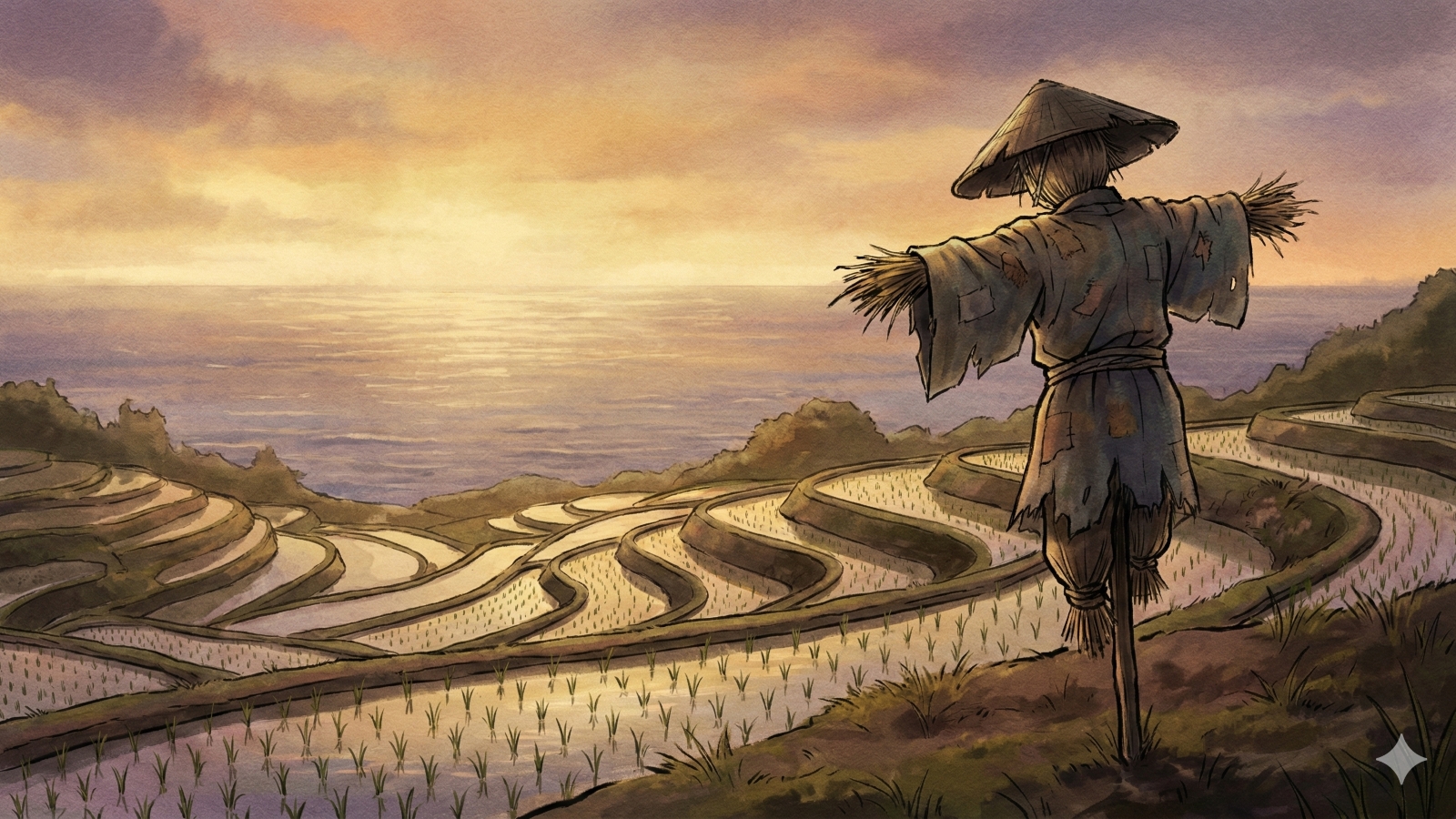
Japan's Primal Landscapes - A Tale of Memories Told by the Land
Superimposing the deceased onto the buzzing of flies, seeing gods in one-legged scarecrows. For Japanese people, these mysterious stories were not fantasy, but "life" itself, right next door. Longing for lands beyond the sea, legends remaining in ancient mounds. Why not travel through the frightening yet gentle "primal landscapes of the heart" gathered by Kunio Yanagita, Lafcadio Hearn, and others?

To Wonders Beyond Logic - The Beautiful Abyss Peered into by Scientists
Science is not just cold calculations. It is awe for nature beyond human understanding and an endless quest for beauty. Seeing the universe in a snowflake, feeling the ferocity of life in roadside grass... These are the adventurers of knowledge who confronted the overwhelming "mysteries" that appear only at the end of logic. We touch upon the records of their quiet yet passionate souls.

The Soul Screaming "I" - Stories of Fate and Pride by Modern Women
Should women's lives be plastered over with resignation to fate? Or is it a battle to break through social barriers and win one's own "life"? The dry self-mockery spat out by Ichiyō, the poignant scream released by Akiko for her beloved. We listen to the cries of their souls as they resisted the chains of their era, struggling through the mud to establish the "self."