

The Ancient Philosophy of Loss and Affection - Seneca and Plutarch on Parental Fortitude and Unconditional Love
The Stoic Seneca teaches the stern acceptance of losing a child, while Plutarch argues that the purpose of raising children is affection. This article explores the universal wisdom left by ancient sages on parental love and the tragedies of life.

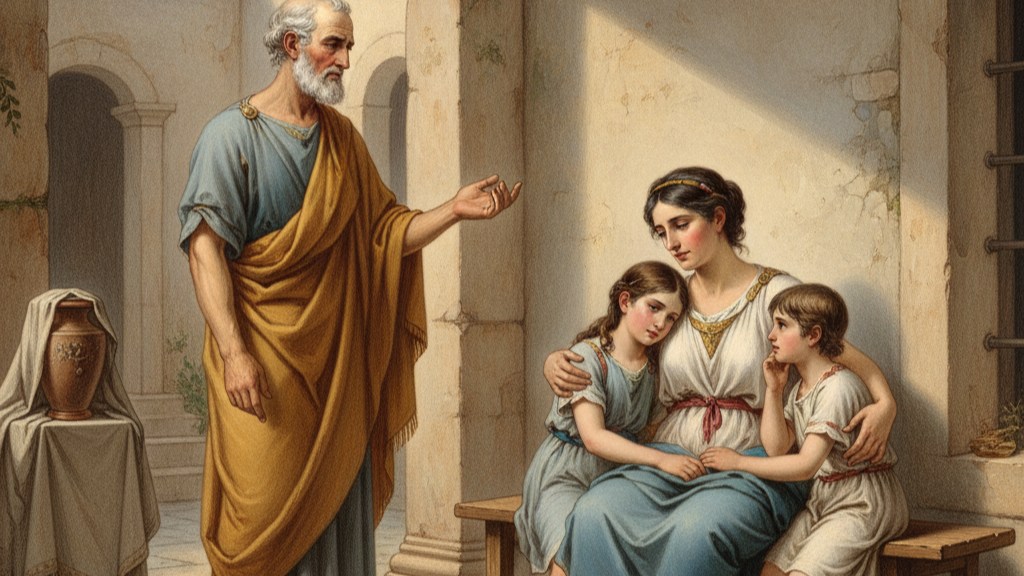
“sic te para tamquam in ignem impositurus vel puerum vel iuvenem vel senem”
Prepare yourself as if you were to commit your child to the funeral pyre, whether as an infant, a youth, or an old man.
(Seneca De Consolatione ad Marciam 17.7)
【Commentary】
How often do we contemplate the loss of our own children? In a letter consoling Marcia on the death of her daughter, the Stoic philosopher Seneca discusses the inherent uncertainty of having children. He argues that a parent must always bear in mind the possibility that a child may die first, and be prepared for that death, no matter the age at which it might occur. This reflects a Stoic mindset—an attempt to maintain tranquility by directly confronting an unavoidable fate.
“Ad hoc genitus es, ut perderes, ut perires”
For this you were born: to lose, and to be lost.
(Seneca De Consolatione ad Marciam 17.1)
【Commentary】
For what purpose were we brought into this world? Seneca, with a stern yet calm demeanor, asserts that while the sorrow of losing a child is painful, it is a fundamentally “human” experience. This sentence succinctly captures the view of fate at the core of Stoic philosophy. Humans are born bearing the inescapable destiny of losing those they love and, eventually, of dying themselves. Seneca believed that the path to liberation from life’s suffering lies in directly facing and accepting this cold, hard fact. This is not a sweet consolation but a harsh prescription for confronting fate with the power of reason.
“Numquam non felicem me dicam, quae Gracchos peperi.”
I shall never say that I am unhappy, for I have borne the Gracchi.
(Seneca De Consolatione ad Marciam 16.3)
【Commentary】
A tragic mother, or a glorious one? To encourage Marcia after the loss of her son, Seneca recounts the tale of Cornelia, a renowned mother in Roman history. She lost both of her sons to violent deaths. When others offered their condolences, calling her a “pitiful mother,” Cornelia replied with unwavering resolve. Her words demonstrate the formidable spirit of a mother who, even when faced with the ultimate tragedy of a child’s death, still takes pride in the very act of having brought that child into the world. Here we see the ultimate expression of a mother’s love, one that transcends the pain of loss to affirm existence itself.
“ὡς τοῦ τεκεῖν καὶ θρέψαι τέλος οὐ χρείαν ἀλλὰ φιλίαν ἔχοντος.”
For the end of bearing and raising children is not necessity, but affection.
(Plutarch On Affection for Offspring 3, 496c)
【Commentary】
A mother’s breast may be more than just a fountain of nourishment. Plutarch speaks passionately about how exquisitely nature has designed the maternal body and a mother’s love. He notes that a mother’s breasts are positioned perfectly for embracing and kissing her infant, and in this he sees a profound purpose. It is an insight that the ultimate goal of child-rearing is not simply “necessity”—the mere sustenance of life—but “affection” (philia) itself, which is nurtured between parent and child. These words suggest that behind the biological mechanisms of nature lies the sublime purpose of fostering human bonds.
“μισθοῦ γὰρ ἄνθρωπον τίς ἄνθρωπον φιλεῖ?”
For what person loves another for the sake of a reward?
(Plutarch On Affection for Offspring 2, 495a)
【Commentary】
Is love that seeks something in return truly love? Plutarch counters the prevailing notion of his time—that “people love others for personal gain”—by contrasting it with the unconditional love seen in animals. A dog does not love her puppies, nor a bird its chicks, in expectation of future care or reward. Theirs is a pure expression of the affection bestowed by nature. This poignant question serves as a warning against parent-child relationships becoming tainted by calculations of profit and loss, powerfully arguing that true affection should, by its nature, be unconditional.
“καθόλου γὰρ ἡ πρὸς τὰ ἔκγονα φιλοστοργία καὶ τολμηρὰ τὰ δειλὰ ποιεῖ”
For in general, affection for offspring makes even the timid bold.
(Plutarch On Affection for Offspring 2, 494d)
【Commentary】
What can turn a coward into a hero? Citing the astonishing parental behaviors of animals, Plutarch declares that the driving force is love for one’s child (philostorgon). Even birds and beasts that are normally timid will confront enemies without regard for their own safety to protect their young. This observation shows that parental love is not merely an emotion but a fundamental force that elicits self-sacrifice and extraordinary courage. It is a sublime instinct, deeply ingrained in living beings, for the continuation of life.
“est enim quaedam et dolendi modestia.”
For there is a certain moderation in grief as well.
(Seneca De Consolatione ad Marciam 3.4)
【Commentary】
While sorrow may feel endless, there can be moderation in how one grieves. The Stoic philosopher Seneca presents the conduct of Livia, wife of the first emperor Augustus, as a model for Marcia, who was mourning her son. When Livia lost her son Drusus, she grieved profoundly yet maintained her dignity without losing her composure. Through these words, Seneca teaches the importance of controlling sorrow with reason and preserving one’s decorum, rather than surrendering to it completely. This is practical advice for a parent, reflecting the Stoic ethic of not being overwhelmed by emotion and thereby losing one’s human dignity.
“Cuius non lacrimas illius hilaritas supprimat?”
Whose tears would not be checked by that child’s cheerfulness?
(Seneca De Consolatione ad Helviam 18.5)
【Commentary】
When we are in the depths of sorrow, what can cast a ray of light? In a letter from exile to his mother Helvia, Seneca urges her, as she laments his absence, to turn her attention to the family that remains. He speaks of his own son, Marcus, as a great source of comfort. This sentence illustrates how a young child’s carefree cheerfulness and innocent chatter have the power to soften an adult’s hardened heart and dry even the deepest tears of sorrow. It shows that healing from suffering can be found in family bonds, especially in the connections that span generations.
“ἢ δέος ἢ λύπη παῖς· πατρὶ πάντα χρόνον”
A child is either a terror or a grief to a father, always.
(Plutarch On Affection for Offspring 4, 497a)
【Commentary】
A child, who should be a source of joy and hope, can also be a seed of fear and sorrow. Plutarch quotes this poignant line from the poet Euenus to highlight the fundamental anxiety inherent in parenting. Parents often pass away before witnessing their children’s growth and success; it is rare for them to know their children’s triumphs. Instead, what parents often see is the immaturity of childhood or the mistakes of youth. And yet, the fact that parents continue to raise their children in spite of this paradoxically speaks to the depth of their unconditional love.
“οὕτως ἡ φύσις ἐν αὐτοῖς τοῖς ἡμαρτημένοις ἤθεσι καὶ πάθεσιν ἐκφαίνει τὸ πρὸς τὰ ἔκγονα φιλόστοργον.”
Thus nature makes affection for offspring shine forth even in the midst of flawed characters and passions.
(Plutarch On Affection for Offspring 5, 497e)
【Commentary】
Just as the glint of gold can be seen in unrefined ore, is there an inextinguishable light in the human heart? Plutarch argues that even though human beings are imperfect and prone to error, a natural love for their children resides deep within their hearts. He likens this affection to gold that continues to shine even amidst all flaws and passions. This sentence suggests that parental love is rooted in the most fundamental and pure part of human nature.
(Editorial assistance: Tomomi Nakayama, Keito Utsumi)

Japanese Views on Seasons - The Gaze of Literary Figures
Japanese literary figures have deeply engaged with the shifting seasons and the workings of life through various forms of expression such as novels and essays. Their delicate sensibilities and keen powers of observation open the door to a dialogue with nature for us, teaching us the beauty and philosophy hidden within everyday landscapes.
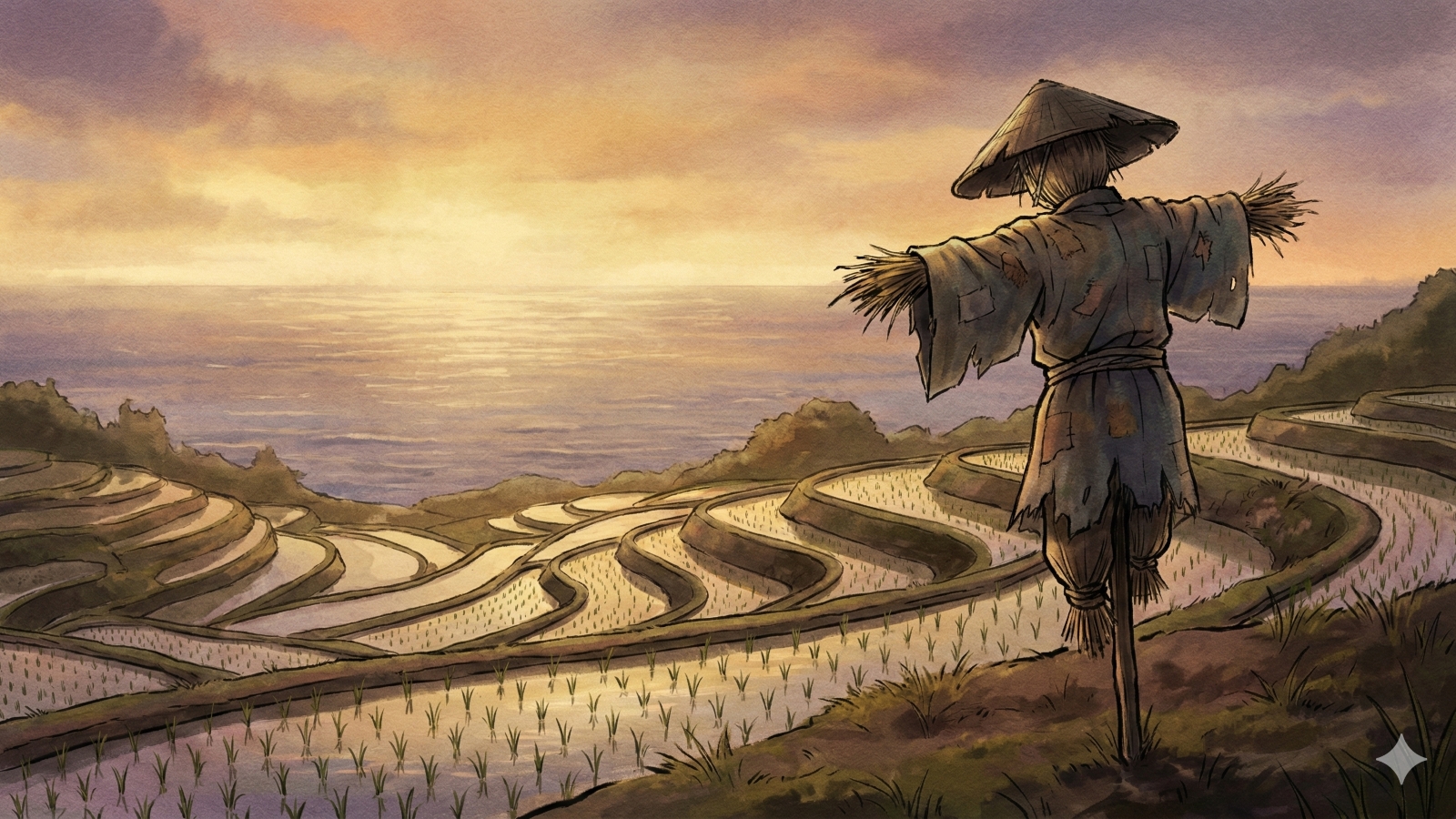
Japan's Primal Landscapes - A Tale of Memories Told by the Land
Superimposing the deceased onto the buzzing of flies, seeing gods in one-legged scarecrows. For Japanese people, these mysterious stories were not fantasy, but "life" itself, right next door. Longing for lands beyond the sea, legends remaining in ancient mounds. Why not travel through the frightening yet gentle "primal landscapes of the heart" gathered by Kunio Yanagita, Lafcadio Hearn, and others?

To Wonders Beyond Logic - The Beautiful Abyss Peered into by Scientists
Science is not just cold calculations. It is awe for nature beyond human understanding and an endless quest for beauty. Seeing the universe in a snowflake, feeling the ferocity of life in roadside grass... These are the adventurers of knowledge who confronted the overwhelming "mysteries" that appear only at the end of logic. We touch upon the records of their quiet yet passionate souls.
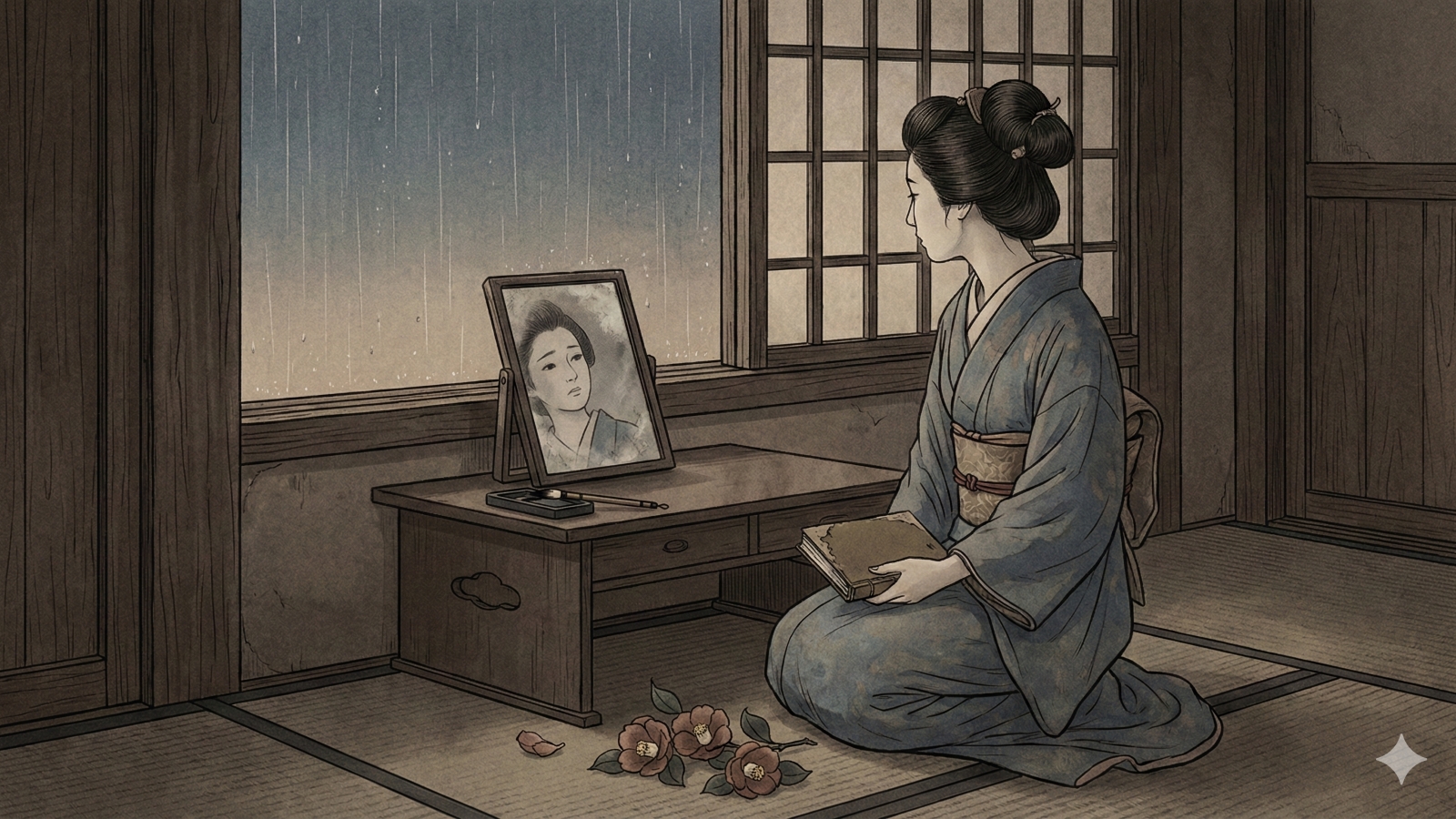
The Soul Screaming "I" - Stories of Fate and Pride by Modern Women
Should women's lives be plastered over with resignation to fate? Or is it a battle to break through social barriers and win one's own "life"? The dry self-mockery spat out by Ichiyō, the poignant scream released by Akiko for her beloved. We listen to the cries of their souls as they resisted the chains of their era, struggling through the mud to establish the "self."