

Ancient Wisdom on Love and Partnership - How Plutarch and Ovid Taught Us to Build Bonds
How are trust and love nurtured? Ancient Greek and Roman philosophers and poets left behind deep insights into the bonds of marriage and the essence of love. This collection explores the timeless truths of partnership.

“τὸ πιστεύειν δοκεῖν πιστεύεσθαι, καὶ τὸ φιλεῖν φιλεῖσθαι.”
To seem to trust is to be trusted, and to love is to be loved.
—— Plutarch, Advice to Bride and Groom, 36
【Commentary】
How is trust born, and how is love nurtured? This saying is one of many pieces of advice that the ancient Greek sage Plutarch offered to a newlywed couple. In this beautiful couplet, he illustrates the law of interaction in human relationships. If you wish to be trusted, you must first show that you trust the other person. And if you desire to be loved, you must first love them yourself. He suggests that actions evoke emotions, and giving leads to receiving. This insight teaches us a timeless truth- that happiness in a partnership begins not with waiting for the other to give, but with one’s own proactive engagement.
“τὸ γὰρ ἐρᾶν ἐν γάμῳ τοῦ ἐρᾶσθαι μεῖζον ἀγαθὸν ἐστι.”
For in marriage, to love is a greater good than to be loved.
—— Plutarch, Of Love, 23
【Commentary】
Which brings greater happiness- to love, or to be loved? With this paradoxical phrase, Plutarch preached the importance of taking an active stance in love. We often tend to place value on “being loved” by others, but he asserts that “to love” is the greater and better act. This is because actively loving enriches a marriage and has the power to protect the couple from many mistakes. These words deliver a powerful message- that happiness in a partnership is found not in waiting to receive from a partner, but in the love that one gives generously.
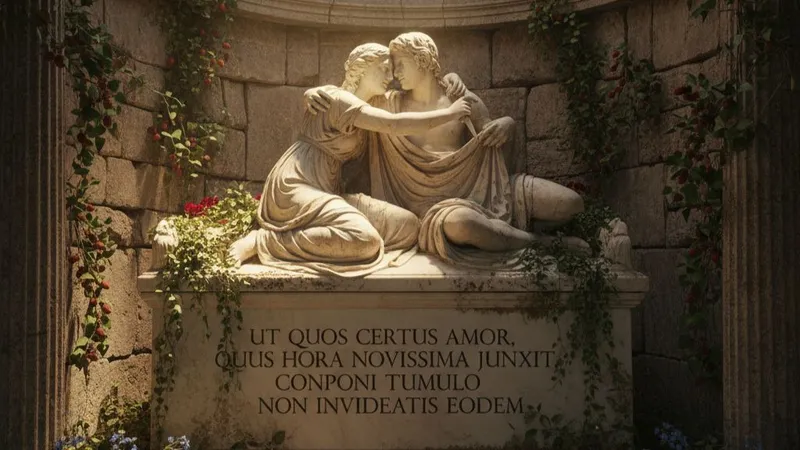
“ut quos certus amor, quos hora novissima iunxit, conponi tumulo non invideatis eodem.”
Do not begrudge that they, whom true love and their final hour have joined, be laid in the same tomb.
—— Ovid, Metamorphoses, 4.156-157
【Commentary】
Can love transcend death? This sad yet beautiful wish is the last words of Thisbe, addressed to the parents of both families as she prepares to take her own life to follow her lover Pyramus. She says that the two, who could not be united in life due to their parents’ opposition, were finally joined as one by “true love” and their “final hour.” She then pleads that they at least be allowed to rest together in the same tomb in the afterlife. These words depict the ultimate form of love, which seeks to overcome any obstacle, even death itself. This poignant cry, wishing for a bond that continues eternally beyond the confines of this world, continues to strike a chord in people’s hearts as a literary symbol of eternal love.
“ut ameris, amabilis esto”
If you want to be loved, be lovable.
—— Ovid, Ars Amatoria, 2.107
【Commentary】
How can a person be loved by others? The ancient Roman poet Ovid, who considered himself a master of love, condensed his answer into this concise phrase. He taught that the surest path was not to rely on love potions or magic, but to elevate oneself into a “lovable” (amabilis) being. This meant polishing not just one’s physical beauty, which will eventually fade, but also enduring inner charms such as intelligence, kindness, and delightful conversation. This powerful imperative teaches us the universal truth that a partnership is not something bestowed by another, but something to be built through one’s own ceaseless efforts.
“τὸ ζεῦγος ὠφελιμώτερον ἑαυτῷ γεγένηται, ἃ τὸ ἕτερον ἐλλείπεται τὸ ἕτερον δυνάμενον.”
The pair becomes more beneficial to itself because the one is able to supply what the other lacks.
—— Xenophon, Economics, 7.28
【Commentary】
Just as two imperfect pieces join to create a single, perfect shape, a partnership is also enriched by mutual differences. Xenophon perceived the essence of a married couple, a “pair” (zeûgos), in this way. God gave men and women different abilities and natures, but not to establish superiority or inferiority. Rather, he argues, it is precisely because they are different that one can compensate for what the other lacks, allowing them to become a stronger, more beneficial entity as one. These words teach us that the ideal partnership is not a gathering of like-minded individuals, but a complementary relationship where differences are acknowledged and mutually supplemented.
“namque parabilem amo Venerem facilemque.”
For I love a Venus that is accessible and easy.
—— Horatius, Satyrarum libri, 1.2.119
【Commentary】
Is ideal love something difficult to obtain, or is it something closer at hand? In this satirical poem, Horace avoids dangerous affairs with married women and celebrates a more carefree love. He condemns as foolish the complicated love affairs that involve fearing a husband’s return or paying a high price, declaring that he prefers a love that is “accessible and easy.” This can be seen as an expression of a realistic and hedonistic attitude that dislikes the mental exhaustion of romance. This slightly cynical perspective, alongside idealized love, also tells of the diverse forms of love among the ancient Romans.
“felices ter et amplius quos inrupta tenet copula”
Thrice happy and more are they, whom an unbroken bond holds fast.
—— Horatius, Carmina, 1.13.17-18
【Commentary】
What is truly happy love? The poet Horace, tormented by jealousy for his lover, sang of the ideal of unwavering love in contrast to his suffering. He declares that couples bound by an “unbroken bond” (inrupta copula), which cannot be torn apart by trivial quarrels or discord, are “thrice happy and more.” That love, he says, should be an enduring one that lasts until the day death parts them. These words present the ideal that a stable, lasting partnership, which has overcome fleeting passions and hardships, is the highest form of happiness. The ideal of love depicted by this ancient Roman poet is surely one that many people still pursue today.
(Editorial assistance: Tomomi Nakayama, Keito Utsumi)
More on Ancient Philosophy and the Art of Living
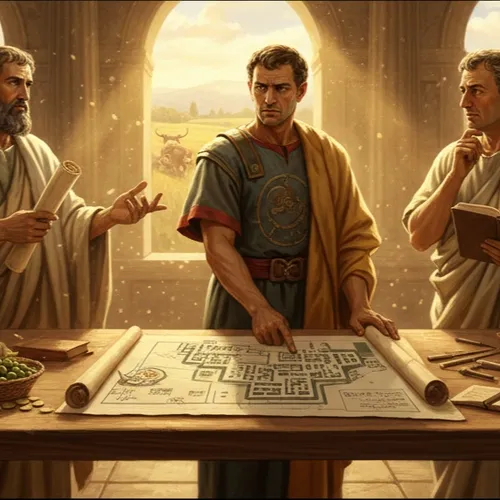
Ancient Wisdom on Work and Preparation - Lessons from Hesiod, Xenophon, and Cicero
From the Greek poet Hesiod to the Roman philosopher Cicero, ancient sages taught the importance of work and preparation. This article explores their wisdom on overcoming procrastination and enriching life through diligence and order.
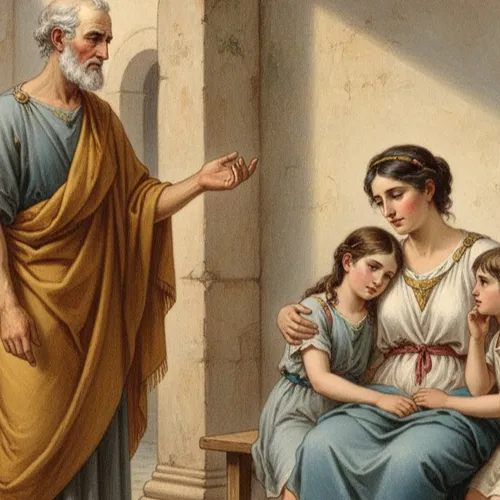
The Ancient Philosophy of Loss and Affection - Seneca and Plutarch on Parental Fortitude and Unconditional Love
The Stoic Seneca teaches the stern acceptance of losing a child, while Plutarch argues that the purpose of raising children is affection. This article explores the universal wisdom left by ancient sages on parental love and the tragedies of life.
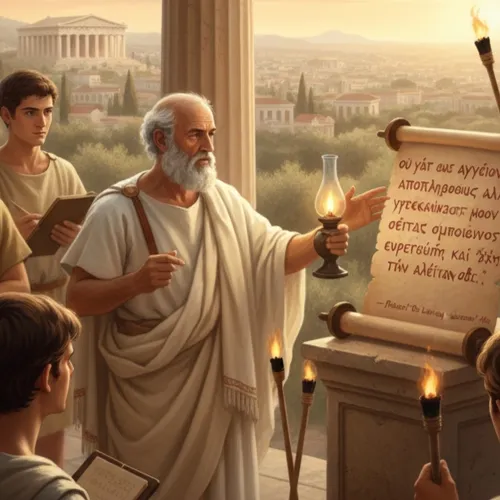
Ancient Wisdom - A Collection of Aphorisms on Learning and Culture
From the Delphic maxims to Plutarch's essence of learning. We explore the core of the culture needed to "live well," as left behind by the sages of ancient Greece and Rome.

What Is True Friendship? Cicero and Aristotle Explained
Can someone you cannot tell the truth to be called a friend? The ancients thought a friend's worth is proven only in adversity. Through Cicero's On Friendship, Aristotle, and Xenophon, this collection examines friendship and trust.