

Drifting Between Dream and Reality: Quotes on the Beautiful and the Uncanny
Night was once a gateway to an otherworld that could lead people astray. Ueda Akinari, Lafcadio Hearn (Koizumi Yakumo), and Izumi Kyoka evoke a haunting world where dream and reality, terror and beauty blur. Golden scales glimmer beneath the water, breath turns white in the snow, and a beast's presence is felt just beyond a wooden door. Enter a world of uncanny beauty glimpsed through the cracks in everyday life.

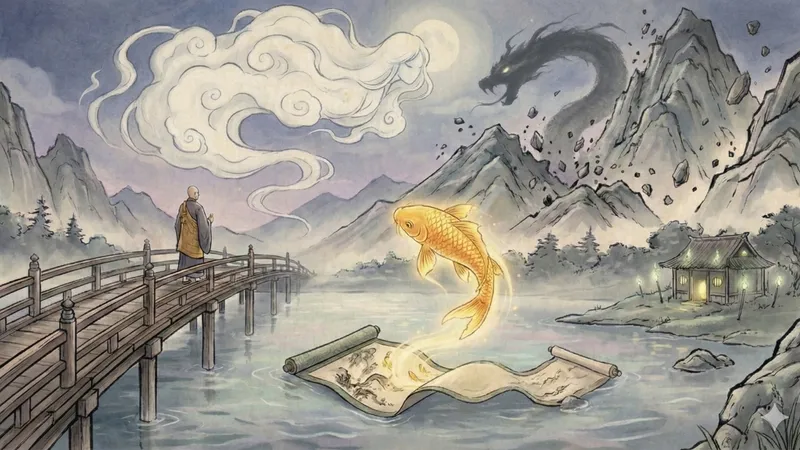
「いつのまにか全身にうろこが生え、それが金色にひかって、私は一匹の鯉となっていました」
“Before I knew it, scales had grown all over my body, shining gold, and I had become a carp.”
—— Ueda Akinari, Tales of Moonlight and Rain (Ugetsu Monogatari) [The Carp of My Dreams - Kogi]
【Commentary】
When transforming into another creature in a dream, does one feel unprecedented freedom, or the fear of losing one’s human ego? This is a scene from “The Carp of My Dreams” where the monk Kogi transforms into a carp in his dream. The pleasure of swimming freely in the water signifies liberation from his daily life as a monk bound by precepts. The visual image of wearing golden scales is beautiful, instantly inviting the reader into a world of fantasy. However, this transformation is not merely an escape; it is also foreshadowing that leads to the terror of eventually being caught by a fisherman. In this moment where the boundaries between human and fish, dream and reality dissolve, Akinari’s unique aesthetic fantasy is condensed.
「絵の魚が
“The painted fish slipped out of the silk paper and swam around in the water.”
—— Ueda Akinari, Tales of Moonlight and Rain [The Carp of My Dreams]
【Commentary】
Does a work painted with an artist’s soul eventually gain the power to leave physical constraints and swim out into the real world? This is a beautiful and mysterious episode told as a sequel to “The Carp of My Dreams.” The conclusion, where the carp painting created by the protagonist slips out of the paper and returns to the water after his death, brilliantly symbolizes the union of art and life. The experience of becoming a fish in a dream is sublimated into the form of a painting, and finally returns to the world of fantasy. This circular structure deepens the lingering tone of the story and seems to imply the karma of the artist living in the space between fiction and reality.
「夢の中で走ろうとしても手も足も動かせない時のような気が致しました。」
“I felt as though I were trying to run in a dream but could not move my hands or feet.”
—— Lafcadio Hearn (Koizumi Yakumo), The Story of Chugoro [Chugoro]
【Commentary】
When fascinated by something from the otherworld, does one lose even the ability to move one’s body at will? In the scene where he is led by a beautiful woman to a mansion that feels like the bottom of the water, the narrator recalls a sense of helplessness similar to sleep paralysis. This sensory description vividly conveys to the reader’s skin the terror of an “irresistible force” that lies back-to-back with sweet temptation. Stepping into the world of fantasy may be synonymous with losing control of the self.
「彼女の息はあかるい白い煙のようであった。」
“Her breath was like bright white smoke.”
—— Lafcadio Hearn (Koizumi Yakumo), Yuki-Onna (The Snow Woman)
【Commentary】
Should a ruthless breath that brings death bear such fantastic beauty? At the moment the Snow Woman takes the old man’s life, her breath is depicted not merely as exhalation but as visual “white smoke.” Here, Lafcadio Hearn’s unique view of the supernatural, where terror and beauty are inseparably linked, is condensed. Although it is a cruel scene where a life freezes over, the spectacle is somehow tranquil, emitting a bewitching radiance that never ceases to captivate the viewer.
「果は峯も山も一斉に揺いだ」
“In the end, the peaks and the mountains all shook at once.”
—— Izumi Kyoka, The Holy Man of Mount Koya (Koya Hijiri) [8]
【Commentary】
Can you imagine the moment when a mountain itself trembles like a living creature? This description portrays how the overwhelming presence of a giant snake crossing the path caused physical vibrations that shook the entire mountain. Beyond mere terror, it evokes a solemnity as if the spiritual energy of great nature has materialized. In the demon world depicted by Kyoka, scenery and supernatural phenomena are inseparably linked, and the world itself transforms.
「畜生道の地獄の絵を、月夜に映したやうな怪の姿が板戸一重、魑魅魍魎といふのであらうか」
“Monstrous figures like a picture of the hell of beasts reflected in the moonlight, separated by a single wooden door—is this what they call chimimoryo (evil spirits)?”
—— Izumi Kyoka, The Holy Man of Mount Koya [24]
【Commentary】
What would you do if a hellscape were spreading out just on the other side of a single door? The monk concludes that the presence of the beasts surrounding the mountain hut late at night are “chimimoryo” (evil spirits). The contrast between the silence of the moonlit night and the gruesome things wriggling behind it creates the fantastic terror unique to Kyoka. Precisely because they cannot be seen, the “monstrous figures” expand infinitely within the reader’s imagination.
「二十三十のものの鼻息、羽音、中には囁いているのがある。」
“The nasal breathing and sound of wings of twenty or thirty things, and among them, some are whispering.”
—— Izumi Kyoka, The Holy Man of Mount Koya [24]
【Commentary】
If something that speaks human words were mixed into a pack of beasts, wouldn’t that be the true horror? It depicts not just an attack by wild animals, but a scene where ominous supernatural beings gather seeking the monk. The auditory description that they are “whispering” determines the eerie nature of their unknown identity. This is a sentence that makes one painfully realize that this mountain hut is a place removed from the logic of the human world.
Related articles
Standing by Your Beliefs: Quotes from Watsuji, Miki, and Others
Through quotations from Tetsuro Watsuji, Kiyoshi Miki's Notes on Life, Kanzo Uchimura, and others, we explore a life guided by conviction and conscience rather than results or public opinion.
Respecting Others - The Dignity of Maturity
Do you ever find your mind unsettled by the behavior of those different from you? True freedom lies in respecting each other's individuality and connecting through the invisible bond of trust. Here is the "wisdom of sages" for harmonizing coolly with society without losing sight of yourself.
Japan's Seasons Through Writers' Eyes: A Collection of Quotes
Through Takahama Kyoshi's writings on haiku, Kunikida Doppo's Musashino, and the words of Masaoka Shiki and others, we trace the sensitivity with which Japanese writers have observed nature and the changing seasons.
Japan's Primal Landscapes - A Tale of Memories Told by the Land
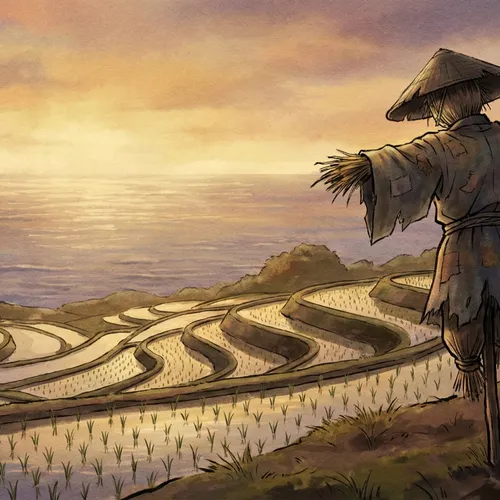
Superimposing the deceased onto the buzzing of flies, seeing gods in one-legged scarecrows. For Japanese people, these mysterious stories were not fantasy, but "life" itself, right next door. Longing for lands beyond the sea, legends remaining in ancient mounds. Why not travel through the frightening yet gentle "primal landscapes of the heart" gathered by Kunio Yanagita, Lafcadio Hearn, and others?